Bread and Houses

The Anfield Home Tour

Commissioned by Liverpool Biennial
 

By Kenn Taylor

It’s rather surreal to be taken on a tour of a city you live in, but then this is quite a different tour. We start conventionally enough, by the Edwardian splendor of the Cunard building at the heart of Liverpool‘s regenerated waterfront, but soon we will be heading to the other side of the city – and the other side of Britain.

After we pile into the minibus, our tour guide Carl “with a C not a K, that’s just weird” Ainsworth announces that we’re heading for a district in the north of the city, Anfield. The word for many means solely the home ground of Liverpool FC, but Anfield is also one of the city’s oldest residential districts.

Welcome to the Anfield Home Tour, part of the Liverpool Biennial, the UK’s largest visual arts festival. The arts in Liverpool have always had something of a social conscience, and the Biennial is no exception; we are not heading to Anfield to look at football stadia or recently restored Stanley Park, but to learn some things about housing, community and regeneration.

Our first stop is Everton Park, where Carl tells us a story that sums up the British urban landscape in microcosm. From the top of the hill above the Mersey, there are amazing views across central Liverpool as far as the mountains of Wales on a good day. It was this view which led rich merchants to build fine houses here in the 18th century, some of which remain. With the expansion of nearby docks and industry, however, speculators built hundreds of densely packed terraced houses in the area, described by Carl as a “tidal wave”.

The merchants then moved further out, and a tight-knit working class community was formed on streets so steep that is some cases they had railings to help people climb them. Then, from the 1930s onwards, there were successive ‘slum clearance’ programmes, culminating in mass demolition in the 1960s. Many people were moved to overspill estates and new towns on the edge of the city. Others meanwhile lived out Le Corbusier’s vision of ‘a machine for living in’ at huge new high-rise blocks of flats. Some enjoyed scaling these new heights, and those old ‘tight-knit’ streets also often meant horrible conditions, but the dream soon turned sour. Carl reveals that some of these ‘new visions’ in housing were demolished fewer than ten years after being built.

In the 1980s, from the rubble of tower blocks came Everton Park , a green space on wasteland; but one with little thought given to its integration into the local area. Carl says: “Many former residents of the area come here to have picnics right where their houses used to be. You’d think from all that history, the powers that be would have learned.”

We find that they did not. Anfield was one of many areas in the UK subject to the Housing Market Renewal Initiative (HMRI). Despite the housing boom from the 1990s onwards, there were areas of the UK that stagnated, mostly in the north of England. The then government took up a report from Birmingham University’s Centre for Urban and Regional Studies. They decided what was needed was demolition, en masse, and new built homes, en masse. The process became the HMRI.

We arrive in Anfield to an area of new homes built by Keepmoat Construction. There’s been criticism from some that such houses in HMRI areas aren’t as ‘nice and neat’ as the terraces they replaced. However, as Carl points out, they do have gardens, off-street parking and modern levels of insulation and damp proofing, things denied to many though not all of the old houses. The tragedy of these homes, one often lost broadsheet debates about aesthetics, is that many people who owned the demolished homes did not get a good enough price for them under compulsory purchase orders to buy one of the new ones. They often had to take out second mortgages in old age to be able to buy somewhere to live. New homes in a community are all very well, but not if the community has to get into debt to buy them when they owned their old homes outright. With the cancellation of HMRI by the present government, we are told it was even touch and go if these new homes would be built or just wasteland left in their place.

As Carl points out, the biggest problem with HMRI was in its title: market renewal, not community or neighborhood renewal. This was of course, pre-crunch, when the market appeared to have the answer to everything; it just needed to be helped on its way. Speaking of markets, in my favourite part of the tour Carl passes two bricks around the bus, one from the new building site and one from the demolished homes. The new brick we are told is worth 30p, the old brick £1. Apparently bricks from the demolished homes are being exported to building sites around the UK, even abroad. Carl tells us: “There’s about 20,000 bricks in an average terrace, whole streets demolished, you do the math.”

As we drive down Granton Road, one of the ‘tinned up’ streets awaiting demolition, Carl plays a recording by Jayne Lawless, a former resident, recalling how just a few years ago, every house in the street was occupied. She speaks of the “controlled decline” under HMRI, which saw people pushed to leave, one by one, until the last residents left in despair. She says: “They said we were deprived, don’t remember being deprived.”

However, Anfield isn’t all dereliction, although newspapers have been full of emotive photos of empty homes. That is one reality, but just round the corner is another. Skerries Road is a traditional terraced street renovated to looking almost new by residents who refused to move. It shows how a different approach can succeed.

Then another local resident, Bob, gets on the bus as we drive past the house where he lived for 50 years. Now it sits empty, with abandoned properties all around. Yet this wasn’t a HMRI street. When former council houses were sold under ‘right to buy’, many ended up owned by landlords who rented to whoever they could get. Bob says this saw an increase of “unruly families” moving in, and with them anti-social behavior, crime and then often abandonment. Bob is a regular on Liverpool’s pub singing scene and gives us a rendition of ‘This Old House’ by Rosemary Clooney, before we move on.

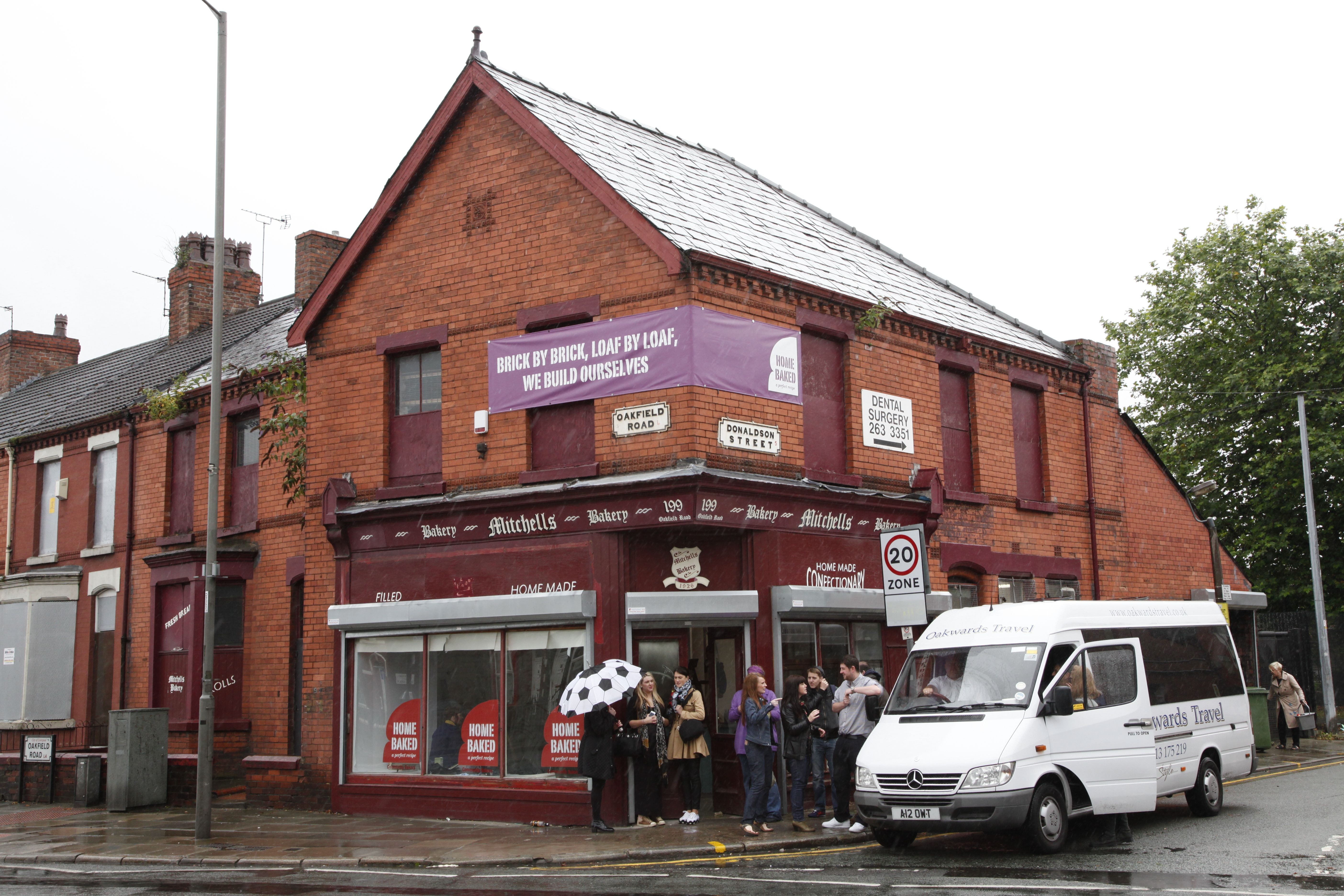
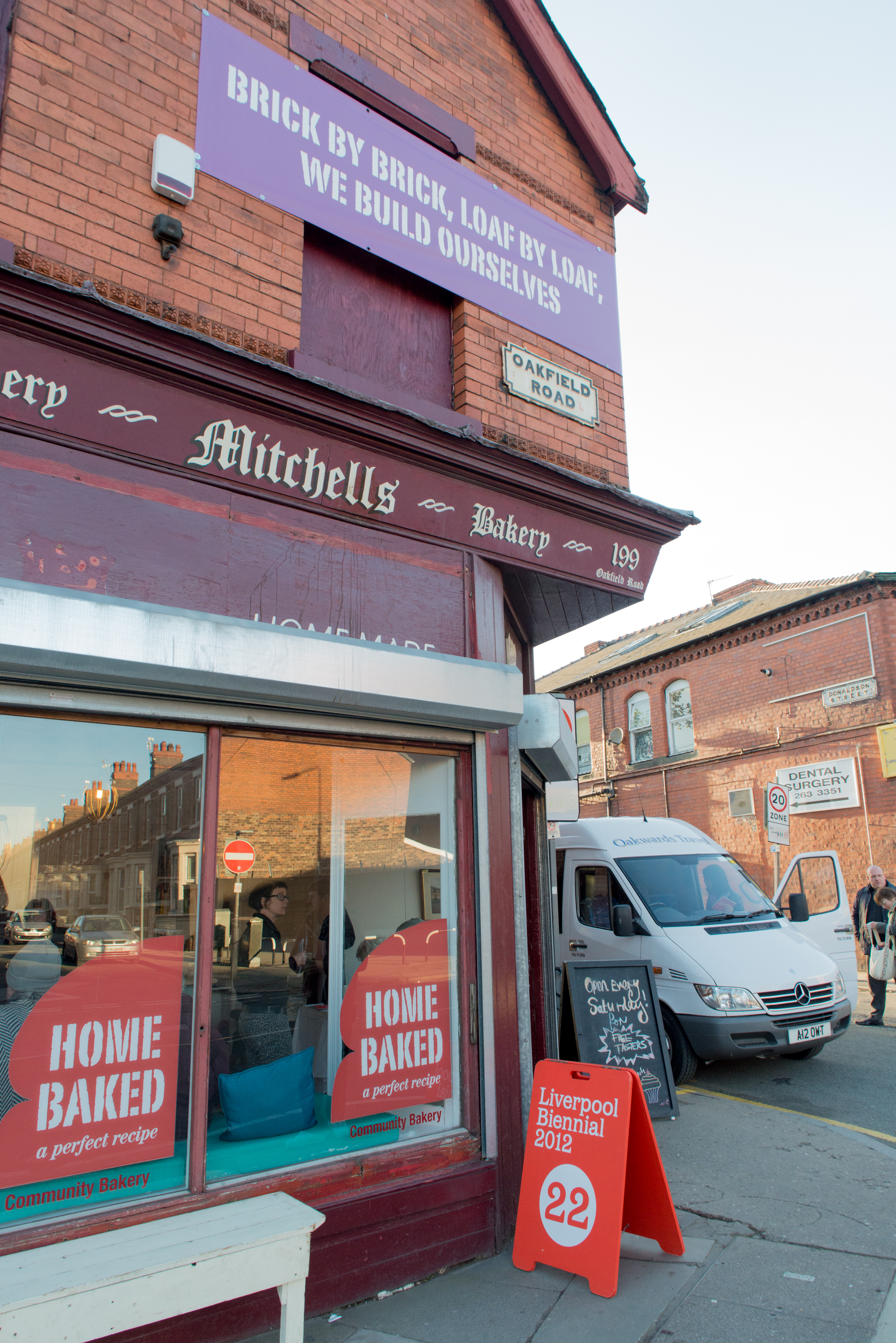
We finish the tour at the former Mitchell’s Bakery, a local business for over 100 years which closed in 2010 and has now become a community hub, the centre of a two-year plan worked up between artist Jeanne van Heeswijk, on a Liverpool Biennial commission, and a myriad of other participants and project partners.

When they began, they had no idea where the idea would lead. The answer is a long-term plan to re-open the bakery as a cooperative, offering local people jobs and training and a Community Land Trust (CLT). If the city council lifts the current clearance order on the building, the CLT hopes to buy it and refurbish the bakery’s former living accommodation. Architect Marianne Heaslip and a group of local young people have drawn up the plans. In the long run the CLT would like to take on more buildings in the area and renovate them for not for profit re-occupation. The bakery has now been refurbished internally and with community members undergoing training, they hope to start trading soon.

Then, a surprise: over tea and cakes, it is revealed that Carl is actually actor Graham Hicks, but that all the stories we have heard are true. Britt Jurgensen, who directed the tour and co-wrote its script with Graham and local novelist Debbie Morgan, adds that many in the community were reluctant to get involved with this project. They had been let down so much by outsiders in the past. But this external spark brought people together who were frustrated by waiting for others to make decisions for them and has acted as a new impetus for residents to become stakeholders in their neighbourhood.

“This is our future,” says Britt, a theatre professional who lives locally and is a member of the CLT and the bakery cooperative. Progress will be slow but from the ground up, not a grand vision imposed from outside. The catalyst may have been the Liverpool Biennial, but local people are now taking things far beyond the ideas of any curators or artists. She says: “I hope we will be able to sustain ourselves as a group and know when to pass responsibilities on to new people. I hope we will be courageous enough to admit when we make mistakes and adapt our plans when it is appropriate. And I hope we will continue to enjoy ourselves whilst we do all that.”

As we munch cake, there is much discussion within our tour group, many of whom have never met before, about the injustice, the problems, and the potential solutions for Anfield and elsewhere. Overall, the feeling is one of energy, of something good coming out of a mess and of things finally, slowly, heading in the right direction.

In the hierarchy of needs in austere times in deprived areas, art may come pretty low, but if art can help regain food and shelter, pride and spirit, then it has a purpose both practical and ephemeral. This was a story that could have been complex, technical, dull and aggressively ideological; instead it has been brilliantly reduced to its actual simplicity: what has been done to a community, and what needs to be done to repair the damage.

The Liverpool Biennial has often struggled to define itself apart from all the other art festivals in the world. Given Liverpool’s weather, it isn’t necessarily going to attract the crowds that head to Venice, Lisbon or Miami. With more projects like this though, it can express itself as something unique in the world.

The Anfield Home Tour is a fine art work. It may also be a fine bit of sociology, entertainment, architecture, history, politics, and cake, but it is an art work. And it is one that should be compulsory consumption for every government minister, every housing association director, every town planner, student of architecture and social affairs correspondent. Its message is simple, and one we should all have learned long ago: The people who know what is best for communities are communities themselves and they are the only people who can truly regenerate an area.

The success of the Eldonian Village, a self-organised community that began in Liverpool in an area of urban blight in the 1980s, just a mile or so from Anfield, is testament to what can be achieved if the support and will is there. Anfield clearly has the will. It remains to be seen though, if those powers that be, whatever coloured rosette they happen to wear, will give them the power and the financial resources to build on this creative start.
This piece appeared on The Guardian in October 2012.

www.2up2down.org.uk

Images Copyright Mark Loudon, Jerry Hardman-Jones and Britt Jurgensen.

A Tate of the North

A look at Tate Liverpool as it approaches its 25th birthday with new director Francesco Manacorda.

By Kenn Taylor

Much has been written over the last few years about the proliferation of new art galleries in the UK regions, especially the north. Often this is seen to have started with Gateshead’s Baltic, which opened in 2002 in a huge converted flour mill on the Tyne waterfront. Much has also been written about the viability and role of such institutions, particularly those located in deprived areas, especially since the public sector cutbacks have ensued.

Before all of this though, there was Tate Liverpool. One the first attempts at creating a modern art gallery in a post-industrial setting in the UK, and certainly so in the north, it will celebrate its 25th anniversary next year. In that quarter century, modern and contemporary art has moved from the fringe of elite culture to something approaching the mainstream while the idea of using culture as a regeneration tool has both risen and fallen.

In an era when the Imperial War Museum has a branch in Tameside and the V&A is building one in Dundee, it might seem common sense to have a Tate gallery in a northern city, but at the time, it was a radical idea. In the early 1980s Sir Alan Bowness, then director of Tate, began formulating a plan to create a ‘Tate of the North’. Bowness later reflected, in a letter now in the Tate archive, on the project’s beginnings: “We made it clear that we wanted if possible to find some great 19th century building that had lost its original purpose, and would lend itself to conversion into an art gallery.”

Having met with positive responses about hosting the gallery from cities across the north, he visited them all, reaching Liverpool last. There he was given list of potential sites to explore by Merseyside County Council. He recalls: “At the end of a stormy and blustery winter’s day we arrived at the Mersey, had a quick look at the Liver building (not suitable) and then went into the totally derelict Albert Dock. It was immediately clear to me that this was the place.”

Pushed along by the then ‘Minister for Merseyside’, Michael Heseltine as a key regeneration project for the city in the wake of the 1981 Toxteth Riots, the idea made rapid progress and in 1985 Liverpool-trained James Stirling was commissioned to design the new gallery in the dock. His work left the exterior of the Grade I listed warehouses largely untouched, but transformed the interior into galleries suitable for the display of modern art. The building opened to the public in May 1988.

There was some scepticism about this ‘branch of the London art world’ opening its doors in Liverpool, yet in the decades since, the gallery has firmly established itself as part of the city’s cultural landscape. Under its last director, Christoph Grunenberg, Tate Liverpool developed from a relatively quiet branch to holding some of Tate’s biggest exhibitions, including Gustav Klimt: Painting, Design and Modern Life in Vienna and Picasso: Peace and Freedom. Although some visitors from London and other exotic places occasionally asked gallery staff “Why on earth is this up here?”, Tate’s presence was a factor in Liverpool winning the title of European Capital of Culture in 2008. The gallery’s hosting of the first Turner Prize that year helped to pave the way for the current system of a regional venue every other year.

At the end of last year Tate Liverpool appointed a new artistic director, Francesco Manacorda, to steer the gallery through its next phase. The 38-year-old has previously been curator at London’s Barbican Art Gallery, curated various pavilions at the Venice Biennale and ran the Artissima international art fair in his native Turin. Manacorda acknowledges the importance of Tate Liverpool’s legacy: “Tate Liverpool was a pioneer in making modern and contemporary art accessible to a wider audience outside London. The results it harnessed have no doubt provided inspiration for the creation of institutions such as Baltic in Gateshead, Nottingham Contemporary and the Hepworth Wakefield.”

He feels that it was not just the regions that were influenced by the opening of Tate Liverpool, but London as well:  “The commissioning of a prominent contemporary architect to convert a monumental piece of industrial heritage into a contemporary art venue was very successful in Liverpool. I am sure this influenced the decision to transform the abandoned Bankside power station into what we now know as Tate Modern.”

In the immediate future Manacorda’s focus is on the Liverpool Biennial, the largest visual arts festival in the UK, which opens this week. Since the Biennial’s inception under the stewardship of a former Tate Liverpool director, Lewis Biggs, the gallery has played a major part in it. Manacorda says: “Tate Liverpool’s relationship with the Biennial has been very good since the Biennial was established in 1998, and I would like to continue this. The Tate Collection is a great asset which allows emerging artists to look at history in an innovative and unconventional way.”

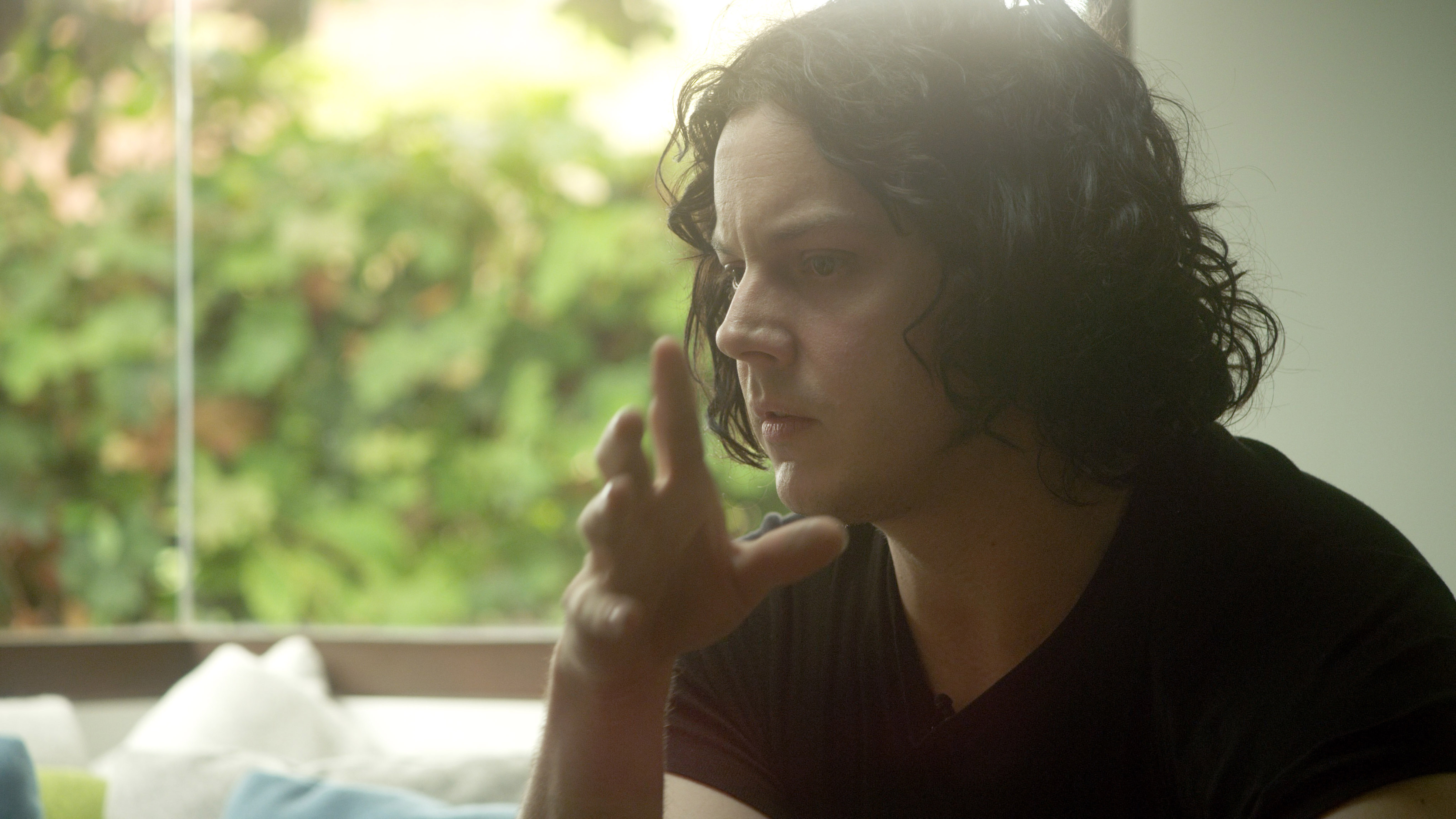
Tate’s contribution to the festival comprises two elements. The first is a new commission, ‘Sky Arts Ignition: Doug Aitken – The Source’, in which Aitken asks a variety of creative practitioners including Jack White, Tilda Swinton and Mike Kelley where their creativity comes from. The work is situated in a glass pavilion situated outside the gallery designed by David Adjaye. Manacorda comments:  “I think it is a great piece and it has been a real privilege working with Doug. The work makes a very important point manifest, that conversations are one of the most important sources of creativity.”

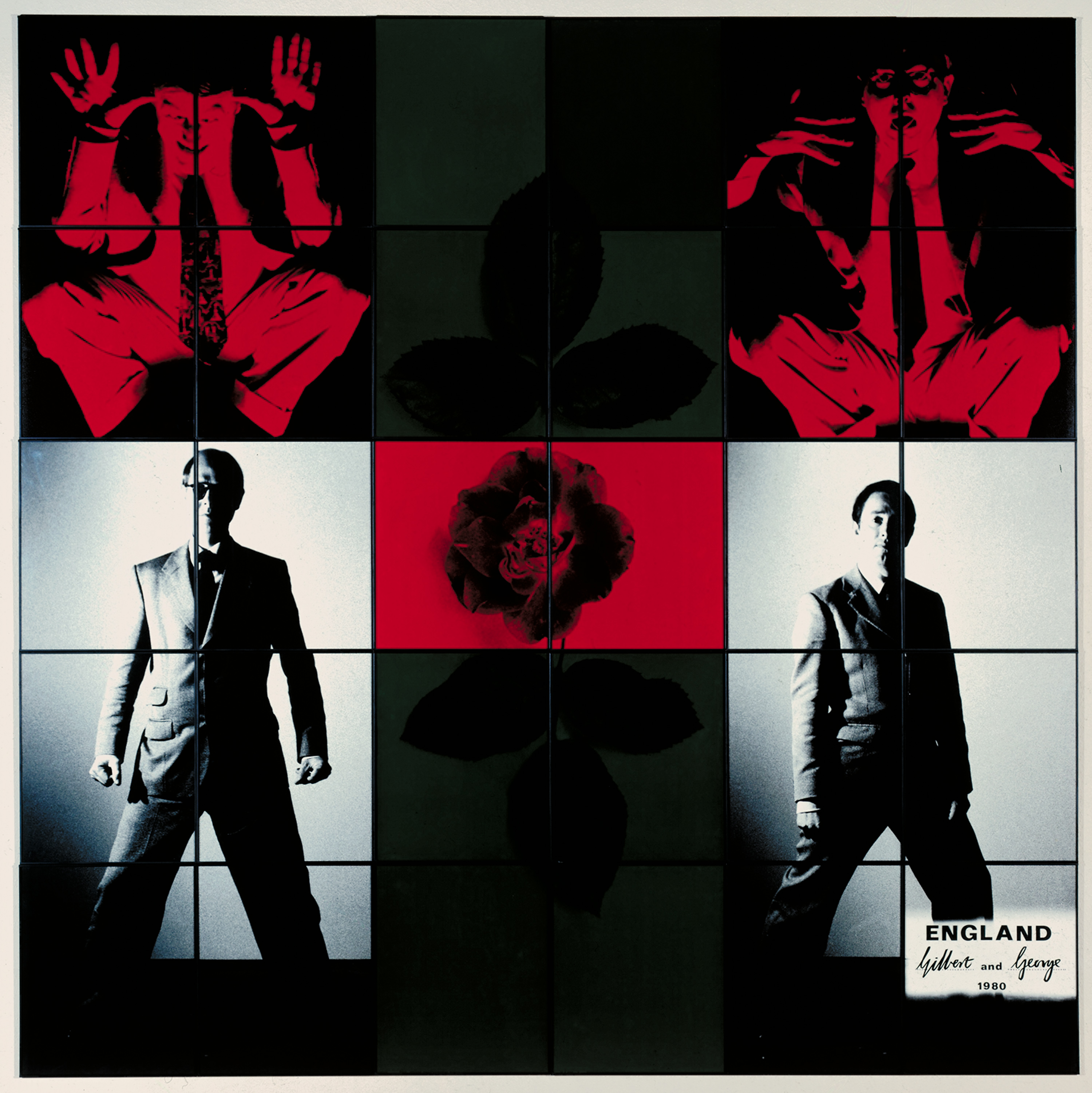
There will also be a new Tate Collection display entitled Threshold, featuring a wide range of artists from Martin Parr to Gilbert and George: “The show was curated by Sook-Kyung Lee as a response to this year’s Biennial theme of ‘Hospitality’. She took a very rigorous and imaginative approach to looking at how both inclusion and exclusion can become social, political and economic tools that manifest in a variety of, not always visible, ‘thresholds’.”

As Tate approaches its 25th birthday in May 2013, plans are already in place to mark the occasion, though Manacorda will only reveal a brief amount at the moment: “We are planning a major re-hang of the Tate Collection at the gallery to coincide with our 25th anniversary. We will be reflecting on the past twenty-five years, using the re-hang to do something different, exciting and revelatory with the collection.”

Nearly a quarter century after its inception as part of a plan to regenerate Liverpool, I ask Manacorda what role he sees the gallery playing now in a city in many ways transformed, in many ways still struggling: “Tate Liverpool was at the forefront of re-imaging the city’s industrial heritage through culture, helping people project new meaning into it. Culture has literally and metaphorically moved into the empty industrial space following the economic evolution of the North in recent decades. Tate Liverpool has a larger audience than other regional galleries, which means that while we have a loyal and growing Merseyside audience, we are also able to attract audiences from further afield. This of course is what brings regeneration effects to the city. We bring visitor spend to Liverpool and work in partnership with organisations across the city to make it a focus for cultural tourism.”

Though he sees the gallery as having a deeper role than just being a tourist magnet: “In addition to considering the economic effects of regeneration, we also consider the other beneficial effects that art can have on people’s lives. Art can speak to people and become an emancipatory tool for people to innovate, question and reinvent. Tate Liverpool’s role is to bring international, top quality practices to Liverpool, activating a conversation between the local and the international.”

Finally I ask, as Manacorda settles into his new role and can start influencing the programme on a deeper level, what is his vision for the future of Tate Liverpool? “I see the museum as a space for learning that provides the public with edifying experiences, critical space for reflection and access to the enjoyment that art can grant. Since Tate Liverpool is a modern and contemporary art gallery, I’d like to involve artists in reinventing how we look at history.”

This piece appeared on The Guardian in September 2012.

Broken Connections

By Kenn Taylor

There have been many eulogies made over the years about the work of dockers, shipbuilders, miners, fishermen and others, about the times when work was more than a job, it was a way of life that helped define you. Much less has been created about railway workers though. This despite the fact that the old LMS Railway alone once employed a staggering 263,000 people and that working on the railway was as much as a way of life, if not more so, than in any other industry.

This is perhaps due to the fact that any interest in railways is negatively associated with ‘trainspotters’, but that is to not acknowledge that working on the railways is very different to being a railway enthusiast, even if the two aren’t mutually exclusive.

Geography also plays a key part. Although there were ‘railway towns’ Derby, Crewe, Doncaster, Shildon and others, the railway, of course, branched out across the country and there was no definite geographical tie to the industry. There were railway people in every town, from the great workshops to the smallest village station and most felt part of that very big network. The Station Master in Kirkcaldy was connected to the Patternmaker in Crewe and the Clerk in Euston.

Railway workers were also generally less radical and militant than those in other industries, making them less noticeable to those in the arts and media. This was because although railway work was often poorly paid, dirty and dangerous, it was also usually secure, a true ‘job for life’ where you could start as an engine cleaner and work your way up to foreman. It was also an industry were workers had, to a degree at least, autonomy, able to move around the yard or station rather than be tied to a production line.

Safety too was important. Deaths of railway workers were, and continue to be, high, due to the nature of the railway – heavy and fast – forces that tend to be negative towards human life. While passenger safety, usually more of a priority for those running railways, was also always a concern uppermost in the minds of railway workers, even if customer service wasn’t. Nothing works on the railway unless everyone works together, and this awareness of the important nature of even the smallest task further helped to bond those working on it together.

And that is perhaps the key to life on the railway. There was the feeling of being part of a great big thing, a service, and an essential network that connected everything in the country; taking the coal of Yorkshire to the steelworks of Teesside and the steel on to the shipyards of Newcastle. And the ship-owner from London to Newcastle and the workers in each of these industries home for the day and to the seaside on high days and holidays. The railway connected things and people and to work on the railway was to be part of that vital connection.

Then came privatisation.

In the mid 1990s the railway was broken up into different competing businesses. Train operators were separated from owning trains, owning trains was separated from maintaining trains, track owning was separated from track maintenance, and ultimately, track was separated from trains. In short, the network ceased to be a network in the real sense. This system was chosen, not for its efficiency, but for its ability to make a quick profit for those involved and left a legacy which everyone else will have to pay the price for, for many decades to come.

And so the bus companies and others bought into the railway. The trains become a rainbow of different colours, often better to be fair than the drab hues of nationalised British Rail. The uniforms got better, and maybe even the staff smiled a bit more, training drummed into them by ‘customer service’ coaches.

Yet these ‘improvements’ on the railway mirrored the ‘improvements’ in Britain over the last 30 years. While on the surface things seemed to be getting better, Costa Coffee’s luxuriant muffins replacing the grim curled sandwiches of the Travellers Fare Buffet, underneath, the real business of the railway, the business of fishplates and electrical switchgear and ton upon ton of grease, a world dirty, unglamorous and technical, was in decline.

Areas of the railway which would have once worked together for mutual benefits now fought each other to improve their own balance sheet. As branding and margins and customer service became the priority, underneath the decay continued. The net result was a more inefficient, more unreliable, more expensive railway that became the laughing-stock of the world. Even allowing for inflation, the taxpayer now subsidies the private railway companies far more than it ever did British Rail. Much worse than that though, with safety given over to profit, with skilled staff replaced by cheaper inexperienced people on short-term contracts, with corners cut and deadlines squeezed to save money, rail accidents and passenger deaths increased. That is the reality of the privatised railway.

The effect of privatisation on railway people was largely the same too. No longer part of a great unified network, something bigger than themselves individually, they are instead separated. Now an employee of a global bus corporation, or a Canadian train manufacturer, or a government Qunago or a national civil engineering PLC, companies all allegedly working together to make trains run but all vying ruthlessly for their own interests. Yet, despite all of this, as recent trade union action has seen, railway workers retain a little more unity than in many other industries. The necessary skills and inevitable interactions of railway workers have kept some sense of togetherness, despite the all the forces working against it.

The current government is mostly concerned with reducing the cost of the railway. That doesn’t give much faith that rail transport will improve in the UK anytime soon. Even if it does, it will never be as good as in the likes of Japan or France, countries where people realise the need of co-operation, long-term planning and investment now for benefits later, things that the UK seems incapable of. As long as the selfish, short-term, profit-obsessed culture continues in the UK, we will not only have a terrible railway, but we will have a terrible society and a weak economy. Only if we can re-establish our broken connections, realise the need to work for something bigger than ourselves as individuals, will things ever improve.

This piece appeared in issue 19 of The Shrieking Violet in August 2012.

In Praise of the Gallery Invigilator

By Kenn Taylor 

The designer hymens had to be the peak – a work of art by Julia Reodica, part of her hymNext Designer Hymen Series. Having to ‘interpret’ this piece to men, women and children of all backgrounds was one of the more challenging tasks during my time as a gallery assistant – one of the many names applied to those who look after art, the spaces it is displayed in and the people who visit it. After a few months of describing designer hymens to the public I felt confident the old adage of ‘selling coals to Newcastle’ would be a piece of cake.

I worked as a gallery assistant of one form or another for nearly three years through numerous exhibitions in a contemporary arts institutions, and this gave me a perspective on the changing nature of this largely unsung role. In traditional museums and galleries, the role of the invigilator was very much one based around security, protecting precious works of art from the unknown whims of the public. This and perhaps occasionally suggesting where a particular painting – or the toilets – could be found.

In today’s new institutions though, the invigilator, while still fulfilling the role of keeping an eye on things and giving directions to the nearest gents, is also called upon to be interpreter, facilitator, demonstrator, guide and technician.

During my own tenure as an invigilator, my role varied from daily discussions with visitors about how a video projection could constitute art to more unusual tasks, including coordinating community takeovers of gallery spaces, making small animals out of pipe cleaners with children (a high point) and looking after shoes in an exhibition which required visitors to remove them – armed of course with a can of Odor Eaters.

A key task was demonstrating how to engage with various interactive pieces, ranging from huge wooden contraptions to talking sofas. In addition to having to apologise to people when ‘interactives’ failed – as they so often did – to stand up to the rigours of the public interacting with them.

I now have another job in the cultural sector, but memories of my time as a gallery assistant were prompted recently when I visited two exhibitions where the invigilator played a key role in the experience of the artwork.

The first was ZEE by artist Kurt Hentschläger. With this piece, the invigilator’s role involved leading participants into a small, smoke-engulfed room where they were subjected to intense strobe and pulse lights which cause the brain to generate surreal images. It was an exhilarating if extreme experience. The invigilator, while undergoing the same ordeal, repeatedly, was our guide and protector for the duration of our time in this disconcerting space – responsible for rescuing those people for whom it was too much, of which there were many.

The Humble Market project, put together by a mixture of Brazilian and UK theatre practitioners and artists, also saw an invigilators take you on an immersive journey designed to knock you out of your comfort zone. Here, they were responsible for everything from helping you dress up as a Brazilian carnival attendee to asking you searching questions about the nature of existence.

As certain branches of contemporary art become ever more based around the creation of installations, situations and ephemeral experiences, the function of the invigilator has increased and expanded. It has reached the point were this role frequently plays a crucial part in the creation of the artwork itself and certainly the gallery visitor’s experience of it. Depending on how an individual invigilator interprets what is presented to them to deliver, the experience becomes even more subjective for the visitor.

This adds another layer beyond the artist’s intention, audience preconception and curatorial interpretation. Speaking as a former invigilator, the experience of being literally ‘on the ground’ with any given exhibit for an extended period of time also sees you develop a unique relationship with an artwork. You are witness to every inch of detail, all its whims, the effects it has on an audience, its highs and lows.

This relationship can be more intense than that between the work and the artist who created it. This is especially true if the artists involved have had little hand in the actual fabrication or ‘demonstration’ of a piece, rather just the concept. It becomes the invigilator’s role to nurture, care for and present to the world someone else’s baby, whether you love it or not.

The role of the gallery invigilator is an area which deserves more thought and respect, yet is often forgotten by artists, critics and curators, even those who have been invigilators in the past. Currently many institutions under financial pressure seem keen to dispense with paid invigilators, replacing this important entry-level position, where a real understanding of arts audiences can be gained, with volunteers. This risks entrenching elitism in the arts, denying roles to anyone who can’t afford to volunteer for long periods of time.

Perhaps it is time that some acknowledgment be given to the important role that invigilators play in the ‘creation’ of many artworks and perhaps even academic research into the function that this unglamorous but vital job plays in our understanding and experience of so much contemporary art

This piece appeared on The Guardian and Museums Journal in July 2012. 

Breaking Apart, Coming Together

By Kenn Taylor

The idea of community, or the lack of it, has become a modern-day obsession. Something that was taken for granted for so long, and frequently resisted, many people now seem desperate to get back.

This is perhaps the inevitable legacy of the second half of the 20th century. An era dominated by the individual. An era, largely in the West at least, of rising wealth and opportunity, and of freedom as an ideological counter point to the enforced community of Communism.

For many people now though, in particular since the turbo-individualism that flourished from the 1980s onwards, it seems that we have gone too far, that we have lost something. A view perhaps most often applied in the UK to urban, former industrial communities.

Now a few years in to the 21st century, if we look at any such community and the things within its fabric that defined it, we may find much loss. Churches, local shops, Pubs and social clubs so often have closed as areas declined and ways of life changed. Local industries too, not only a source of wealth but frequently of pride and identity, have also largely succumbed. To be replaced, if at all, by the anonymous sheds of supermarkets, distribution warehouses and call centres, or perhaps the odd foreign-owned assembly plant.

Even the home, the basis of community, has not been spared. In many urban areas outside London, there are often whole streets of abandoned houses were the population has dispersed in the face of lack of work, failed urban policies and social and cultural decline.

The deterioration of such communities is often painted simply as a picture of 1980s Thatcherite policies destroying industries and, by proxy, the communities and cultures that were largely defined by them. This is indeed a huge part of it. In this period, the enforced unemployment and fracturing of traditional peer structures, based on trade unions, apprenticeships and the like, helped to break the patterns of life that had united people for centuries. However, the fact is that increasing post-war wealth and opportunity also played its part in eroding such communities.

As people became wealthier, wages doubled between the start and end of the 1950s, coupled with the support given by the welfare state, people began to need each other less. This combined with relative peace, technological advance and a young, expanding population, also helped lead to increased liberalisation in the 1960s in everything from censorship to religion to sexual morality. As the often oppressive structures that bound people’s behaviours loosened, this created more opportunity to act as an individual against control, be that from your parents, employers, the church, or the state.

In this era, with many people for the first time being able to maybe afford a house with a garden, a car, a washing machine, a foreign holiday, perhaps even sending their children to newly expanding universities, many became convinced that, if allowed more freedom and relieved from the burdens of tax and regulation, their life could be even better. This increase in individual wealth and freedom saw many people who would have previously voted Labour turning to the Conservatives at the end of the 1970s. Labour politician Tony Benn even commented in 1971, “The individual escape from class into prosperity is the cancer which is eating into Western European Social Democratic parties.”

Of course, that was all based on rising and spreading wealth and opportunity. Even though the Conservative administration devastated many communities and industries in the 1980s, across the UK in general, incomes actually rose. North Sea oil and the money generated from privatisation allowed for tax breaks and new opportunities for many who were not trapped in declining industrial towns and cities. Such places were written off by many, the government included, as having ‘failed to adapt’ and thus responsible for their own decline.

Now of course, there’s nothing left to sell, the oil is running out, and places that escaped the worst ravages of Thatcherism in the 1980s now also find themselves staring into the abyss now their industries and communities have also declined. Wealth and opportunity is shrinking and many of those who had done well in these times are now seeing their children and grandchildren denied the opportunities they had, and face a society that seems darker and harsher than they could have imagined a few years ago.

As family, work, class, cultural and religious structures that held people together declined, this lessened the ability of society to influence people to behave in way that wasn’t wholly selfish. This was further pushed by the ‘Bling’ culture which has prevailed since the Thatcher era. Initially this was the preserve of the Yuppies and entrepreneurs who prospered in the new economic liberalism of the 1980s. Eventually though, this culture trickled down to ordinary people and fame, status, money, power and the pleasure and will of the individual were elevated to all that mattered.

Thatcher removed the enemy of her ideology by destroying the unions and industrial communities, but this has come back to haunt those who believed this would see the return to a more stable and acquiescent society. Firstly such destruction created despair, which saw many industrial communities overwhelmed by Heroin addiction, and then later, almost its counterpoint, Ecstasy, and the raves that occupied the abandoned industrial spaces and represented new hedonistic communities for those deserted by the decline in old ways. Both these phenomena led to the ugly expansion of criminal gangs, now capable of making much higher profits through drugs, who now offer a seemingly easy route to money, power, status and belonging for those with few other opportunities, filling the vacuum in many communities left by the decline of previous power structures.

Today, we seem to have reached a turning point. Perhaps not a conscious one, but just like the changes brought about by rising wealth, an inevitable one. The money has run out, the opportunities for the individual have declined and many people are perhaps waking up to what has gone, and just how much we really rely on each other. Yet, in wishing for old ideas of community to return, we must also be careful not to look down those terraced streets with rose-tinted spectacles.

It is ironic that 150 years ago, so much art and literature was created at the Victorian height of the Industrial Revolution about how horrible urbanisation and industrialisation was, and how it had uprooted and destroyed rural life and created dysfunctional communities in dirty towns and cities.

From Romantic poet William Wordsworth to anti-industrial proponent of the Arts and Crafts movement, William Morris, and Pre-Raphaelite painters like John Everett Millais, many artists, despite frequently finding their patronage from those who had made their money in expanding industry, lusted after a rural, anti-modern idealism.

But for all its aestheticised harmony and idyll, the reality of life on the land was hard and brutal. Life expectancy was short, it doubled in the UK during the Industrial Revolution, and the idealism of the village masked the serfdom and ignorance that often defined such life. The newly developing industrial settlements eventually formed their own new culture and sense of community which, in time, became as normal as that which it replaced in the countryside.

Now we find that, as they are declining too, many people romanticise industrial communities in a similar way. But for all the Silver Jubilee street parties that were held in now empty roads, there was also often domestic violence, alcoholism, vicious bullying and repression that went on behind the net curtains. The uncomfortable fact is that feelings of community are to an extent always based on the adoption of a form of collective identity and the exclusion of that which is different.

From the Rock and Rollers of the 1950s to the Ravers of the 90s, we should not forget all the brilliant art and human potential that has been unleashed by rebels butting against oppressive ways that rigidly bound people into narrow patterns of behaviour, alienating and often destroying anyone that differed from an oppressive norm. Individualism may have damaged community, but it allowed the potential of people to be who they wanted to be, and we should not forget that. Such liberty was hard-won.

We cannot go back to the way things were. Just as the new ideas of community were formed after the upheaval of the Industrial Revolution, communities in our Post-Industrial age will have new shapes defined by the circumstances of their own time. The ever-expanding rise of the online community alone means that things will never be the same again and, in time, this too may become as normal as the previous ideas of community it replaced.

Community is a two-way thing. We all to an extent feel the need to belong, yet we are all individuals. Too much community can be oppressive, too little leaves us isolated, vulnerable. When a way if life is broken, it is always painful, but it is part of the inevitable shifts of humanity, things go on, new structures are formed, and new ways of living become accepted. Rather than look back and wonder at once was or might have been, today in our ever more connected world, we should see what new communities we can form and perhaps how we can use them to look after each other that little bit more.

This piece appeared in Article magazine’s ‘Broken’ issue in April 2012. 

2012: A Sea Odyssey

By Kenn Taylor

2012 marks one hundred years since the Titanic’s ill-fated maiden voyage and Liverpool is commemorating its links to the famous ship, with the key event being a huge street procession called Sea Odyssey. From Friday 20 to Sunday 22 April, various city spaces will become focal points in a story about love, family and communication.

Sea Odyssey will be delivered by renowned French street theatre and marionette experts Royal De Luxe (RDL) who were responsible for the hugely popular ‘Sultan’s Elephant’ event in London in 2006.  Sea Odyssey is one of the most complex events Liverpool has ever staged and will involve hundreds of people in its planning and execution, with the hope that around 250,000 people will attend over the course of the weekend.

Talks have been taking place between Liverpool City Council and RDL since 2006, when their Artistic Director Jean-Luc Courcoult visited Liverpool. He was inspired by a letter he saw in the Merseyside Maritime Museum written by a young girl called May to her father, William, a steward aboard Titanic. Her letter did not reach Southampton in time for Titanic’s departure, and tragically, her father was lost with the ship. This forms the basis of the Sea Odyssey story.

Much will be kept under wraps until the event, as Alicia Smith, Head of Participation and Engagement at Liverpool City Council explains. “We’ve already revealed that there will be two giants visiting Liverpool; the Little Girl Giant standing 30ft high and her Uncle at a whopping 50ft. There will definitely be a lot of surprises to come. It’s very much part of the Royal de Luxe mystique to keep parts of the action completely secret until the big day.”

Beyond the procession itself though, Liverpool City Council has done much work to develop the event on a wider level.  In the lead up to Liverpool’s European Capital of Culture year in 2008, there was much criticism of the remoteness of those organising cultural events in the city. This has prompted a new way of working that focuses on community involvement, as Smith explains. “The Wider Participation Programme focuses on providing opportunities for local organisations, businesses, community groups and education facilities to become involved with the event by taking ownership of and embracing what’s happening in their city. Partners have devised a series of ways to interlink their programming to create a cohesive approach.”

There has also been criticism in the past of the city centre or South Liverpool being the focus of much of the city’s cultural programme, so this event, though beginning in the town centre, will very much focus on North Liverpool, incorporating Stanley Park, Everton Park and Anfield.

“Liverpool has experienced an incredible resurgence in the last few years and culture has played a big part in this,” says Smith. “But North Liverpool in particular still faces some very real challenges. Sea Odyssey will be a crucial chance for the North of the city to kick-start a new phase of regeneration by showcasing investment opportunities, demonstrating the drive and ambition of the area and by empowering local communities to take a central role in future regeneration plans.”

Local business is also positive about the possibilities of the event. Gemma McGowan became the youngest licensee in the country in 1996 when she took over The Sandon pub – famous for being the place where both Liverpool and Everton Football Club’s were founded. In 2006 she also became the operator of Stanley Park’s newly restored Isla Gladstone Conservatory.

Gemma is organising one of the many fringe events connected to Sea Odyssey as she explains. “On Saturday 21st and Sunday 22nd April, we will hopefully be welcoming a large number of people for the first ever Stanley Park Festival where we will bring the park to life will lots of activities including dancing for the school children, a Family Active Zone which will include free activities for the children. There will also be live music and a Community Zone for all local organisations to showcase what they have to offer to the residents of Liverpool.”

Gemma also hopes that Sea Odyssey could be a turning point for the area.  “Opportunities like this don’t come along often. We will be attracting people from all over the country and I was determined to highlight just what an amazing place Stanley Park is. When this Sea Odyssey success has been recognised, we intend to organise several events over the calendar year which will bring the park to life.”

Ruth Little, Manager of Anfield Breckside Community Council, has been engaging with local people over the event. “There’s a programme to encourage local people to sign up as volunteers,” she says. “We’ve got people involved in the mechanics of the giants, activities in the park, stewards marshalling, to people making tea and coffee, so that everybody’s got a chance to get involved. It’s all coming out slowly, and everyone’s starting to get a bit of giant fever now!”

Ruth also thinks it’s a good opportunity to promote the area and generate civic pride. “Given that we’re top of the Indices of Deprivation, it gives us the opportunity to show that people here are very close knit and very willing and very supportive of each other. And for local people as well, you know we’ve had lots of regeneration, and now we’re stuck with the failure of the HMRI, so it’s nice to have something joyful to look forward too, something nice in the area that involves the Anfield area.”

Overall, Alicia Smith has high hopes for the legacy of Sea Odyssey for North Liverpool. “Like the Capital Culture did for the city centre, major events can be
catalyst for change and if two giants can come to the north, anything can
happen.”

Sea Odyssey Giant Spectacular, 20 – 22nd April 2012, Liverpool

www.giantspectacular.com

This is an extended version of an article that appeared in the 2nd April 2012 edition of The Big Issue in the North.

Culture as a Commodity

By Kenn Taylor

On a preserved section of the Berlin Wall, specifically the East Side Gallery, now used as a canvas by various international graffiti artists, I once saw written:

“I am claiming this space. I am defacing the visual record of a history which is not my own. But why not? This is now a site which has been split from the continuity of Berlin culture. It is heritage which belongs to tourist culture. We are recording our own history, here, now, and I was here.”

Quite a statement, one that made me think of my home city of Liverpool’s biggest tourist draw: The Beatles. While they were a product at least partially of Liverpool culture and do remain part of the local collective memory, there is also an undoubted and growing Beatles industry in the city. A cultural experience created to be sold to visitors.

Football is also going the same way. As much as Liverpool Football Club is still part of the city’s culture, it is now an entity that exists outside of it. A brand followed from Brazil to Thailand that is far removed from the streets of Anfield itself, and another tourist draw to Merseyside for those worldwide fans. Even Liverpool’s history as a maritime centre is sold to visitors via the museums and the souvenir books of the old docks filled with liners, the remnants of something that was once an actual industry employing thousands, now largely a distant heritage.

Since Liverpool won its bid to be European Capital of Culture for 2008 there has been an increase in attempts to package various aspects of the city’s culture to attract more visitors and boost its fragile economy. This has been met with some resistance from those who are wary of the city’s culture becoming commodified to serve the tourist industry and who fear that this might detract from the new, raw creativity in the city.

These may be local examples, but the same thing goes worldwide; that which was once part of active, live, perhaps even dangerous culture, becomes popularised, accepted, sanitised and sellable. Many places that have had their landscape and way of life represented by famous artists now find themselves selling back that expedience to visitors; the Yorkshire moorland of the Brontës, the rural Welsh communities of Dylan Thomas, Thomas Hardy’s ‘Wessex’ version of Dorchester.

Even St Ives, the Cornish fishing community whose remoteness from the metropolitan art world attracted sculptor Barbara Hepworth and others, is now a favoured second-home location of those same metropolitan elite, happy to be somewhere remote and pretty but also reassuringly ‘cultured’.

What was once real culture and lived experience, once transformed into art, becomes something that can be appreciated by others far away. Something people will come seeking so that they too can experience it. To be in the place that bore the art that they love.

Pushed to extremes, these things can be distasteful. Those seeking Bob Marley’s Jamaica can apparently purchase skin care products, headphones and even a Marley-branded ‘calming beverage’ licensed by his estate. While the recent book Eat Pray Love by American journalist Elizabeth Gilbert, detailing how she found love in South East Asia, has apparently sent thousands of other women to Ubud in Bali, Indonesia in search of their dream guy, much to the despair of some locals.

Yet it is also naive to pretend that any artist or any artwork can stand entirely outside of mainstream culture and the wider economy. If any art is of value, interest and importance, even if it is initially rejected or dismissed, however underground and alternative it may seem in the first instance, it will almost always be absorbed into the mainstream eventually. Often to be used in ways the original artist may never have imagined.

James Joyce’s seminal Modernist novel Ulysses, was banned for obscenity in countries across the world, only for less than a hundred years later the Irish national ferry company to name its huge flagship after it. A critic meanwhile once dismissed Claude Monet’s Impression, Sunrise thus: “Wallpaper in its embryonic state is more finished than that seascape.” I’m not sure about wallpaper, but Monet’s work is now certainly popular on everything from tote bags to place mats.

This phenomenon is especially strange when it happens in a short space of time. As I started university, the largely unknown graffiti artist Banksy painted a rat on an abandoned pub in a run-down part of Liverpool. Now less than ten years later, the city’s Walker Art Gallery has a sculpture of his alongside works by Rembrandt and Turner.

Such things may provoke aversion from those at the cutting-edge of culture, but we should acknowledge that today’s cult fanzine is the next decade’s collectors’ hardback edition, this year’s subversive underground film is the next decade’s National Film Theatre special screening. Culture may be at its rawest and purest at its beginnings, but it is constantly in flux, dying and reforming. One of the few ways to capture the fleeting, ephemeral nature of beauty in existence is to turn it into art and for ultimately it to become part of cultural history.

Attempts to preserve the spirit of any given place or way of life are often precisely at the point they are ending. Writer Rachel Lichtenstein even admitted that in creating the book On Brick Lane about that East London street’s raw culture, diversity and creativity she was unavoidably contributing to its gentrification as the latest hotspot for urban trendies.

There is almost an inevitability of locations with connections to great artists and artworks selling themselves on the back of their cultural links. Small places such as Shakespeare’s birthplace, Stratford-upon-Avon, or Grasemere in Cumbria, former home of William Wordsworth, who in his lifetime was suspected as a spy by rural locals, are almost entirely reliant on such cultural tourism to sustain them.

However, it can also be important for bigger places too. Venice for example was once a great centre of power, trade, technology and innovation, now it is a museum. All it has left to sell is what it once was. Similarly in the UK, York and Chester were the centres of power in the north before the Industrial Revolution, but with the growth of neighbouring cities they are now mostly forced to trade on their heritage.

Even Liverpool and Manchester are now also to an extent places which sell their culture to survive, be it The Beatles or Manchester United. The once brash centres of industrial and social change have become places to be looked back upon now such growth and production is mostly elsewhere. Like Venice the culture that once grew out of their economy and industry is now a vital part of their economy and industry itself.

And why not sell what they have? The case often made against this is that the tourist industry is a weak base compared to an industrial or business one. This may be true, but for all those keen to point this out, few are able to suggest viable alternatives, and a weak economy is better than no economy, which is what many rural towns and post-industrial cities face. A city like Manchester or Liverpool cannot rely on cultural tourism alone in the way somewhere like Grasemere may do, but it can form an important part of the wider economy.

After all, the art and artists linked to such places often to a greater or lesser extent exploited these localities, with artwork frequently inspired by the poverty or rawness of a place. So why can’t these places do the same back, especially when they often have few other options?

I do find the carbon copy of The Cavern constituted to lure visitors here in Liverpool sad when compared with the new, exciting venues in the city, but don’t we all like to visit similar things when in towns and cities abroad? Liverpool would be mad not to have a Beatles museum, even Hamburg, a city with a much more tenuous connection to them, has one. The Beatles are the greatest thing this city is ever likely to produce and we should rightly celebrate and acknowledge that. Liverpool also really needs the visitors, and once they’re here, it’s a hell of a lot easier to engage them in the contemporary culture also.

As for the difference between raw culture and that which becomes absorbed into the mainstream, surely what ultimately those of us who make ‘art’ of one form or another hope, even secretly, is that we may produce something that one day will be considered good enough to last beyond our own existences. To be preserved, catalogued and commodified and to become part of cultural history, even if we know few of us will achieve it. Maybe there is no better tribute to a great artwork of transcendent humanity to end up on a tea towel or a postcard on a student’s wall. Better that at least than for it to be lost to obscurity.

This piece appeared on The Double Negative in February 2012.

The Memory of a Hope

The boom and bust of Council housing and the Modernist ideal

By Kenn Taylor

“Ideology collapses and vanishes, utopianism atrophies, but something great is left behind: the memory of a hope”. Henri Lefebvre.

As a child, on every walk to and from my Primary School, I would pass a large plaque that fascinated me:

 The Woodchurch Estate

On completion will contain the houses and other buildings necessary to the fully developed life of a community of some 10,000 persons. The land was formerly part of the Royden Estate and was purchased by the Birkenhead Corporation in 1926. Building operations were inaugurated in 1946.

That plaque, on the first house built on the estate, I have no doubt helped spark what would become my fascination for history, a desire to know just why things were the way they were. Its hope, for a new community started a year after the end of World War II, also resonated with me.

Older, and my curiosity having pushed me towards an understanding of Modernism and social housing, I came to realise how standing on the edge of the valley where I grew up, between Arrowe Park and Bidston Hill in Birkenhead, it was possible to look upon the rise and fall of Modernist social housing.

The Woodchurch estate began construction immediately after WWII, a shortage of wood meaning metal windows and concrete ceilings where the norm. Despite this, they were pretty decent houses, built in a self-consciously cottagey style. The shops even had windows with ‘bullseye’ glass panels that suggested a vintage far earlier than the 1950s. They represented the optimism of decent, sound homes for everyone after the horrors of two world wars and the shocks of revolution, totalitarian dictatorships and the Great Depression. The same world shifting factors that, combined with technological advance, helped lead many artists and intellectuals to wish to break away from the past and create what we now understand as Modernism.

Estates like Woodchurch has their roots in the model industrial villages such as Port Sunlight, down the road from Birkenhead, developed by William Hesketh Lever for his soap factory workers, and the ‘Garden City’ movement that inspired Letchworth and Welwyn the south of England. Places that gave ordinary people far better living conditions than were the norm in Britain after the Industrial Revolution. In the post-war era, such estates were constructed en-masse to replace the vast amount of housing stock destroyed by the Blitz and cope with the rapidly rising population. The plan was to finally take working people out of the city centre slums that dogged Britain’s urban areas.

Banked by plenty of grass, with shops, schools, a park and a leisure centre, Woodchurch was a pretty decent place to grow up. The dramatic Modernism of my childhood church, St Michael and All Angels, a still-today stunning pyramid of aluminium, concrete and pine, seemed to represent the high point of the estate and the new ideals of the era; of light and space and new materials that would lead to a better society.

But if you look across to where the Woodchurch developed as time wore on into the 1950s and 60s, you can see where the dream began to fade as the idea of the ‘new village’ was lost and replaced with something much more stark. Instead of the earlier cottage-type houses, they now built maisonettes and tower blocks. Influenced by the visionary designs proposed by Le Corbusier and others, these structures were seen as the physical embodiment of the new society being fashioned after the war. Their new materials and designs were also easier and cheaper to construct than the earlier houses, making them popular with local authorities with tight budgets and growing populations. The neighbouring, later estate, Ford, now renamed Beechwood, was built at the zenith of such ideas.

Largely denied the facilities of Woodchurch, Ford/Beechwood’s green spaces were fewer and there were even more concrete towers and flats. The houses themselves were both structurally and aesthetically poorer. Modernist certainly, but built quickly and cheaply and with none of the heart or soul that went into St Michael’s Church. The estate was also more isolated its crime and social problems inevitably much worse. A 1984 World in Action documentary ‘On the Scrapheap’ highlighted its decaying fabric only a few years after construction. The Modernist dream of a better world through design had collapsed.

Thus in this largely unremarkable corner of North West England it is possible to look at the gradation between the start of the boom and then the end of the dream of post-war Council estates. What we must remember though, is that Modernism’s failure was not the root of its intentions; that of a better world for all, but that it ran away with itself. The human concern that had led to the development of such estates was lost in a zeal for new ideas, grand plans and overarching solutions. With supposed utopias developed by elites dropped straight from drawing boards onto fields often miles from everything their residents knew, and needed.

It wasn’t just the fault of architects and planners as some would have it, or even those often equally well-meaning local authorities who adopted their ideas, but that in the sheer mass scale of post-war rebuilding, the spirit of their intentions was lost. With the desperate speed in construction and limited budgets, the facilities, transport links and industry that had been vital to the success of the ‘factory villages’ and  ‘garden cities’ that such estates had been influenced by were lacking, often resulting in just banks of isolated, poorly-built housing. And, with the post-war boom waning and government policy turning away from social housing as a right for all, these issues were further compounded by lack of support and economic malaise.

Modernist social housing was the product of a hope for a better world. That hope was lost amongst the absolute self-belief in the righteousness of these new ideas and indifference to the needs and wants of people. The notion that just in building new housing to new designs in new locations, it was possible to remake society was both arrogant and naïve. Communities, human beings, are far more complex than that, and in their desire to “Make it new!” as Modernist poet Ezra Pound demanded, they forgot who they were meant to be building that world for. Both Woodchurch and Beechwood have now seen most of their later tower blocks and flats removed, but that first house, with its hopeful plaque, remains.

What we should take from this is that good intentions can be easily be lost in the fervour of a new idea. If any plans become too big, too inhuman, they risk forgetting why they began in the first place. We may like to revel in new ideas, new designs, new perspectives, but they should never be taken as gospel, for one day they too will be rejected. There is no endpoint.

Whilst acknowledging their failures, we must remember were such Council estates came from, the idea that ordinary people deserve a decent place to live. There may be no utopia possible, but there is always hope for a better world, even in the darkest of times, and it is perhaps in this that we find the real beauty when we look back on Modernism and social housing.

This piece appeared in Issue 17 of The Shrieking Violet in February 2012.


Reviewing the Regions

By Kenn Taylor

When Brian Sewell was asked if he was going to see the Gustav Klimt exhibition at Tate Liverpool, he replied: “But that would mean going to Liverpool. Liverpool’s awful. Nothing would get me there. They should dig a trench all round the place and pull it out to sea.”

Sewell is, of course, generally fond of such pathetic outbursts. However it is not an isolated incident when it comes to the media’s view of arts outside of London. The situation is so dire it prompted the then head of Bradford’s National Media Museum, Amanda Nevill to say “We still don’t get talked about or written about nationally. I sometimes think I don’t mind if they tear us apart, as long as they write something about us.” This lack of attention is shocking given the fact the venue attracts over 600,000 visitors a year.

When coverage does happen, more than once, I’ve seen broadsheet reviews give more criticism to the train service north than the show itself. Other alleged reviews are in fact opinion pieces about culture as a regeneration tool or the social and economic problems of any given region. Interesting topics that I have written about myself, but so often the exhibition itself is forgotten, as regions are used as mere fodder by metropolitan writers to peddle one ideology or another. I notice that coverage of shows at Tate Britain or the Serpentine in London does not tend to feature much comment on the latest tube strike or deprivation in Tower Hamlets.

The same goes for the frequently patronising coverage of arts institutions outside London in general. The media has been full of tut-tutting about financial and other issues facing newer regional venues like Gateshead’s Baltic and The Public in West Bromwich, but considerably less on the successes of places like the New Art Gallery in Walsall or Nottingham Contemporary.

Coverage of art in the regions is especially hilarious when it comes to reviewing the cultural festivals of various kinds that have sprung up across the country. When reading reviews from Venice or some other exotic locale, you can almost hear the hack smiling and sipping a glass of vino on expenses, while writing on some sun-drenched terrace. Just as you can hear the bitterness of the journalist typing up a review in Costa Coffee in rain-sodden Manchester, miffed that the other guy got the Lisbon Biennial gig this year. Of course it is easy to be impressed with weather and glamour that Britain can not offer, but what about the actual quality of the shows?

There is perhaps an inevitable ‘chip-on-shoulder’ defensiveness in regional arts institutions when critics attack ‘our’ venues, especially when it is such a struggle to get arts outside of the capital acknowledged at all. Nevertheless, I think most of us regional arts workers are capable of critical distance and our chip-on-shoulder is almost inevitable when consistently faced with such poor examples of journalism.

Not only is it exasperating for those of us who know the quality of some of the work being shown in regional Britain, despite the frequent malaise in the media. With critics often treating the regions as ‘other’, like some colony whose attempts at culture must be picked over anthropologically by the ‘educated outsider’. I think it also unveils something deeper and darker about our media: its lack of understanding of the Britain outside London and the narrow talent pool it so often draws its staff from. Perhaps the BBC move to Salford will shift this a little. We live in hope.

If you want to review art in the regions, commission local writers with better insight, even better, come and criticise, we can take it. But if you want to moan about the train service, write a letter to Network Rail and save the space to tell your readers about the artwork.

This piece appeared on Arts Professional in January 2012.

Why George Shaw should have won the Turner Prize


By Kenn Taylor

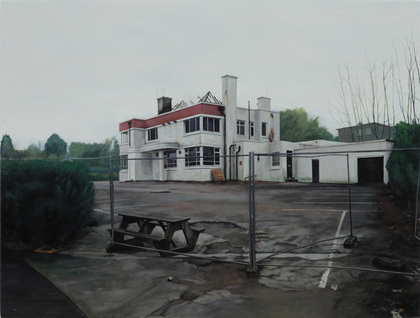
I always take an interest in art’s biggest bauble, the Turner Prize, and usually have my favourite entrants, but for once, in 2011, I was actually excited about a nominee. It was through the prize I learned about the work of George Shaw, comprising of paintings, in Humbrol enamel model paint, of seemingly insignificant places in the area of Coventry where he grew up.

Occasionally, something just speaks to you. I’m not from Coventry and my feeble attempts at Airfix as a child were limited, but his representation of abandoned pubs, bent fences, tatty lock-up garages and scrappy woodland appealed greatly to me. There was a personal recognition that the landscapes he was painting looked similar to where I grew up, but more importantly, and why I wanted him to win the Turner, was that his work felt so representative of where the UK is now as a country.

This is not to disparage Turner winner Martin Boyce’s work, which I also like. However, Shaw’s paintings seem much more significant, almost like a stark acknowledgment of a Britain brought back down to Earth after what Adrian Mole writer Sue Townsend brilliantly referred to as ‘The Cappuccino Years’. The time when we pretended everything was getting better in new modern sophisticated Britain, when really they were getting worse, covered only briefly by froth on the surface now swept away.

Coventry, like pretty much everywhere outside the South East of England, has suffered economic decline, in particular in its once thriving car industry. However Coventry’s decline was not in a dramatic, easily aesthetic way the likes of Liverpool and Glasgow did in the 1980s; cities picked apart by so many ‘social realist’ photographers and documentary makers.

Coventry’s decline was slower, almost unknowable. A breaking apart, due to various factors, of economic, social and cultural ties, something that has now enveloped much of Britain, from Dundee to Burnley, Ipswich to Plymouth. Shaw’s Coventry is neither the ‘gritty’ inner city like East London, places for the latest crop of art students to colonise, nor the ‘quaint’ leafy suburbs, but the area in between. Places where the hope of the post-war settlement, of new housing estates and modern factories and a better, more stable, more egalitarian world has decayed. Places confused, liminal, unsure of what anything means any more or where things are heading. The Britain that I know, the Britain David Cameron hasn’t got a clue about.

That’s not to say ‘The Cappuccino Years’ that led us to now didn’t have their plus points. For those of us in the arts it was a boom time. Galleries expanded and spread, audiences grew and diversified, there was cash for ambitious projects, and art entered more into the arena of mainstream culture. Now though, when I look back on so much of the work that was created at this time, at least that which dominated the public consciousness; the infamous Young British Artists, all those big public sculptures and the Tate Modern Turbine Hall projects. Grand visions assembled by armies of fabricators with money no object. Even if I like such work and still value it, I can’t help but think back into art history.

Back to the turning of the 19th century into the 20th, of the Fin de siècle, the Viennese Secession, the beautiful decadent work produced at the zenith of a culture that would soon collapse in on itself. A high point before everything that was solid melted into air, transformed by technological advances, war, depression, revolution, social change and scientific discovery. I look back and ponder that we might now be at a similar point again.

The sheer lack of monumentalism in Shaw’s work seems to me to represent the UK now. A country humbled from its arrogance that its laissez-faire, sado-monetarist system should be embraced by the world and that real industry could be replaced by finance and the ‘Cool Britannia’ cultural industries. Shaw shows instead the reality; a Britain cracked, dog-eared, confused, battered, half-shod, but in a way that is sublime and truthful rather than bleak.

His use of Humbrol model paints is also resonant. An everyday product that most people must have used at some point as children, Humbrol was once manufactured in Hull. Now it is produced in China and its old plant stands abandoned and boarded up. Hull being another place in the UK that has suffered slow, quiet, decline, ignored by those in the ever faster spinning wheel of the City of London, a wheel that has now fallen of its axis.

It was great seeing musician and former graffiti artist Goldie on Channel 4’s Turner Prize coverage from the Baltic in Gateshead. The very fact that the Turner prize was held in Gateshead, shown on Channel 4 and partially presented by Goldie is a positive product of the last ten to fifteen years, of art’s increasing popularity and expansion out of the capital and, to an extent, out of elite circles. Goldie’s open enthusiasm for fellow West Midlander Shaw’s work was also great in contrast to fellow presenter Matthew Collings, looking like Karl Marx and talking the usual jargon.

Shaw at least has been given a solo show in the Herbert Museum in Coventry, and like all Turner nominees, should see his work grow in popularity and price even though he didn’t win. Hats off to Martin Boyce, but we’ll see in decades, who was making the more important work, the work that captured the spirit of our age.

This piece appeared at a-n Online in January 2012.