Breaking Apart, Coming Together

By Kenn Taylor

The idea of community, or the lack of it, has become a modern-day obsession. Something that was taken for granted for so long, and frequently resisted, many people now seem desperate to get back.

This is perhaps the inevitable legacy of the second half of the 20th century. An era dominated by the individual. An era, largely in the West at least, of rising wealth and opportunity, and of freedom as an ideological counter point to the enforced community of Communism.

For many people now though, in particular since the turbo-individualism that flourished from the 1980s onwards, it seems that we have gone too far, that we have lost something. A view perhaps most often applied in the UK to urban, former industrial communities.

Now a few years in to the 21st century, if we look at any such community and the things within its fabric that defined it, we may find much loss. Churches, local shops, Pubs and social clubs so often have closed as areas declined and ways of life changed. Local industries too, not only a source of wealth but frequently of pride and identity, have also largely succumbed. To be replaced, if at all, by the anonymous sheds of supermarkets, distribution warehouses and call centres, or perhaps the odd foreign-owned assembly plant.

Even the home, the basis of community, has not been spared. In many urban areas outside London, there are often whole streets of abandoned houses were the population has dispersed in the face of lack of work, failed urban policies and social and cultural decline.

The deterioration of such communities is often painted simply as a picture of 1980s Thatcherite policies destroying industries and, by proxy, the communities and cultures that were largely defined by them. This is indeed a huge part of it. In this period, the enforced unemployment and fracturing of traditional peer structures, based on trade unions, apprenticeships and the like, helped to break the patterns of life that had united people for centuries. However, the fact is that increasing post-war wealth and opportunity also played its part in eroding such communities.

As people became wealthier, wages doubled between the start and end of the 1950s, coupled with the support given by the welfare state, people began to need each other less. This combined with relative peace, technological advance and a young, expanding population, also helped lead to increased liberalisation in the 1960s in everything from censorship to religion to sexual morality. As the often oppressive structures that bound people’s behaviours loosened, this created more opportunity to act as an individual against control, be that from your parents, employers, the church, or the state.

In this era, with many people for the first time being able to maybe afford a house with a garden, a car, a washing machine, a foreign holiday, perhaps even sending their children to newly expanding universities, many became convinced that, if allowed more freedom and relieved from the burdens of tax and regulation, their life could be even better. This increase in individual wealth and freedom saw many people who would have previously voted Labour turning to the Conservatives at the end of the 1970s. Labour politician Tony Benn even commented in 1971, “The individual escape from class into prosperity is the cancer which is eating into Western European Social Democratic parties.”

Of course, that was all based on rising and spreading wealth and opportunity. Even though the Conservative administration devastated many communities and industries in the 1980s, across the UK in general, incomes actually rose. North Sea oil and the money generated from privatisation allowed for tax breaks and new opportunities for many who were not trapped in declining industrial towns and cities. Such places were written off by many, the government included, as having ‘failed to adapt’ and thus responsible for their own decline.

Now of course, there’s nothing left to sell, the oil is running out, and places that escaped the worst ravages of Thatcherism in the 1980s now also find themselves staring into the abyss now their industries and communities have also declined. Wealth and opportunity is shrinking and many of those who had done well in these times are now seeing their children and grandchildren denied the opportunities they had, and face a society that seems darker and harsher than they could have imagined a few years ago.

As family, work, class, cultural and religious structures that held people together declined, this lessened the ability of society to influence people to behave in way that wasn’t wholly selfish. This was further pushed by the ‘Bling’ culture which has prevailed since the Thatcher era. Initially this was the preserve of the Yuppies and entrepreneurs who prospered in the new economic liberalism of the 1980s. Eventually though, this culture trickled down to ordinary people and fame, status, money, power and the pleasure and will of the individual were elevated to all that mattered.

Thatcher removed the enemy of her ideology by destroying the unions and industrial communities, but this has come back to haunt those who believed this would see the return to a more stable and acquiescent society. Firstly such destruction created despair, which saw many industrial communities overwhelmed by Heroin addiction, and then later, almost its counterpoint, Ecstasy, and the raves that occupied the abandoned industrial spaces and represented new hedonistic communities for those deserted by the decline in old ways. Both these phenomena led to the ugly expansion of criminal gangs, now capable of making much higher profits through drugs, who now offer a seemingly easy route to money, power, status and belonging for those with few other opportunities, filling the vacuum in many communities left by the decline of previous power structures.

Today, we seem to have reached a turning point. Perhaps not a conscious one, but just like the changes brought about by rising wealth, an inevitable one. The money has run out, the opportunities for the individual have declined and many people are perhaps waking up to what has gone, and just how much we really rely on each other. Yet, in wishing for old ideas of community to return, we must also be careful not to look down those terraced streets with rose-tinted spectacles.

It is ironic that 150 years ago, so much art and literature was created at the Victorian height of the Industrial Revolution about how horrible urbanisation and industrialisation was, and how it had uprooted and destroyed rural life and created dysfunctional communities in dirty towns and cities.

From Romantic poet William Wordsworth to anti-industrial proponent of the Arts and Crafts movement, William Morris, and Pre-Raphaelite painters like John Everett Millais, many artists, despite frequently finding their patronage from those who had made their money in expanding industry, lusted after a rural, anti-modern idealism.

But for all its aestheticised harmony and idyll, the reality of life on the land was hard and brutal. Life expectancy was short, it doubled in the UK during the Industrial Revolution, and the idealism of the village masked the serfdom and ignorance that often defined such life. The newly developing industrial settlements eventually formed their own new culture and sense of community which, in time, became as normal as that which it replaced in the countryside.

Now we find that, as they are declining too, many people romanticise industrial communities in a similar way. But for all the Silver Jubilee street parties that were held in now empty roads, there was also often domestic violence, alcoholism, vicious bullying and repression that went on behind the net curtains. The uncomfortable fact is that feelings of community are to an extent always based on the adoption of a form of collective identity and the exclusion of that which is different.

From the Rock and Rollers of the 1950s to the Ravers of the 90s, we should not forget all the brilliant art and human potential that has been unleashed by rebels butting against oppressive ways that rigidly bound people into narrow patterns of behaviour, alienating and often destroying anyone that differed from an oppressive norm. Individualism may have damaged community, but it allowed the potential of people to be who they wanted to be, and we should not forget that. Such liberty was hard-won.

We cannot go back to the way things were. Just as the new ideas of community were formed after the upheaval of the Industrial Revolution, communities in our Post-Industrial age will have new shapes defined by the circumstances of their own time. The ever-expanding rise of the online community alone means that things will never be the same again and, in time, this too may become as normal as the previous ideas of community it replaced.

Community is a two-way thing. We all to an extent feel the need to belong, yet we are all individuals. Too much community can be oppressive, too little leaves us isolated, vulnerable. When a way if life is broken, it is always painful, but it is part of the inevitable shifts of humanity, things go on, new structures are formed, and new ways of living become accepted. Rather than look back and wonder at once was or might have been, today in our ever more connected world, we should see what new communities we can form and perhaps how we can use them to look after each other that little bit more.

This piece appeared in Article magazine’s ‘Broken’ issue in April 2012. 

Culture as a Commodity

By Kenn Taylor

On a preserved section of the Berlin Wall, specifically the East Side Gallery, now used as a canvas by various international graffiti artists, I once saw written:

“I am claiming this space. I am defacing the visual record of a history which is not my own. But why not? This is now a site which has been split from the continuity of Berlin culture. It is heritage which belongs to tourist culture. We are recording our own history, here, now, and I was here.”

Quite a statement, one that made me think of my home city of Liverpool’s biggest tourist draw: The Beatles. While they were a product at least partially of Liverpool culture and do remain part of the local collective memory, there is also an undoubted and growing Beatles industry in the city. A cultural experience created to be sold to visitors.

Football is also going the same way. As much as Liverpool Football Club is still part of the city’s culture, it is now an entity that exists outside of it. A brand followed from Brazil to Thailand that is far removed from the streets of Anfield itself, and another tourist draw to Merseyside for those worldwide fans. Even Liverpool’s history as a maritime centre is sold to visitors via the museums and the souvenir books of the old docks filled with liners, the remnants of something that was once an actual industry employing thousands, now largely a distant heritage.

Since Liverpool won its bid to be European Capital of Culture for 2008 there has been an increase in attempts to package various aspects of the city’s culture to attract more visitors and boost its fragile economy. This has been met with some resistance from those who are wary of the city’s culture becoming commodified to serve the tourist industry and who fear that this might detract from the new, raw creativity in the city.

These may be local examples, but the same thing goes worldwide; that which was once part of active, live, perhaps even dangerous culture, becomes popularised, accepted, sanitised and sellable. Many places that have had their landscape and way of life represented by famous artists now find themselves selling back that expedience to visitors; the Yorkshire moorland of the Brontës, the rural Welsh communities of Dylan Thomas, Thomas Hardy’s ‘Wessex’ version of Dorchester.

Even St Ives, the Cornish fishing community whose remoteness from the metropolitan art world attracted sculptor Barbara Hepworth and others, is now a favoured second-home location of those same metropolitan elite, happy to be somewhere remote and pretty but also reassuringly ‘cultured’.

What was once real culture and lived experience, once transformed into art, becomes something that can be appreciated by others far away. Something people will come seeking so that they too can experience it. To be in the place that bore the art that they love.

Pushed to extremes, these things can be distasteful. Those seeking Bob Marley’s Jamaica can apparently purchase skin care products, headphones and even a Marley-branded ‘calming beverage’ licensed by his estate. While the recent book Eat Pray Love by American journalist Elizabeth Gilbert, detailing how she found love in South East Asia, has apparently sent thousands of other women to Ubud in Bali, Indonesia in search of their dream guy, much to the despair of some locals.

Yet it is also naive to pretend that any artist or any artwork can stand entirely outside of mainstream culture and the wider economy. If any art is of value, interest and importance, even if it is initially rejected or dismissed, however underground and alternative it may seem in the first instance, it will almost always be absorbed into the mainstream eventually. Often to be used in ways the original artist may never have imagined.

James Joyce’s seminal Modernist novel Ulysses, was banned for obscenity in countries across the world, only for less than a hundred years later the Irish national ferry company to name its huge flagship after it. A critic meanwhile once dismissed Claude Monet’s Impression, Sunrise thus: “Wallpaper in its embryonic state is more finished than that seascape.” I’m not sure about wallpaper, but Monet’s work is now certainly popular on everything from tote bags to place mats.

This phenomenon is especially strange when it happens in a short space of time. As I started university, the largely unknown graffiti artist Banksy painted a rat on an abandoned pub in a run-down part of Liverpool. Now less than ten years later, the city’s Walker Art Gallery has a sculpture of his alongside works by Rembrandt and Turner.

Such things may provoke aversion from those at the cutting-edge of culture, but we should acknowledge that today’s cult fanzine is the next decade’s collectors’ hardback edition, this year’s subversive underground film is the next decade’s National Film Theatre special screening. Culture may be at its rawest and purest at its beginnings, but it is constantly in flux, dying and reforming. One of the few ways to capture the fleeting, ephemeral nature of beauty in existence is to turn it into art and for ultimately it to become part of cultural history.

Attempts to preserve the spirit of any given place or way of life are often precisely at the point they are ending. Writer Rachel Lichtenstein even admitted that in creating the book On Brick Lane about that East London street’s raw culture, diversity and creativity she was unavoidably contributing to its gentrification as the latest hotspot for urban trendies.

There is almost an inevitability of locations with connections to great artists and artworks selling themselves on the back of their cultural links. Small places such as Shakespeare’s birthplace, Stratford-upon-Avon, or Grasemere in Cumbria, former home of William Wordsworth, who in his lifetime was suspected as a spy by rural locals, are almost entirely reliant on such cultural tourism to sustain them.

However, it can also be important for bigger places too. Venice for example was once a great centre of power, trade, technology and innovation, now it is a museum. All it has left to sell is what it once was. Similarly in the UK, York and Chester were the centres of power in the north before the Industrial Revolution, but with the growth of neighbouring cities they are now mostly forced to trade on their heritage.

Even Liverpool and Manchester are now also to an extent places which sell their culture to survive, be it The Beatles or Manchester United. The once brash centres of industrial and social change have become places to be looked back upon now such growth and production is mostly elsewhere. Like Venice the culture that once grew out of their economy and industry is now a vital part of their economy and industry itself.

And why not sell what they have? The case often made against this is that the tourist industry is a weak base compared to an industrial or business one. This may be true, but for all those keen to point this out, few are able to suggest viable alternatives, and a weak economy is better than no economy, which is what many rural towns and post-industrial cities face. A city like Manchester or Liverpool cannot rely on cultural tourism alone in the way somewhere like Grasemere may do, but it can form an important part of the wider economy.

After all, the art and artists linked to such places often to a greater or lesser extent exploited these localities, with artwork frequently inspired by the poverty or rawness of a place. So why can’t these places do the same back, especially when they often have few other options?

I do find the carbon copy of The Cavern constituted to lure visitors here in Liverpool sad when compared with the new, exciting venues in the city, but don’t we all like to visit similar things when in towns and cities abroad? Liverpool would be mad not to have a Beatles museum, even Hamburg, a city with a much more tenuous connection to them, has one. The Beatles are the greatest thing this city is ever likely to produce and we should rightly celebrate and acknowledge that. Liverpool also really needs the visitors, and once they’re here, it’s a hell of a lot easier to engage them in the contemporary culture also.

As for the difference between raw culture and that which becomes absorbed into the mainstream, surely what ultimately those of us who make ‘art’ of one form or another hope, even secretly, is that we may produce something that one day will be considered good enough to last beyond our own existences. To be preserved, catalogued and commodified and to become part of cultural history, even if we know few of us will achieve it. Maybe there is no better tribute to a great artwork of transcendent humanity to end up on a tea towel or a postcard on a student’s wall. Better that at least than for it to be lost to obscurity.

This piece appeared on The Double Negative in February 2012.

The Memory of a Hope

The boom and bust of Council housing and the Modernist ideal

By Kenn Taylor

“Ideology collapses and vanishes, utopianism atrophies, but something great is left behind: the memory of a hope”. Henri Lefebvre.

As a child, on every walk to and from my Primary School, I would pass a large plaque that fascinated me:

 The Woodchurch Estate

On completion will contain the houses and other buildings necessary to the fully developed life of a community of some 10,000 persons. The land was formerly part of the Royden Estate and was purchased by the Birkenhead Corporation in 1926. Building operations were inaugurated in 1946.

That plaque, on the first house built on the estate, I have no doubt helped spark what would become my fascination for history, a desire to know just why things were the way they were. Its hope, for a new community started a year after the end of World War II, also resonated with me.

Older, and my curiosity having pushed me towards an understanding of Modernism and social housing, I came to realise how standing on the edge of the valley where I grew up, between Arrowe Park and Bidston Hill in Birkenhead, it was possible to look upon the rise and fall of Modernist social housing.

The Woodchurch estate began construction immediately after WWII, a shortage of wood meaning metal windows and concrete ceilings where the norm. Despite this, they were pretty decent houses, built in a self-consciously cottagey style. The shops even had windows with ‘bullseye’ glass panels that suggested a vintage far earlier than the 1950s. They represented the optimism of decent, sound homes for everyone after the horrors of two world wars and the shocks of revolution, totalitarian dictatorships and the Great Depression. The same world shifting factors that, combined with technological advance, helped lead many artists and intellectuals to wish to break away from the past and create what we now understand as Modernism.

Estates like Woodchurch has their roots in the model industrial villages such as Port Sunlight, down the road from Birkenhead, developed by William Hesketh Lever for his soap factory workers, and the ‘Garden City’ movement that inspired Letchworth and Welwyn the south of England. Places that gave ordinary people far better living conditions than were the norm in Britain after the Industrial Revolution. In the post-war era, such estates were constructed en-masse to replace the vast amount of housing stock destroyed by the Blitz and cope with the rapidly rising population. The plan was to finally take working people out of the city centre slums that dogged Britain’s urban areas.

Banked by plenty of grass, with shops, schools, a park and a leisure centre, Woodchurch was a pretty decent place to grow up. The dramatic Modernism of my childhood church, St Michael and All Angels, a still-today stunning pyramid of aluminium, concrete and pine, seemed to represent the high point of the estate and the new ideals of the era; of light and space and new materials that would lead to a better society.

But if you look across to where the Woodchurch developed as time wore on into the 1950s and 60s, you can see where the dream began to fade as the idea of the ‘new village’ was lost and replaced with something much more stark. Instead of the earlier cottage-type houses, they now built maisonettes and tower blocks. Influenced by the visionary designs proposed by Le Corbusier and others, these structures were seen as the physical embodiment of the new society being fashioned after the war. Their new materials and designs were also easier and cheaper to construct than the earlier houses, making them popular with local authorities with tight budgets and growing populations. The neighbouring, later estate, Ford, now renamed Beechwood, was built at the zenith of such ideas.

Largely denied the facilities of Woodchurch, Ford/Beechwood’s green spaces were fewer and there were even more concrete towers and flats. The houses themselves were both structurally and aesthetically poorer. Modernist certainly, but built quickly and cheaply and with none of the heart or soul that went into St Michael’s Church. The estate was also more isolated its crime and social problems inevitably much worse. A 1984 World in Action documentary ‘On the Scrapheap’ highlighted its decaying fabric only a few years after construction. The Modernist dream of a better world through design had collapsed.

Thus in this largely unremarkable corner of North West England it is possible to look at the gradation between the start of the boom and then the end of the dream of post-war Council estates. What we must remember though, is that Modernism’s failure was not the root of its intentions; that of a better world for all, but that it ran away with itself. The human concern that had led to the development of such estates was lost in a zeal for new ideas, grand plans and overarching solutions. With supposed utopias developed by elites dropped straight from drawing boards onto fields often miles from everything their residents knew, and needed.

It wasn’t just the fault of architects and planners as some would have it, or even those often equally well-meaning local authorities who adopted their ideas, but that in the sheer mass scale of post-war rebuilding, the spirit of their intentions was lost. With the desperate speed in construction and limited budgets, the facilities, transport links and industry that had been vital to the success of the ‘factory villages’ and  ‘garden cities’ that such estates had been influenced by were lacking, often resulting in just banks of isolated, poorly-built housing. And, with the post-war boom waning and government policy turning away from social housing as a right for all, these issues were further compounded by lack of support and economic malaise.

Modernist social housing was the product of a hope for a better world. That hope was lost amongst the absolute self-belief in the righteousness of these new ideas and indifference to the needs and wants of people. The notion that just in building new housing to new designs in new locations, it was possible to remake society was both arrogant and naïve. Communities, human beings, are far more complex than that, and in their desire to “Make it new!” as Modernist poet Ezra Pound demanded, they forgot who they were meant to be building that world for. Both Woodchurch and Beechwood have now seen most of their later tower blocks and flats removed, but that first house, with its hopeful plaque, remains.

What we should take from this is that good intentions can be easily be lost in the fervour of a new idea. If any plans become too big, too inhuman, they risk forgetting why they began in the first place. We may like to revel in new ideas, new designs, new perspectives, but they should never be taken as gospel, for one day they too will be rejected. There is no endpoint.

Whilst acknowledging their failures, we must remember were such Council estates came from, the idea that ordinary people deserve a decent place to live. There may be no utopia possible, but there is always hope for a better world, even in the darkest of times, and it is perhaps in this that we find the real beauty when we look back on Modernism and social housing.

This piece appeared in Issue 17 of The Shrieking Violet in February 2012.


Reviewing the Regions

By Kenn Taylor

When Brian Sewell was asked if he was going to see the Gustav Klimt exhibition at Tate Liverpool, he replied: “But that would mean going to Liverpool. Liverpool’s awful. Nothing would get me there. They should dig a trench all round the place and pull it out to sea.”

Sewell is, of course, generally fond of such pathetic outbursts. However it is not an isolated incident when it comes to the media’s view of arts outside of London. The situation is so dire it prompted the then head of Bradford’s National Media Museum, Amanda Nevill to say “We still don’t get talked about or written about nationally. I sometimes think I don’t mind if they tear us apart, as long as they write something about us.” This lack of attention is shocking given the fact the venue attracts over 600,000 visitors a year.

When coverage does happen, more than once, I’ve seen broadsheet reviews give more criticism to the train service north than the show itself. Other alleged reviews are in fact opinion pieces about culture as a regeneration tool or the social and economic problems of any given region. Interesting topics that I have written about myself, but so often the exhibition itself is forgotten, as regions are used as mere fodder by metropolitan writers to peddle one ideology or another. I notice that coverage of shows at Tate Britain or the Serpentine in London does not tend to feature much comment on the latest tube strike or deprivation in Tower Hamlets.

The same goes for the frequently patronising coverage of arts institutions outside London in general. The media has been full of tut-tutting about financial and other issues facing newer regional venues like Gateshead’s Baltic and The Public in West Bromwich, but considerably less on the successes of places like the New Art Gallery in Walsall or Nottingham Contemporary.

Coverage of art in the regions is especially hilarious when it comes to reviewing the cultural festivals of various kinds that have sprung up across the country. When reading reviews from Venice or some other exotic locale, you can almost hear the hack smiling and sipping a glass of vino on expenses, while writing on some sun-drenched terrace. Just as you can hear the bitterness of the journalist typing up a review in Costa Coffee in rain-sodden Manchester, miffed that the other guy got the Lisbon Biennial gig this year. Of course it is easy to be impressed with weather and glamour that Britain can not offer, but what about the actual quality of the shows?

There is perhaps an inevitable ‘chip-on-shoulder’ defensiveness in regional arts institutions when critics attack ‘our’ venues, especially when it is such a struggle to get arts outside of the capital acknowledged at all. Nevertheless, I think most of us regional arts workers are capable of critical distance and our chip-on-shoulder is almost inevitable when consistently faced with such poor examples of journalism.

Not only is it exasperating for those of us who know the quality of some of the work being shown in regional Britain, despite the frequent malaise in the media. With critics often treating the regions as ‘other’, like some colony whose attempts at culture must be picked over anthropologically by the ‘educated outsider’. I think it also unveils something deeper and darker about our media: its lack of understanding of the Britain outside London and the narrow talent pool it so often draws its staff from. Perhaps the BBC move to Salford will shift this a little. We live in hope.

If you want to review art in the regions, commission local writers with better insight, even better, come and criticise, we can take it. But if you want to moan about the train service, write a letter to Network Rail and save the space to tell your readers about the artwork.

This piece appeared on Arts Professional in January 2012.

Why George Shaw should have won the Turner Prize


By Kenn Taylor

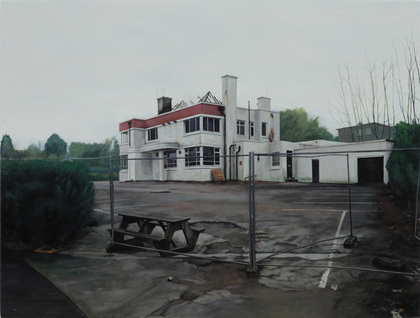
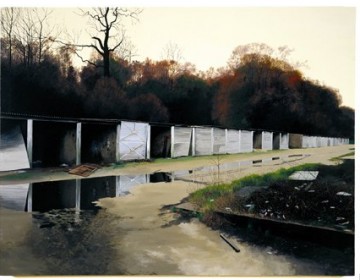
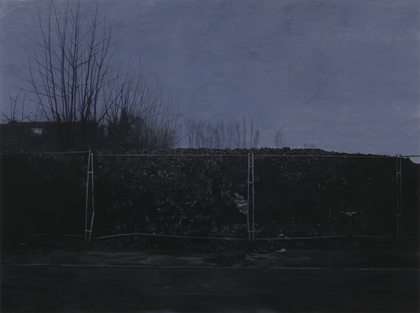
I always take an interest in art’s biggest bauble, the Turner Prize, and usually have my favourite entrants, but for once, in 2011, I was actually excited about a nominee. It was through the prize I learned about the work of George Shaw, comprising of paintings, in Humbrol enamel model paint, of seemingly insignificant places in the area of Coventry where he grew up.

Occasionally, something just speaks to you. I’m not from Coventry and my feeble attempts at Airfix as a child were limited, but his representation of abandoned pubs, bent fences, tatty lock-up garages and scrappy woodland appealed greatly to me. There was a personal recognition that the landscapes he was painting looked similar to where I grew up, but more importantly, and why I wanted him to win the Turner, was that his work felt so representative of where the UK is now as a country.

This is not to disparage Turner winner Martin Boyce’s work, which I also like. However, Shaw’s paintings seem much more significant, almost like a stark acknowledgment of a Britain brought back down to Earth after what Adrian Mole writer Sue Townsend brilliantly referred to as ‘The Cappuccino Years’. The time when we pretended everything was getting better in new modern sophisticated Britain, when really they were getting worse, covered only briefly by froth on the surface now swept away.

Coventry, like pretty much everywhere outside the South East of England, has suffered economic decline, in particular in its once thriving car industry. However Coventry’s decline was not in a dramatic, easily aesthetic way the likes of Liverpool and Glasgow did in the 1980s; cities picked apart by so many ‘social realist’ photographers and documentary makers.

Coventry’s decline was slower, almost unknowable. A breaking apart, due to various factors, of economic, social and cultural ties, something that has now enveloped much of Britain, from Dundee to Burnley, Ipswich to Plymouth. Shaw’s Coventry is neither the ‘gritty’ inner city like East London, places for the latest crop of art students to colonise, nor the ‘quaint’ leafy suburbs, but the area in between. Places where the hope of the post-war settlement, of new housing estates and modern factories and a better, more stable, more egalitarian world has decayed. Places confused, liminal, unsure of what anything means any more or where things are heading. The Britain that I know, the Britain David Cameron hasn’t got a clue about.

That’s not to say ‘The Cappuccino Years’ that led us to now didn’t have their plus points. For those of us in the arts it was a boom time. Galleries expanded and spread, audiences grew and diversified, there was cash for ambitious projects, and art entered more into the arena of mainstream culture. Now though, when I look back on so much of the work that was created at this time, at least that which dominated the public consciousness; the infamous Young British Artists, all those big public sculptures and the Tate Modern Turbine Hall projects. Grand visions assembled by armies of fabricators with money no object. Even if I like such work and still value it, I can’t help but think back into art history.

Back to the turning of the 19th century into the 20th, of the Fin de siècle, the Viennese Secession, the beautiful decadent work produced at the zenith of a culture that would soon collapse in on itself. A high point before everything that was solid melted into air, transformed by technological advances, war, depression, revolution, social change and scientific discovery. I look back and ponder that we might now be at a similar point again.

The sheer lack of monumentalism in Shaw’s work seems to me to represent the UK now. A country humbled from its arrogance that its laissez-faire, sado-monetarist system should be embraced by the world and that real industry could be replaced by finance and the ‘Cool Britannia’ cultural industries. Shaw shows instead the reality; a Britain cracked, dog-eared, confused, battered, half-shod, but in a way that is sublime and truthful rather than bleak.

His use of Humbrol model paints is also resonant. An everyday product that most people must have used at some point as children, Humbrol was once manufactured in Hull. Now it is produced in China and its old plant stands abandoned and boarded up. Hull being another place in the UK that has suffered slow, quiet, decline, ignored by those in the ever faster spinning wheel of the City of London, a wheel that has now fallen of its axis.

It was great seeing musician and former graffiti artist Goldie on Channel 4’s Turner Prize coverage from the Baltic in Gateshead. The very fact that the Turner prize was held in Gateshead, shown on Channel 4 and partially presented by Goldie is a positive product of the last ten to fifteen years, of art’s increasing popularity and expansion out of the capital and, to an extent, out of elite circles. Goldie’s open enthusiasm for fellow West Midlander Shaw’s work was also great in contrast to fellow presenter Matthew Collings, looking like Karl Marx and talking the usual jargon.

Shaw at least has been given a solo show in the Herbert Museum in Coventry, and like all Turner nominees, should see his work grow in popularity and price even though he didn’t win. Hats off to Martin Boyce, but we’ll see in decades, who was making the more important work, the work that captured the spirit of our age.

This piece appeared at a-n Online in January 2012.

Local and Global – contemporary art centres in the UK regions

There were many booms in the years leading up to the Credit Crunch, but one of the most visible was undoubtedly in the arts. After years of chronic underfunding by the previous Conservative administration, New Labour’s victory in 1997 saw a massive increase in funding for arts and culture in the UK. Museums were made free again, large-scale public commissions like Gateshead’s Angel of the North became commonplace and every city scrambled to organise a range of cultural festivals and open new arts facilities.

The increase in funding was especially prevalent in more contemporary, avant-garde and esoteric avenues. Up until this point, ‘modern’ art, especially the conceptual, was a largely London-based phenomenon. Save for a few brave regional municipal galleries and usually poorly funded ‘alternative’ spaces.

As the money ramped up, a plethora of new contemporary arts spaces was opened across the UK. Such facilities were promoted as the catch-all solution to a host of problems in these areas; combating social exclusion and economic weakness, regenerating derelict land, increasing tourist revenue and re-branding downtrodden areas suffering from negative stereotypes. This belief was encouraged by many of those that had been operating with success in the ‘alternative’ sector in the preceding years and held sway with local authorities inspired by the oft-quoted ‘Bilbao factor’, after the regional city in Spain that saw visitor numbers soar after it became home to a branch of the Guggenheim.

This trend of using public art galleries as a regeneration tool in the UK can be seen to have started in Liverpool. With the Tate pushing for more exhibition space, the then Conservative government directed them to open a gallery in Liverpool’s redundant dockland warehouses in the aftermath of the 1981 Toxteth riots. Tate Liverpool, which opened in 1988, has since provided a model for not only Tate Modern at Bankside, but also abroad, including the regional Pompidou Centre in Metz, France and Moderna Museet in Malmö, Sweden amongst others.

Tate Liverpool also helped to provide the inspiration for similar schemes across the UK and, since 1997, contemporary arts centres have been opened in Middlesbrough, Gateshead, Walsall, Glasgow, Nottingham, West Bromwich, Manchester, Wakefield, Sheffield and Margate amongst others.

The opening of such institutions was a success in many ways, and helped increase access to, and interest in, contemporary art across the UK. Yet, as this expansion trundled on, the flaws in such cultural regeneration plans became more apparent and problems began to set in. As contemporary art emerged in the regions it began to face tensions it wouldn’t have done in London, with its guaranteed middle-class art-going audience.

Despite the well-meaning behind the new arts centres, many quickly became accused of not bringing the regeneration benefits they promised and of being elitist islands of art in places that otherwise remained unchanged. Such centres were derided for being unreflective of ‘local’ culture, and of ignoring audiences beyond the artistic elite. Many were also criticised for only employing small numbers of highly educated ‘outsiders’ and ignoring artists in their vicinity in favour of international ‘star’ names.

Having helped begin the trend for culture-led regeneration in the UK regions, Liverpool was also the place were these issues came to a head twenty years later. The city’s European Capital of Culture celebrations in 2008 prompted many to examine the conventional logic of such schemes and the tension between bought-in ‘international’ culture and the reality for those living in many of these deprived towns.

Directors, Curators and Programmers have had to increasingly face this tension and criticism, and it has only worsened since the Credit Crunch. With local authority and Arts Council funding being cut and private sponsorship hard to come by, such facilities have had to increasingly justify their own existence much harder than they had ever done before.

As such, those in charge of these institutions are now undergoing a rapid re-assessment of their role and future sustainability in these changed times. They face a tough challenge of finding a balance between local needs, sound financial footings and high-quality artistic integrity.

Although difficult, this can be achieved with skilful programming, much in the same way that regional theatres have operated for years. A mixture of ‘blockbuster’ shows, experimental and risk taking shows and something with a local focus can all be done in a year. This must be coupled with providing opportunities for local artists and a proper engagement programme for the wider community that is taken seriously and not treated as an ‘add-on’.

Operationally too, there has to be a happy medium between employing the best staff from wherever, and enough local people to, not only provide opportunities that they would have once had to move to London for, but to help shape programmes with knowledge of, and concern for, local audiences and their tastes and quirks.

Achieving such a balance is not an easy task, especially in an era when budgets are being cut to the bone. The fear is that some will panic and sway their centres into lame, crowd-pleasing parochialism or, equally bad, rampant naked commercialism. While it is important for such venues to have different income streams such as corporate hire, becoming a conference venue with some nice, unchallenging stuff on the walls would defeat the object of its existence as a public arts institution.

These are challenging times for cultural venues, but they also represent a real chance to do things differently, to take the opportunity that has been created by opening such centres in deprived areas and for them to really make a difference, in artistic, social and economic terms, to their locality. The cuts should prompt a new openness and new ways of working, forming links across the community to provide programming for all.

Those institutions that don’t adapt can’t complain if public sympathy for their cause is limited after so much money was spent, and now so much money is being cut back from all areas of public life. Now can be the time of real flourishing for cultural centres in the regions, for those that pursue their own identity with focus and openness and have one foot in the local, one foot in the global, not merely be regional franchises of the international art word.

This article appeared in the September edition of Object of Dreams magazine. An abridged version also appeared in Arts Professional.

Closing Time?


By Kenn Taylor

“An epoch or a civilization cannot be prevented from breathing its last. A natural process that happens to all flesh and all human manifestations cannot be arrested. You can only wring your hands and utter a beautiful swan song.”

Renee Winegarten

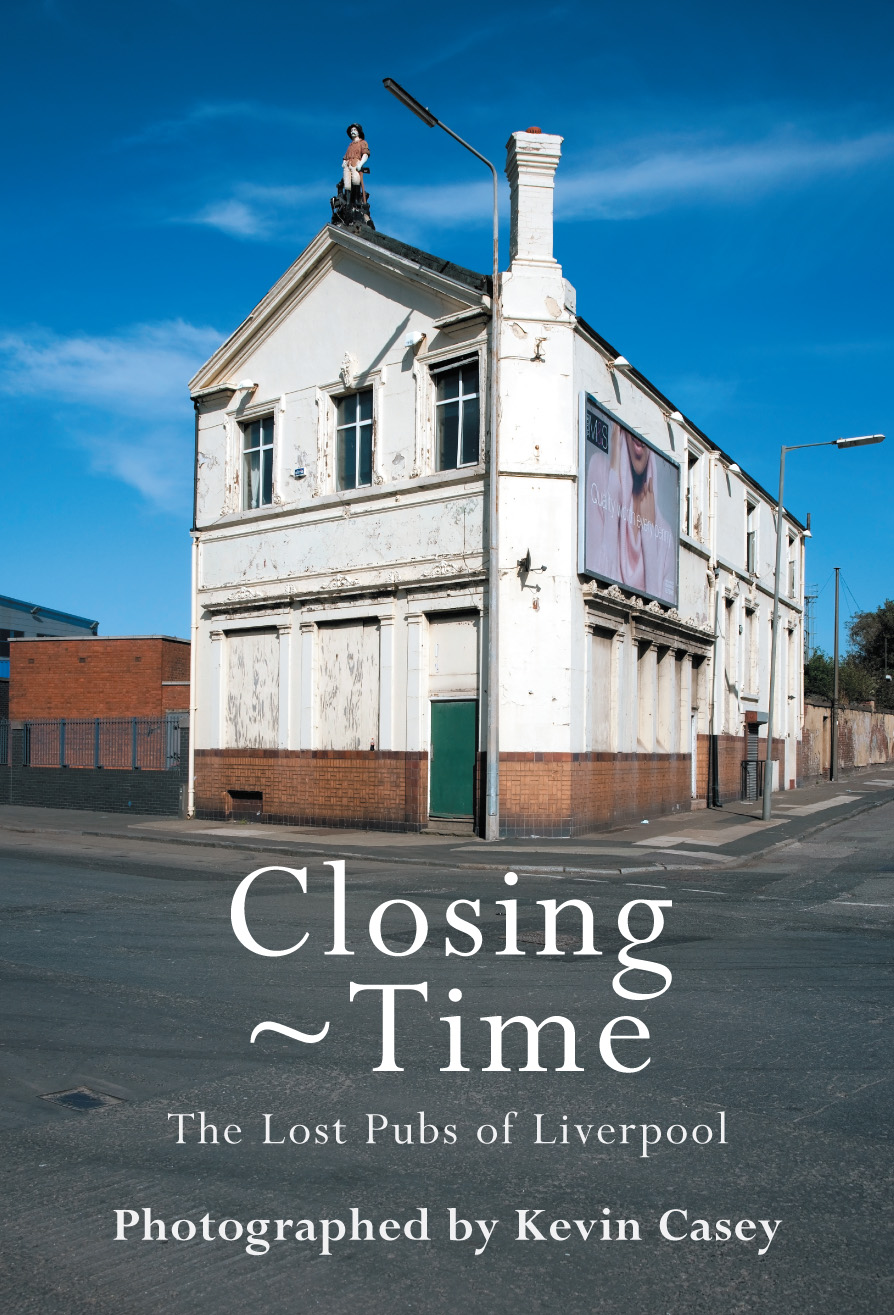
THROUGHOUT THE HISTORY OF PHOTOGRAPHY, the medium has often been used as a way of capturing what will soon be lost.There is a long tradition of photographers trying to preserve something of both landscapes and people at the point before they are gone forever. Kevin Casey’s images of abandoned public houses in Liverpool fall into this tradition.

These photographs are a systematic archive of the disappearance of what were once, both culturally and architecturally, a key feature of local communities across the country. They are also a lament, and a tribute, to what was contained within these public houses. After all, though we may admire old pubs for their cornices, brass rails, wood panelling and frosted glass, it was the life and community spirit that once existed within these now abandoned buildings that makes most people nostalgic for them.

These photographs are also a stark reminder of the urban decay that, far from being turned around by the regeneration schemes of the 1990s and 2000s, has continued apace in most areas of Britain. The uniformity in composition and the repetition of form in these images bring to mind the work of German photographers, Bernd and Hilla Becher. Except that while, in the 1960s, the Becher’s documented post-war industrial expansion and the increase of automation, here Casey documents the decline of Western industrial culture and the communities that relied on it. Yet, despite the frank depiction of the current state of these buildings, there is also a sense of empathy in the images. An empathy that could only come from a photographer native to Liverpool who had personally witnessed the decline of many of these pubs and their communities.

The number of pubs in the UK has long been in decline, as patterns of life and work have changed. However, the rate of closure has increased in recent years, with over 6,000 shutting down since 2005. Those that remain are now being battered on all fronts. The smoking ban, cheap alcohol in supermarkets, high tax rates on alcohol, problems with entertainment licences, big-money video gambling machines in bookmakers and the inability to tap into the lucrative pub/restaurant market have all hit many local pubs. Added to this is the domination of the pub industry by large, ruthless pub companies, keen to maximise their returns on supply charges and rent, leaving tenants struggling to make a profit. In turn, these power blocks of pub companies, with their collective buying and bargaining powers, are squeezing out the smaller operators. Above all, the deep recession we are currently experiencing, has driven down money for leisure right across the social strata, making people rethink how they spend their more limited incomes.

Pub closures in the UK peaked in 2008 and, although levels have since reduced, the number of pubs going out of business remains depressing. At the time of writing, closures are running at the rate of 39 a week, with a total of 2,365 pubs lost during the whole of 2009. This shocking rate raises a variety of big issues, from job losses and reduced tax revenue to abandoned real estate rotting away, but the effects are felt most in the communities that these pubs once served.

The Campaign for Real Ale (CAMRA) estimates about 40,000 of the UK’s 60,000 public houses are ‘community pubs’ – those which serve the people who live or work around them. CAMRA suggests that the benefits of having a pub in your local area include support for local charities and sports teams, having a space for social interaction and providing a place to drink in a safe, regulated and controlled environment. This shows the profound effect the loss of a local pub can have on a community although we should also be careful not to romanticise the local pub entirely. It is easy to look back with rose-tinted spectacles at the glazed tiles, wood-block flooring and frosted glass and forget that the tiles and wood block flooring were easier to wipe the blood and spit off and the frosted glass meant that the man of the house could drink away his wages unnoticed while his wife and children starved.

Even today, it must be acknowledged that pubs can also be a blight on a community, and many welcome the shutting-down of problem establishments in their area. There has been a history of some pubs being centres for criminal gangs, drug dealing and violent incidents, not to mention anti-social behaviour, vandalism and theft from those leaving the pub at the end of the night. For some urban communities, these pubs add to their many and complex problems, not help solve them.

This highlights the fact that the photographs in this book also reflect something wider, that of the changing nature of Britain’s urban communities in the 21st Century. From the Great Depression of the 1930s, through the 1960s slum clearances to the present day, photographers have been drawn to the inner-city and its people. Liverpool, in particular, with its striking urban changes, has often been a favourite subject.

So what does this latest survey of our changing urban environment tell us? What else can we see in the landscape where these abandoned pubs sit? It is not a happy story wasteland, boarded-up houses, crumbling industrial buildings, local shops as abandoned as the pubs. In some photographs, the signs of communities clinging on despite all of this can be seen, but nowhere in these pictures is thriving and, in many, the communities themselves are struggling as badly as the pubs on their corners.

It may not be a happy story, but it conveys a truth that reflects not just on Liverpool but much of the UK. These dead pubs are simply the most prominent examples of dying communities, a dying culture even. For generations, cities like Liverpool grew on the back of their commerce and industry. Now, as the industries have declined, the culture and way of life that surrounded them has slowly ebbed away, despite the best efforts of many within these communities. The Victorian architecture of the pubs, and the rows of terraced houses and industrial buildings that usually surround them, are a marker of a time past, a culture now gone, that will soon be as much a memory as the rural and agricultural Britain that the Industrial Revolution replaced.

As patterns of life and work change so inevitably will behaviour and culture. The consumer dream of choice that Britain has bought into has reduced the need for community pubs. Fifty years ago, in cramped family-filled houses with no central heating and limited home entertainment, the pub was one of the few escapes for many.

Now, why go the pub when you can buy cheap alcohol from the local supermarket, relax on your sofa, watch the match on your own big-screen television or play computer games, in the comfort of your own home for as late as you want?

There is, however, also something of a fightback on behalf of pubs. There have been many innovative solutions to stave off closures including co-operative community takeovers with pubs also taking on the role of general stores, cafes and even post offices. Most of these successes, however, have been in rural communities, often home to a wealthy commuting population. A CAMRA survey meanwhile suggests that over 80% of pub closures are urban.

In other UK cities, closed-down pubs have found new uses, everything from restaurants to money transfer facilities and even a canoe centre. There are some examples in Liverpool – one former pub in Seaforth has now found a new life as a branch of KFC, while another, The Clock in Everton, is now a successful community centre. Many more lie empty though, symptomatic of Liverpool’s perpetual economic malaise. Can these measures to save pubs succeed when the culture pub-going was based on has fundamentally changed? Can we, or do even want to, preserve in aspic what was a once-lively culture that is now in decline? Or, should we just accept that things will always change, and that there is a different future for drinking establishments? That will concern the traditionalists but let us remember that the grand ‘gin palace’ pubs we now revere, like The Vines and The Philharmonic in Liverpool, were viewed in similar ways by Victorian and Edwardian society as today’s media tend to view our ‘vertical drinking establishments’ – as garish and decadent places whose false glitz and glamour seduces the lower-classes to drink and doom.

Today, most young people in Merseyside prefer drinking in city centre-based bars and clubs and this poses problems. As much as drunken and violent behaviour happened in local pubs, the fact that they were still located within the communities that people lived in, with different generations drinking together, usually put a brake on such outbursts. City centre bars don’t have this self-regulation, and it has been suggested by the police that areas of concentrated bar development, such as Concert Square in Liverpool, actually intensify unruly behaviour by containing a large number of drinkers in a small area.

Concert Square was one of the pioneering developments in the UK for modern bars with dance-floors and outside drinking areas. Its developers advocated they wanted to give Liverpool the kind of ‘sophisticated’ outside drinking area that they had seen in Europe, and the development was replicated throughout the UK. Any visitor to Concert Square on a Saturday night could easily see that this has not come to pass, and that the violence and destruction that are features of weekend nights across the UK is at least partially a result of this failed aim. British culture is simply not like that of continental Europe and introducing 24 hour city-centre drinking will not covert British drinkers to slowly sipping a red wine on the terrace.

Liverpool might be the focus for Casey’s photographs but this city is merely at the extreme end of a national phenomenon. Social disorder and urban decay is prevalent, in varying degrees, from Burnley to Nottingham, Stoke to Newcastle, and Swansea to Ipswich. Leisure-led regeneration has been trumpeted as one of the answers to problems of urban decline since the 1980s but, once again, Liverpool has shown the rest of the country the error of its ways.

Since the credit crunch, the leisure-led regeneration myth has largely been debunked. Luxury flats, art galleries and shopping centres may improve cities but they will not, on their own, renew the communities that live next to them and, without wealthy residents to move into these new developments, they will not even replace those communities as they have done in places like London and New York.

Post-industrial cities of the kind that are now found throughout Britain are a relatively recent development. The future of urban areas, like the ones Casey has photographed, is uncertain. Many of these places, such as Kensington, Anfield and Seaforth, were once fields or sand dunes. In these pictures we can see grass and foliage slowly reclaiming what was once built over in the rush for a growth that is now retreating. Perhaps, one day, these streets will be fields and dunes again. Maybe the glass and steel bars that have transformed our city centres will eventually spill out into the districts that surround them. Yet, all of the issues that surround climate change seem to indicate that we could once again become more dependent on community. Most people seem to agree that we have lost something in our consumer-led, individualist culture that is unsustainable. Perhaps, then, the local pub has a future?

Indeed, it must also be pointed out that, despite this photographic survey, CAMRA recognises that Liverpool has, perhaps, the best collection of traditional pubs in the UK outside of London, though most are in the town centre and the wealthier suburbs.

The irony is that Liverpool’s poverty has actually helped preserve many of these pubs, which in wealthier cities would have been swept away by money-generating developments. These pubs, coupled with Liverpool being one of the few cities to retain an independent local brewery, Cains, has made the city a hotspot for ‘real ale tourism’ – a growth area for pubs. Real ale fans tend to be financially better off and might keep these pubs alive. Ironic, perhaps, that in the 1980s, it was the middle classes who appeared to favour the new style of bars over the traditional working-class pub. Whatever happens, this photographic survey of pubs, of Liverpool, of Britain’s urban environment in 2010, will remain a poignant document of its particular time. Casey’s efforts in scouring Merseyside for these buildings, in some cases on the day they were being demolished, are to be admired and have resulted in an important book that will be increasingly appreciated as more of our traditional landscape is lost in the coming years.

This essay was one of several pieces of writing by me that appeared in the book Closing Time (ISBN 9781904438854) published by Bluecoat Press in December 2010.

It’s time to drop the negative stereotyping of Liverpool

Liverpudlians are often accused of paranoia about how they are viewed by others, but it is little wonder when we see yet another broadsheet article about the city peppered with references to the Toxteth riots, militancy and striking dockworkers (Spending cuts: Liverpool facing ‘worse than the worst-case scenario’, 22 October). Yes, that is our history, but the city has moved on. The article opens with the line “Liverpudlians have long been exasperated at the persistence of the ‘gizza job’ tag bequeathed by … 1980s drama Boys from the Blackstuff”, and then goes on to tread over the same tired old cliches.

Even the picture that accompanies the report, captioned “boarded-up houses in Toxteth, Liverpool” despite the fact that only one of the houses in the image has boarded-up windows, serves to reinforce the bleak image that is given of Liverpool in the national press.

Particularly problematic is the continual negative focus on the Toxteth area “almost 30 years after a riot in 1981 became a symbol of the consequences of Thatcher’s policies”. That is not to deny the many problems that Toxteth faces, but it isn’t the most deprived part of the city; constantly referencing it as a touchstone of poverty only serves to reinforce the ingrained stereotypes the district faces. Do Chapeltown in Leeds or Birmingham’s Handsworth, also home to riots in 1981, receive this constant barrage of negativity?

Meanwhile, what is not mentioned is that around the corner from where the photograph illustrating the article has been taken are grand Georgian and Victorian mansions inhabited by property developers and art gallery directors.

The article touches on the city’s urban regeneration and European Capital of Culture status, but there is scant mention of the genuine economic development Liverpool has undertaken over the past few years. The Jaguar and Land Rover plant in Halewood is regularly hailed as one of the best car factories in the world; nearby is one of Europe’s largest printing plants, producing national and international magazines. The city is also a leading centre for computer games design, a growing biotechnology hub, the largest centre for wealth management outside London … I could go on.

It is true that these savage ideological cuts will hurt Liverpool. Like many regions in the UK, the city relies heavily on the public sector and suffers from a legacy of successive governments that have been happy to let its manufacturing sector fall by the wayside. In addition, cuts to the police force will undermine the work done to curb the destructive local gangs, and the loss of services will hit our poorest residents hardest. But there are ways of reporting this without consistently reinforcing negative stereotypes against our community and harking back to the city’s worst times.

The economy is still fragile but, unlike the last two recessions, there is still hope and growth in Liverpool. The city is in a better position than it has been for many years to weather the changes, and is much better off than other areas in the UK that didn’t do too badly in the 1980s. If the city is to survive and grow, it needs to receive more balanced coverage nationally. Commissioning more writing from rather than about the regions would go a long way towards this.

By Kenn Taylor

This article appeared in The Guardian newspaper on 11th November 2010.

The Journey Continues

One hundred and eighty years ago, Liverpool and Manchester became the first two cities in the world to be connected by a railway.

The driving force behind this was profit based on geography; Manchester’s damp atmosphere was good for spinning cotton and Liverpool’s proximity to the sea was good for shipping that raw cotton in and manufactured goods out. The railway shrunk the distance between the two, cementing their growth, but this was not just an important moment in the history of these cities, it was an important moment in the history of the world.

No industrial development has had such a sudden and transformative effect as the steam railway. It fuelled a revolution that not only changed the way we live fundamentally, but even the way we thought and perceived the world. Though the railways were built for freight and profit, they had the almost unintentional tandem effect of making passenger travel much easier and faster, speeding up communication and thus the spread of ideas, concepts, cultures, and, ultimately, change.

Information from London could be transported to the north of Scotland in a newspaper in a day. The slow shifts that would have once happened over many generations were replaced with a rate of change that destroyed old patterns of existence much quicker than anything had done before. The railway even revolutionised time itself, as scheduling led to the first standardised measure of time across the country. The effect of these changes can only be understood by us in the context of the transformative effect the internet has had in our own living memory.

This speeding up of the world was controversial at the time and many fought it, from William Wordsworth and John Ruskin to The Duke of Wellington, who feared that railways “will only encourage the lower classes to move about needlessly”. Doctors suggested that human organs could become displaced while travelling at these new speeds and farmers feared that thunderous locomotives running through the countryside would stop cows milking.

The last two never came to pass, but the railway and the Industrial Revolution it helped power did have ill-effects on countless people’s lives. Many migrated to the expanding towns for better wages, but found themselves working in dangerous factories for long hours, tied to the routine of a machine and living in squalid, cramped conditions. Yet the Industrial Revolution also freed people from the fields, increased wealth in general and, gradually, conditions did improve. Life expectancy increased and education spread. Despite the massive upheavals, people adapted, survived and prospered.

The human capacity for innovation and overcoming barriers continues to accelerate to this day, and we’re becoming used to it. We expect obsolescence and change, we expect newer, faster and more powerful. These forces driven forward by the intense development of technology and that most human desire it seems, always to advance. One hundred and eighty years ago a newspaper travelling from one end of the country to the other in a day was wondrous. Today the fibre-optic wires that carry the internet aid the transfer of information globally literally at the speed of light. The Industrial Revolution that the railway heralded has passed. We now live in an Information Age.

The Liverpool and Manchester Railway was a giant leap forward in the speeding up and shrinking of the world, but this has come back to haunt the towns and cities on its route. As the twentieth century drew to a close, industry in the Western world, and the culture that had grown up around it, declined and a post-industrial revolution swept across North West England.

Like the Industrial Revolution before it, this changed society immeasurably, and was also driven by technology and transport. The development of the container shipping reduced transportation costs so much that it became cheaper to make things in the Far East and ship them back through docks in southern England than it was to import the raw materials through Liverpool and make them here. Finally our speed of consumption overtook our speed of production.

Just as the Industrial Revolution was resisted by those who wished to protect old ways of life, as was de-industrialisation. Yet it seems that such revolutions are inevitable however much we may try to resist them. It can seem like the end of the world when such changes are ushered in, and for some cultures and some people, it unfortunately can be. Somehow though, in the end, humanity always seems able to adapt, survive and thrive in changed conditions. That is not to revel in the upheaval and destruction of ways of life, but to accept the inevitability of change and marvel at the continued capacity of the human race to move forward.

What then is the future for Liverpool and Manchester, who both rose up by creating a faster world only to be cast back down by it? Today, both cities are trying their best to be centres of the Information Age, with new developments on the sites of now long gone industry that aim for a high-tech future. Is this the start of a new age of success for the two cities? Or, was our age of consumption one to mark their end?

Edge Hill, on the route of the original Liverpool to Manchester line, is the oldest operational passenger railway station in the world. It is also home to Metal, an organisation trying to forge a new creative culture in the heart of an old industrial area. If anything can make the places that line the route of this railway relevant again, it’s new, creative, revolutionary ideas. Fostering such a culture can only help with the hope that these cities will continue, and that maybe even the wheel of history will turn in their favour once again.

Whatever happens, the journey continues. It never ends.

By Kenn Taylor

The piece originally appeared in the exhibition guide accompanying the ‘Dream Machine’ exhibition, held at Metal, Edge Hill as part of the Liverpool Independents Biennial 2010.  A digital version of the guide is also attached: Dream Machine Exhibition Guide – Metal

Come on feel the noize

There is currently a minor war taking place between the owners of one of Liverpool’s oldest nightclubs, the Blue Angel, known to many as ‘The Raz’, and the occupants of the block of flats which back onto it.

The situation has been rumbling on since the apartments were put up several years ago, with the residents unhappy about the level of noise being generated by the club. But a Facebook group in the club’s favour has attracted 5,000 members, and nearly 900 people have signed a ‘Save The Raz’ online petition.

Things took another turn this January, when the nightclub’s decks were seized by the Council. With no sign of them being returned, the Blue Angel’s owners were forced to expensively reinvest in a new soundsystem. If moves like this continue to hamper the club’s operation, it could be forced to close, ending a nightclub presence on the site of nearly 50 years.

The club’s appeal against the council order started yesterday (May 12). Solicitors representing the club argued that levels of noise coming from the venue have not been measured in a scientific way and that it is impossible to distinguish between the establishment and others in the area, which as a whole is always very noisy.

But Jonathan Eaton, representing the city council, said: “Although we accept residents can’t expect a Liverpool of tranquility associated with Belgravia Square or the open countryside, we have produced enough evidence to show it is a significant noise and interrupts sleep patterns. On no basis should these people expect to put up with it.”

Fun, cheap, tatty and unpretentious, the Blue Angel is unmistakably part of Liverpool. And when nowt but a few arty types and squatters lived in the city centre, such a complaint would have been unheard of. But as down town becomes full of apartment blocks, this could become and increasing problem – as the young urbanites living in these flats find that they aren’t getting enough sleep to be able to cut their big deals in new media public relations and city centre rental marketing in the morning.

Thing is though, what seemingly attracts people to living in town is the easy availability of thrills and entertainment, the vibrancy, the buzz, the bright lights and excitement. Well, all of that is generated by people having a good time, hitting the town and letting their hair down. And the thing is, it ain’t pretty, and it certainly ain’t quiet. Especially in this city were not only do we really know how to party, but where often the harshness of life means we need to party.

Worst case scenario – could we see these residents getting all the clubs in town closed, or forced to be quiet. Where would we go out ofnthe tiles then? Set up discotheques in West Derby? Night spots in Tuebrook? Town is ultimately for mixing, be that to buy and sell goods and services, or to find your life partner. And anyone who wants to buy into city centre living should accept that, though they may officially be residents, the central area belongs to everyone in the city.

If you want peace, go and rent a house off Lark Lane and pretend that the world is full of wine bars, trees and birdsong. If you want the excitement of living in town, accept that its going to involve putting up with a lot of cheesy disco tunes and relationship arguments at 3am, and broken glass and vomit when you go out for a pint of milk in the morning.

You can’t have it both ways.