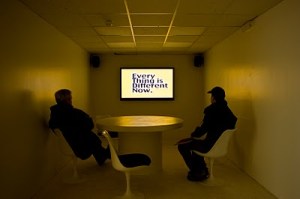
Winterpool

November continues to draw in, darkness now at five. Trapped, breathing steam onto the windows of the too full, too expensive, too slow, too unreliable busses and the kidz that throw stones at them. The city is adopts its winter persona and so do we.

Tis the season of the fat coat, no longer time to be marauding around the streets in a T-shirt. Instead buried beneath ever more layers, sweating at the centre but still frozen at the extremities, while dragging around gifts for distant relatives in bags that seem to cut harder up hills that seem longer.

Liverpool is good in the summer, it might make everyone go a bit madder, but it’s all easier to cope with. In the winter the cold and wet sloshes all the horror from out the cracks and everything that’s bad just seems to bite that bit worse. All the rain doesn’t wash the scum from the streets though; it just collects in deep, still pools that lie in wait to soak through your trendy trainers to your toes.

Cheap Christmas lights strung up add to the usual PIZZAS KEBABS BURGERS illuminated ambience. All lights are welcome at this time of year though. Even every grotty shop looks inviting when faced with the harsh realities outside, despite all being filled with people being worse to each other at a more concentrated rate than at any other time of year. This AND constantly blaring out a never-ending medley of BandAidWhamSlade. Only SEAN AND KIRSTY saves.

Festive crap bought, time to push on back to hibernate in the security of hearth and home. Except your house that seemed breezy and dreamy in summer, now struggles with the bitter chill of winter. The heating warms up at the speed that glaciers shift and then leaks straight out of the crappy windows as you sit back and watch the damp rise and the gas meter spin.

Still, even under a dozen layers you can always spot a friend in mutual distress and propose instead the other option. Go instead to a bar where everyone knows your name. And how much money you owe them. Here are people. Here is warmth. And here is beer. And the more beer is more warmth and more warmth with people and warmth to them and you can take your coat off and lower defences.

Everyone drinks harder and faster in winter. A beer jacket is another layer, a better layer. Around the round table in the corner, intoxicated by booze and by the very thought of intoxication, of hiding from the world in the company and the moment till WARM INSIDE, the best kind of warmth.

Stiff shots, the time of year is a great excuse. Stay on. Stay on. JUST ONE MORE. Outside offers only isolation and cold. Stay on. Stay on and have another one. And on. Till the bell goes and you’re booted out and there’s no where left to go. Except home, once a fear, is now so inviting, all its faults forgotten.

If you drink just enough the Christmas lights and the city get that sheen, reflections distorted in the moisture of the pavements, flashes of light and magick and the place might just be beautiful if you can catch the orange glow of a cab before the cold radiation eats through. Get home and sit down, huddle in that manky armchair and switch on the Christmas tree just for a bit to remind you of how boss it is with all the different light settings and there’s the Merry Christmas’ light up thing in the wet, wet condensation window and

They don’t work.

Fucking Home Bargains crap.

Merry fuckin Christmas.

By Kenn Taylor

This piece appeared in the Dec/Jan issue of Bido Lito! magazine.

The Land Between Us: power, place and dislocation

Whitworth Art Gallery, Manchester

Untill 23rd January 2010

The Land between Us combines a variety of landscapes from the Whitworth’s fine collection with a selection of more recent and contemporary works, examining landscape as a genre and the places and power associated with it.

In Olafur Eliasson’s The Forked Forrest Path, Birch and Sycamore branches are woven into dense forest, creating an entrance to the exhibition that is both playful and unsettling. Beyond this is a diverse selection of works ranging from a Rembrandt etching to Black Audio Film Collective’s Handsworth Songs.

A key theme is change; both in the landscapes themselves and who is representing them. William Holman Hunt’s idyllic Holy Land portrayed in The Plain of Rephaim from Zion, Jerusalem contrasts sharply with Larissa Sansour’s video work Soup over Bethlehem which examines the complex politics of contemporary Palestine.

Equally striking though are the continuities. J.M.W Turner’s rendition of Conway Castle, Caernarvonshire, a structure built in the 13th century to control and monitor local people, sits adjacent to Donavan Wylie’s South Armagh, Golf 40, West View 2007, a photograph of a British Army watchtower in Northern Ireland constructed for a similar purpose in more recent times.

By placing these works next to each other, the exhibition forces the viewer to confront the tensions between them and to look beyond to the power structures that influenced them. It’s a simple idea but creates a context for a radical re-examination of these works that manages to be both subtle and intellectually challenging whilst remaining accessible.

The Land Between Us is a curatorial marvel that should be viewed by all interested in the art and politics of land and landscape.

By Kenn Taylor

This review appeared in Aesthetica magazine December 2010.

It’s time to drop the negative stereotyping of Liverpool

Liverpudlians are often accused of paranoia about how they are viewed by others, but it is little wonder when we see yet another broadsheet article about the city peppered with references to the Toxteth riots, militancy and striking dockworkers (Spending cuts: Liverpool facing ‘worse than the worst-case scenario’, 22 October). Yes, that is our history, but the city has moved on. The article opens with the line “Liverpudlians have long been exasperated at the persistence of the ‘gizza job’ tag bequeathed by … 1980s drama Boys from the Blackstuff”, and then goes on to tread over the same tired old cliches.

Even the picture that accompanies the report, captioned “boarded-up houses in Toxteth, Liverpool” despite the fact that only one of the houses in the image has boarded-up windows, serves to reinforce the bleak image that is given of Liverpool in the national press.

Particularly problematic is the continual negative focus on the Toxteth area “almost 30 years after a riot in 1981 became a symbol of the consequences of Thatcher’s policies”. That is not to deny the many problems that Toxteth faces, but it isn’t the most deprived part of the city; constantly referencing it as a touchstone of poverty only serves to reinforce the ingrained stereotypes the district faces. Do Chapeltown in Leeds or Birmingham’s Handsworth, also home to riots in 1981, receive this constant barrage of negativity?

Meanwhile, what is not mentioned is that around the corner from where the photograph illustrating the article has been taken are grand Georgian and Victorian mansions inhabited by property developers and art gallery directors.

The article touches on the city’s urban regeneration and European Capital of Culture status, but there is scant mention of the genuine economic development Liverpool has undertaken over the past few years. The Jaguar and Land Rover plant in Halewood is regularly hailed as one of the best car factories in the world; nearby is one of Europe’s largest printing plants, producing national and international magazines. The city is also a leading centre for computer games design, a growing biotechnology hub, the largest centre for wealth management outside London … I could go on.

It is true that these savage ideological cuts will hurt Liverpool. Like many regions in the UK, the city relies heavily on the public sector and suffers from a legacy of successive governments that have been happy to let its manufacturing sector fall by the wayside. In addition, cuts to the police force will undermine the work done to curb the destructive local gangs, and the loss of services will hit our poorest residents hardest. But there are ways of reporting this without consistently reinforcing negative stereotypes against our community and harking back to the city’s worst times.

The economy is still fragile but, unlike the last two recessions, there is still hope and growth in Liverpool. The city is in a better position than it has been for many years to weather the changes, and is much better off than other areas in the UK that didn’t do too badly in the 1980s. If the city is to survive and grow, it needs to receive more balanced coverage nationally. Commissioning more writing from rather than about the regions would go a long way towards this.

By Kenn Taylor

This article appeared in The Guardian newspaper on 11th November 2010.

Bloomberg New Contemporaries 2010

A Foundation, Liverpool

Untill 13th November 2010

Bloomberg New Contemporaries is an open-submission showcase for art students and recent graduates, which takes emerging artists and their works out of the educational realm and places them within the framework of the “real” art world. The exhibition has a long-established pedigree, having been in existence in various forms since 1949, and it provides a rare opportunity for early career artists to get their work shown in a professional gallery context.

In 1996 the exhibition premiered in Liverpool, before touring to London and other venues across the country. Part of this year’s Liverpool Biennial, the show is once again airing at A Foundation, consistently one of Liverpool’s most satisfying contemporary art spaces.

Inevitably, with such a variety of work and artists on display, the exhibition feels like a graduate show, albeit a high quality one. This is however, not necessarily a bad thing, and it’s a refreshing exhibition. A Foundation’s huge Coach Shed Gallery is large enough to give generous space to each of the 49 artists featured.

A highlight is Sam Knowles’ series of works, which utilise the aesthetics of space. In Field (2009) star systems are painted over dozens of pages from books: novels, works of anthropology, philosophy and science. Elsewhere A Sectional View of the Endless Immensity (2009) is a complex map laying out an outline of both the mind and the universe. Reflecting on how we attempt to reduce the enormity of existence to technical diagrams and descriptions, it’s a complex, understated and arresting series of works.

Kiwoun Shin’s Dis_illusion_Coin_Faces (2010) features close-ups of various international coins being ground down. It is a particularly memorable piece, because it is simultaneously straightforward and yet uncompromisingly epic. Dis_illusion_Coin_Faces is continuously fascinating to watch, as symbols of power and wealth are repeatedly and relentlessly reduced to dust.

Another stalwart is the time-based work of Greta Alfaro. In Ictu Oculi (2009) unfolds as a static camera documents a flock of vultures descending upon and devouring a lavish banquet laid out on a table in barren countryside. The film is both engrossing and disturbing to watch, as domestic subtly is subjected to brutal animal reality.

Nick Mobb’s large photographs of sofas stuffed in doorways make the ordinary and industrial seem organic and uncanny. Elsewhere, Joe Clark’s mixed media piece Somewhere in West Virginia (2009) requires time in order to understand exactly how the “Mousetrap-like” set-up produces the image on view. Technical quality aside, the vision is atmospheric, but might have benefited from a darker, more isolated location.

Chris Shaw Hughes’ carbon drawings of aerial scenes, from petrochemical plants to housing estates are technical marvels, creating a shift in perception that makes the mundane monumental. At the opposite end of the drawing scale, Naomi Uchida’s Doodles on National Treasure Project (2010) is a surreal and finely drawn amalgam of fiction, fantasy and folklore, with the look of an ancient scroll created by an oddly contemporary hand.

New Contemporaries is a timely survey of upcoming talent, and it is encouraging to see the work of new artists given a decent platform, demonstrating that there are plenty of raw, talented artists to watch out for in the future.

By Kenn Taylor

This review was published by Aesthetica magazine in October 2010.

Liverpool Biennial 2010


Various venues 18 September – 28 November 2010

The Liverpool Biennial, now in its sixth incarnation, is the largest festival of contemporary art in the UK. It’s a huge undertaking that can only really be appreciated by walking around it. Every two years the city is literally filled with art in every conceivable place. Virtually every type of medium is represented by hundreds of artists from all corners of the globe.

The core of the Biennial is the International Exhibition, programmed by a myriad of curators to a singular theme, which this year is ‘Touched’. More specifically, the festival’s stated intention this time around is to showcase contemporary art that can allegedly transcend boundaries of culture, language, identity et al and move those experiencing it on an emotional level.

Bluecoat, the city’s oldest and perhaps most diverse arts centre, is as good a place to start as any. Some works hit home, like Nicholas Hlobo’s Ndize an enchanting and engulfing tactile installation which highlights the Biennial’s ability at its best to transform the city’s spaces and your view of them. However, others like Daniel Bozhkov’s Music Not Good For Pigeons, an uncomfortable amalgam of football, The Beatles and political militancy, highlight the Biennial at its worst – international artists attempting to respond to Liverpool and coming up only with cliché.

Tate Liverpool, usually the only Biennial venue to charge entry, is thankfully free this year. On entering Magdalena Abakanowicz’s Embryology, a large collection of different sized textile ‘rocks’ is visually pleasing and invites, well, touch. Unfortunately, as it’s now accessioned in the Tate collection, we can only look; a great disappointment to the children who run in to play on it. It seems touching has boundaries.

In the main gallery, Jamie Isenstein’s furniture and flame installation Empire of Fire left me cold. Better was Isabel and Alfredo Aquilizan’s model boat-building project with local community groups Passage which looked like it had been a great deal of fun for all involved, if not revelatory to look at. Tate’s is a diverse exhibition but not as strong as in previous years.

This year Open Eye Gallery has decided to focus on three works by Swede Lars Laumann. New commission Helen Keller is multi-layered and complex but ultimately not as rewarding for its considerable duration as 2006’s surely self-explanatory Morrissey Foretelling the Death of Diana, which manages to be equal parts engaging, amusing and thought-provoking.

FACT, frequently Liverpool’s most radical arts institution, this time around has two of the best works in the Biennial. Gallery 1 contains a recreation of Tehching Hsieh’s One Year Performance 1980 – 1981, which consisted of the artist getting up on the hour, every hour, for one year. Documentation of performance is frequently boring. This however is both aesthetically arresting and emotionally moving as the thousands of images and clock cards he used to prove it display clearly of all the ups and downs of his commitment laid out across the gallery.

Upstairs meanwhile is Yves Netzhammer’s Dialogical Abrasion, an installation which transforms the gallery into an uncanny, fractured environment; part Ghost Train, part Alice in Wonderland, part Michel Gondry outtake. Heightened by an accompanying animation and jarring sound and lighting effects, the work makes you question your own perceptions and, despite its alienating effects, you’re compelled to stay to explore its many different layers and moods.

One of the most exciting elements of the Biennial is its utilisation of the city’s abandoned and forgotten spaces. The focus this year is the former Rapid Hardware store on Renshaw Street. The store is vast but seems underused, attempts at theming different sections fall flat and works lie cobbled about here and there between not so old posters for bathroom fittings. Nevertheless, for the gems the building is worth taking the time to explore. A highlight is Ryan Trecartin’s Trill-ogy Comp – a trio of garish videos filled with extreme characters sliding through even more extreme situations, made all the more disturbing by being placed down the empty corridors of the shop’s the labyrinthine basement.

Elsewhere, in the former Scandinavian Hotel, Alfredo Jarr’s We Wish to Inform You That We Didn’t Know, an uncompromising filmic account of the genocide in Rwanda is a reminder that sometimes the unvarnished truth is the most moving thing of all. Less good however is Emese Benczùr installation on Lime Street’s abandoned Futurist cinema, now emblazoned courtesy of the artist with a slogan over the middle of it ‘Think About The Future’, an intervention considerably less poignant than the cinema’s own faded signage clearly illustrating its past glory and now insecure future.

For almost as long as there’s been a Biennial, there’s been an alternative fringe uniting under the banner of ‘The Independents’. This year though, a new initiative apart from this has seen most of the city’s major independent arts collectives come together under a new banner called The Cooperative. Taking over another abandoned shop, this venue serves as both a temporary gallery and event space and a central showcase for the exhibitions in each of the group members own galleries. It seems there’s always a fringe to add to the fringe.

Even then, there’s so much more. Outside of the main Biennial there are dozens of other exhibitions, events and initiatives which link to it. Even if you stay in the city for the festival’s duration and had unlimited free time, you’d be bound to miss stuff.

That’s not really the point though. Despite pulling in all sorts of different directions, there’s something admirable about the fact that, somehow, it all comes together, and this critical mass of art in a relatively small and still very poor city has to be appreciated. For every action of the Biennial there is a reaction and Liverpool, never one to have anything imposed upon it, becomes a hotbed of competing creative voices shouting to be heard and I can’t see it working in any other city in the UK.

But, bringing everything back to this year’s theme; did all of this work touch me? The idea of showcasing contemporary art that can overcome boundaries and communicate deep transcendental truths is admirable. But the word ‘Touched’ is suitably vague that curators have inevitably taken it to mean whatever they want. Even some of the best works seem only tenuously linked to the theme and many others are as obtuse as any art you can see anywhere. This is unfortunate, as the show could have been more radical and revelatory had it stuck more cohesively to this original intention. Despite this though, there’s enough work that shows, in the right hands, yes, the best art can shatter all of the bullshit that surrounds it and move you.

Perhaps then, this Biennial especially, is best appreciated by not trying to see everything, not reading the guidebook or the curatorial musings. Instead, just wander through the city, the art is everywhere remember, and see, what, if anything, touches you.

By Kenn Taylor

An abridged version of this review was published by Aesthetica magazine in October 2010 and can be viewed here.

The Journey Continues

One hundred and eighty years ago, Liverpool and Manchester became the first two cities in the world to be connected by a railway.

The driving force behind this was profit based on geography; Manchester’s damp atmosphere was good for spinning cotton and Liverpool’s proximity to the sea was good for shipping that raw cotton in and manufactured goods out. The railway shrunk the distance between the two, cementing their growth, but this was not just an important moment in the history of these cities, it was an important moment in the history of the world.

No industrial development has had such a sudden and transformative effect as the steam railway. It fuelled a revolution that not only changed the way we live fundamentally, but even the way we thought and perceived the world. Though the railways were built for freight and profit, they had the almost unintentional tandem effect of making passenger travel much easier and faster, speeding up communication and thus the spread of ideas, concepts, cultures, and, ultimately, change.

Information from London could be transported to the north of Scotland in a newspaper in a day. The slow shifts that would have once happened over many generations were replaced with a rate of change that destroyed old patterns of existence much quicker than anything had done before. The railway even revolutionised time itself, as scheduling led to the first standardised measure of time across the country. The effect of these changes can only be understood by us in the context of the transformative effect the internet has had in our own living memory.

This speeding up of the world was controversial at the time and many fought it, from William Wordsworth and John Ruskin to The Duke of Wellington, who feared that railways “will only encourage the lower classes to move about needlessly”. Doctors suggested that human organs could become displaced while travelling at these new speeds and farmers feared that thunderous locomotives running through the countryside would stop cows milking.

The last two never came to pass, but the railway and the Industrial Revolution it helped power did have ill-effects on countless people’s lives. Many migrated to the expanding towns for better wages, but found themselves working in dangerous factories for long hours, tied to the routine of a machine and living in squalid, cramped conditions. Yet the Industrial Revolution also freed people from the fields, increased wealth in general and, gradually, conditions did improve. Life expectancy increased and education spread. Despite the massive upheavals, people adapted, survived and prospered.

The human capacity for innovation and overcoming barriers continues to accelerate to this day, and we’re becoming used to it. We expect obsolescence and change, we expect newer, faster and more powerful. These forces driven forward by the intense development of technology and that most human desire it seems, always to advance. One hundred and eighty years ago a newspaper travelling from one end of the country to the other in a day was wondrous. Today the fibre-optic wires that carry the internet aid the transfer of information globally literally at the speed of light. The Industrial Revolution that the railway heralded has passed. We now live in an Information Age.

The Liverpool and Manchester Railway was a giant leap forward in the speeding up and shrinking of the world, but this has come back to haunt the towns and cities on its route. As the twentieth century drew to a close, industry in the Western world, and the culture that had grown up around it, declined and a post-industrial revolution swept across North West England.

Like the Industrial Revolution before it, this changed society immeasurably, and was also driven by technology and transport. The development of the container shipping reduced transportation costs so much that it became cheaper to make things in the Far East and ship them back through docks in southern England than it was to import the raw materials through Liverpool and make them here. Finally our speed of consumption overtook our speed of production.

Just as the Industrial Revolution was resisted by those who wished to protect old ways of life, as was de-industrialisation. Yet it seems that such revolutions are inevitable however much we may try to resist them. It can seem like the end of the world when such changes are ushered in, and for some cultures and some people, it unfortunately can be. Somehow though, in the end, humanity always seems able to adapt, survive and thrive in changed conditions. That is not to revel in the upheaval and destruction of ways of life, but to accept the inevitability of change and marvel at the continued capacity of the human race to move forward.

What then is the future for Liverpool and Manchester, who both rose up by creating a faster world only to be cast back down by it? Today, both cities are trying their best to be centres of the Information Age, with new developments on the sites of now long gone industry that aim for a high-tech future. Is this the start of a new age of success for the two cities? Or, was our age of consumption one to mark their end?

Edge Hill, on the route of the original Liverpool to Manchester line, is the oldest operational passenger railway station in the world. It is also home to Metal, an organisation trying to forge a new creative culture in the heart of an old industrial area. If anything can make the places that line the route of this railway relevant again, it’s new, creative, revolutionary ideas. Fostering such a culture can only help with the hope that these cities will continue, and that maybe even the wheel of history will turn in their favour once again.

Whatever happens, the journey continues. It never ends.

By Kenn Taylor

The piece originally appeared in the exhibition guide accompanying the ‘Dream Machine’ exhibition, held at Metal, Edge Hill as part of the Liverpool Independents Biennial 2010.  A digital version of the guide is also attached: Dream Machine Exhibition Guide – Metal

The Loud Return of Quiet People: The Pixies Reform

A man in the queue for the The Pixies reunion gig at Brixton Academy is asked why he thinks they broke up: “They were too good. They had to stop sooner or later.” And why he thinks they got back together: “They were too good. They had to sooner or later.”

Between forming in Boston in 1986 and splitting amid animosity in 1992, The Pixies created five albums from the combination of Charles Thompson’s distinctive wail and strange lyrics versus the drawling whisper and tickling bass of Kim Deal, the guitar brilliance of Joey Santiago and the precise, infectious rhythms of David Lovering. It was rock music so distinctive and powerful that it captured the hearts and ears of nearly all those who heard it.

Despite this, they achieved only moderate success during their first incarnation. Unlike so many other acts of their era, The Pixies never managed to crossover. Splitting up just as America’s alternative scene was heading into the mainstream. But celebrated by everybody from David Bowie to Radiohead, and eulogised in the music press, they became everyone’s favourite discovery. Never truer than when it was said about the Velvet Underground, not a lot of people bought their records, but everyone who did formed a band.

The playing of their song ‘Where Is My Mind’ in the closing scene of über-alt film Fight Club further helped introduce them to a new generation. And so when they began a reunion tour in 2004, it made them a lot of money, made a lot of fans happy and forced them to face their legendary status.

That reunion has been documented in loudQUIETloud, a film by Steven Cantor and Matthew Galkin. Its title coming from The Pixies oft-copied sound dynamic. Likely to be as close a portrait as we’ll ever see of them, we get to witness the triumphant shows and the devotion of their fans worldwide. But we also see the blisters, the boredom and signs of the tensions that broke them up the first time around. There is little high drama though. This is more a story of four middle-aged people dealing with their own problems and priorities, while coming together to reform a strange force they were once part of all those years ago.

A fan long before he filmed them, I ask Cantor if anything about the band surprised him when he finally got to meet them: “I think what was most surprising was how utterly normal they all were. I think they’ve all been humbled by the fifteen years since they broke up, so they were just really regular, down to earth, easy-going, approachable people.” Though this was to change as their confidence in their own status grew: “As the tour went on I think they kind of regained their rock star swagger a little, which was interesting to observe.”

We talk about one of the key things the film captures, the fact that the band hardly communicate. “Well I think it’s there in the film that they don’t interact with each other,” Says Cantor. “There is an amazing dynamic when they get on stage, they have this amazing electricity, this chemistry and you think they must love each other and love their music and love their fans. But if you’re privy to what’s happening backstage you sort of think, ‘Wait a minute everything that was going on stage must have been artificial, they don’t even talk to each other’. He goes on, “The Second they got of stage they went off in their own directions and said goodnight.”

But what of The Pixies own view of their staring role and return to the stage? After several calls, a “Can you call me back in five minutes?” and a “Can you hold on just one second?” I finally get to speak to Charles Thompson, AKA Frank Black or Black Francis. Apologies and explanations out the way, I ask him how he feels about his portrayal in the film. After a long pause he says:  “Mildly inaccurate but I kind of like it. I mean, it’s a documentary, they’re not just turning the camera on randomly you know. Even subconsciously they’re kind of looking for something that fits their hunch about you.” He continues, “But in a way, maybe it’s better. For once I’m shrouded in a little mystery and you know, jeez, I don’t think I’m a very mysterious guy.”

Twelve years is a long time in anyone’s life. Did he find it difficult to go back to the old band and those old songs after such a gap? “No it wasn’t difficult. It was difficult the first time around,” he says with a slight laugh. “Once we got over the stress that led up to it, the tension, the apprehension about it all, once we all got back together in a room and said ‘Hi’ it was like all those years apart were disappearing and we were like ‘What were we doing five minutes ago?’ except 5 minutes had been 12 years, so it was kind of surreal.

Their 2004 tour was one of the fastest selling shows in music history, but Thompson appears to be little surprised by the massive popularity of their reunion: “Even when we were nobody, playing our first gig to like 50 people, I remember there was this general kind of feeling of support from people we didn’t know and we were just this band starting out, tuning our guitars for five minutes in-between songs. But even then there was this kind of reaction like ‘Whoa, you guys are really special or something’ and people seemed amused, confused and delighted all at once and it’s always been like that.”

So does he feel they’re finally getting the recognition they’ve always deserved? “Deserve is not how I feel, I think it’s nice. I subscribe to the showbiz attitude of ‘You get what you get.’ If you’re blessed, then gather ye and say thanks and if your not blessed then try hey, try again, that’s showbiz.” He adopts a high voice, “Showbiz baby!”

Despite being cited as an influence by so many, Thompson refuses to be drawn about The Pixies legacy on music: “I’m the classic wrong guy to ask. I’m on the inside looking out and you and other people have that shared perspective that you can see things in this comparative kind of way. Whenever people bring up this ‘Oh, you influenced the so and sos’ I don’t really hear it. I hear rock music. Whether it’s Nirvana or it’s anybody, I don’t hear it the way other people hear it.”

He has his own views on what made them such a special band: “Erm, well of course there is my genius,” he says in deadpan tones. “But besides that my perception of things is that we are just regular people. Even if people exalt us, whoever it is, I think exalts us because we’re not up there trying to be all pretty, we have a diamonds in the rough kind of quality and people like that. People like an underdog you know.”  The Pixies – ordinary people who made extraordinary music.

By Kenn Taylor

A street off Smithdown

And so we continued. Outside is a slightly tatty street off Smithdown, but by now the yellowing curtains that covered the bay window were enough to isolate us from that day-to-day scene of Londis and Vauxhall Novas and purple bins. Those curtains obscured a view that could, for all we cared, looked out onto war-torn Iraq or the steamy streets of central New York or shimmering fucking glaciers because we are in our own world. The warm brown light from the old table lamp lights one corner of the room while a knackered, green lava job burns in the other and day or night we do not adjust these settings, rarely leaving the haven we had created for ourselves. There we fucked, mostly on the duvet and cushions in the corner which had accidentally become our bed, sometimes on the sagging grey couch or the debris-filled back kitchen from which the only outside light emerged. But that only consumed half of our energies.

In between we sit across from each other at the table in the middle of the room with the laptop and the old PC and the printer and type. And type. And type. Sometimes looking up from the screen and the darkened keys to glance and smile at each other in-between bouts. Quote something we were proud of, only to have it cheekily shot down as shit by the other. And every time I was turned sick by those deep fucking gems of eyes that offered much but revealed little. Stopping to skin up sometimes, passing bottles and spliffs across as we got lost in and what we’re consuming and the worlds we are creating, writing to the rhythms of Pendulum and Nick Cave and The Libertines and the wall-thumping of the neighbours. Every so often the passion for something other than Scotch and Microsoft Word consumes us and a glance of eyes leads to one of us taking a big swig and stalk over to the other and we put aside the words for a while to fulfil our other desire, other need, lost in the intoxicating path of creation.

The PC stopped working, broken when we were having a drunken rave. We think. So we now work shifts on the laptop while the other scribbles away in notebooks. She was more in her element there with her beautiful, flowing hand. With my spider scrawl, especially when pissed and trying to get it all out as fast as I could, I struggled to read back what I wrote. Getting the notebooks had required a rare trip to the shops and the suspension of the illusion. To queue in the harsh, fake light of Londis in clothes I don’t know how long since washed and receive under-the-breath “Smackhead” comments. But it was worth it, for now we pasted our work on the walls ever more, without telling each other what we had done, to be read at leisure for more amusement and delight and thigh-slapping shouts of “Yes!” prompting us into further bouts of passion.

The lights have gone out now. I penned a stern letter to the Merseyside and North Wales Electricity Board that I never managed to send before the battery went on the laptop. We barley noticed the turning of days and nights now, but continued to write and love and drink and merge and we sometimes got up to venture out but never quite managed it and things spun more and more and further and faster we could barley see each other anymore as we reached ever closer to something unimaginable as we began put our works together, but they became harder to find. Fragments got lost in the dark. We got lost in the dark.

I woke up and looked across to the table where I expected to see her writing but she wasn’t there. Was she here at all? I couldn’t tell. I called out but she didn’t answer. I called and called for her to find me and bring some light. There was some light coming through the crack in yellowing curtains but it wasn’t enough. I called until the bile and rawness choked my throat. I tried to get up, but my weakness dragged me back to the ground.

The next thing I recall was when they came. They opened the curtains and shattered the illusion. Stern faces carried me up and out.  I could see only a mess now. Smell only the detritus our creation had produced. I tried to call out to her again but nothing came.

I’m awake now. She is gone. I returned. They allowed me after I while. I wanted to get together all that we had created, make it what it as meant to be, but most of it had already gone. I sifted around but they had left only fragments. Fragments which on there own were but shadows of what we had formed. She had been devoured by what we had done, by longing and desire and darkness. And I had failed her by letting them separate us as we were about to merge. I’m awake now, but I am cold and alone, standing in a tatty street off Smithdown Road.

By Kenn Taylor

Liverpool Sound City 2009

Various venues, Liverpool – May 20-23 2009

These city-based festivals are becoming more popular of late. An interesting innovation, but they just aint like the usual field-based variety. It’s impossible to ‘lose yourself’ in the atmosphere when you have to traverse a city, go back to a hotel or home, constantly cross roads and non-festival people and get in and out of all kinds of different venues all other things like that. So they always end up just feeling like a massive concentration of gigs in a short space of time that you couldn’t possibly see all of, leaving you knackered and still feeling like you’ve still missed so much.

Still, if you going to try anything like this in the UK, Liverpool is the place. Compact, easily navigable, and with a mood in its population somewhere between the sublime and the ridiculous, it’s the nearest you’ll get to a festival atmosphere in the middle of a city. Of course, as the organisers are keen to point out, this isn’t just a series of gigs, as there’s all kinds of talks and debates and blah blah blah. But we’ll leave the ‘industry’ machinations to those with their noses more firmly in the trough. EMI, NME, BPI and BBC may be imploding, but there will always be music and who-da-fuck cares how we ingest it.

So many bands, so let’s just pick out some highlights you might have missed. Headlining Static on the Thursday we have Wave Machines (pictured), Liverpool’s best little-known band. There, I’ve said it. Three of them share vocal duties and make sometimes epic, sometimes delicate songs with a mixture of unsanded jangly guitar, taut rhythms and deft keys. Most of their output is instantly catchy and sticks in the mind long after. They’re lo-fi much of the time, but unafraid to go for the oomph occasionally, and recent single ‘Keep the Lights On’ is almost Scissor Sisters in style. They end on the sweet and catchy ‘Punk Spirit’.

Maps, Northampton-based musician James Chapman, first caught our attention with the laconic indie electronics of 2007 debut ‘We Can Create’. He must be keen to get promoting that second album though, as Maps come on in Static well early. The second surprise of the night is their ‘new sound’, less dreamy keys and more hard-edged beats. This change of direction was signaled by recent single ‘Let Go Of The Fear’, and judging by this show that certainly isn’t a one off. We’re more bemused than anything, having signed up for a chilled-out rumination not a hepped-up semi-rave. Still, Maps have not settled for standing still and have ramped up their sound with ease. We can’t wait to hear what the album sounds like.

In the basement of Monochrome, one of the city’s newest venues, we find where Clinic has been buried. A cult success worldwide, they’re still little known in their hometown of Liverpool. They still play in the masks and surgical suits they’ve had since ‘IPC Subeditors Dictate Our Youth’ was made NME Single of the Week back in the mists of time when that was important. And, indeed, behind the masks they continue to produce the same uncanny funk, esoteric grooves and odd vibes. They take us down dark and interesting avenues and keep us dancing on the edge to how those grooves will shift. But those interesting avenues remain side roads and those edges merely kerbs a few inches off the ground. Which is probably why, despite their originality that they stay out of the mainstream.

A few gems in a fine city. This show can stay.

By Kenn Taylor

Sound City 2008: Hadouken! Crystal Castles, Does It Offend You, Yeah?

Liverpool Carling Academy

Tuesday 27th May 2008.

By Kenn Taylor

As they have a tendency to do, sections of the nation’s youth, influenced by the media and the never-ending angst of adolescence, have formed a new tribe with strange customs based on ancient alternative ways of life. The organisers of Liverpool’s Sound City event ‘SXSW without the sunshine’ have handily assembled some of the deities of the movement together in one place for our thorough examination. Tonight DiS descends into the Heart of Darkness, otherwise known as the Carling Academy, an errand boy send by a grocery clerk to collect the bill.

Your correspondent has heard rumours that these nu-ravers ritually commit suicide at the age of 18 by ingesting a glow stick, in order to avoid the corrupt and grey adult world. This we can’t confirm, though there are many strange activities in evidence, such as them grinding their teeth incessantly and sucking at the ‘NOT DRINKING WATER’ tap in the toilets like it is dispensing ambrosia. Welcome to the new society, it’s like Lord of the Flies but with a box of Shamen records instead of a pig’s head.

Does It Offend You, Yeah? are the first act we witness. The yeah says it all. Yeah, Yeah? YEAH! We don’t care what you think! We have come to pollute your sickening, simpering world with our big beat electro Chemical Brothers lite. There are no subtle nuances here. This is in your face party music for a new generation. If rave was society’s response to Thatcherism and de-industrialisation, then maybe this new version is its response to global warming, terrorism, American Imperialism and all that jarg. Big overwhelming things require big overwhelming responses, and Does It Offend You, Yeah? are not short of power and force. Unfortunately, they’re also all shoutyness and no actual heart, head or balls. They do show some skill and promise when they push things away from the band set up and into the realms of screaming disjointed electronica. If they’d only stop ramming the keyboards hard up your arse for five fucking minutes. Is not that offensive really guys; it’s bland and lacking in ideas.

We hang fire for Hadouken! another band for whom an in your face name, fuck you attitude and loud, simple sounds just isn’t brash enough. They’re also heavily into the use of the kind of colours that you normally only find in the ink reservoirs of highlighters. Musically we’d hazard a guess that they ‘listen to the same records’ as Does It Offend You, Yeah? It all feels glaringly similar live, big squeaky keyboard, rapid light beats and a few ‘Demo button’ sound effects. Hadouken! seem to have more to say though, possessing some easy-on-the-ear hip-hop phrasing that means they’re still just listenable when you’ve not drank more your own bodyweight in pissy Carling. The love from Hadouken’s fans seems more intense than for the other bands, and the dancing more frenzied, though they could all just be coming up at the same time. On pissy Carling of course.

“We are the wasted youth/We are the future” Hadouken! sing and it’s true. There is few from the industry at this event, few people over twenty in fact. The audience consists mostly of nice boys and girls from the suburbs. The ‘music biz’ are no doubt drinking to their health and watching some avant-garde nonsense elsewhere, dismissing this line up though they’d all be out of a job without it. And as they lig, the youth as ever give you hope. For there is much spirit and spunk in this music, and we’re going to need it in the future. But with our old heads we’re prompted to think, do they know their history? Do they care? Will they save us? Or will David Cameron ride into office with a thin strip of pink day-glo paint just underneath his left eye?

We descend the ‘suicide staircase’ into the depths of the Academy 2 to see Crystal Castles. A nu-rave band? We doubt it. There’s no ramming a keyboard up your arse here. More like force feeding you crunched up game-cartridge PCBs and pushing your face through the monitor-screen glass.  If Hadouken! are Super Mario, then this is some twisted little game put together in darkness by a disaffected GTA4 programmer in the early hours of the morning as a distraction from his incurable insomnia, a game that, once begun, has no end.  DiS no longer stands by maintaining a slight ironic distance. We jump headlong into the black. There’s no day-glo paint here, just intense white lights and that pocket rocket Alice Glass, who adds a violent humanity to Ethan Kath’s machine utterings. There’s a different atmosphere here than with the other bands, people are dancing on a more intense individual level. The other nu-rave acts seem to be about mindless but fun collective celebration, whereas Crystal Castles prompt more extreme, indefinable self-expression. This is not the finest performance of there’s we’ve seen, but after a slightly underwhelming debut album, Crystal Castles remind us of the possibilities of live electro music. Liverpool rave on.

By Kenn Taylor