By Kenn Taylor
Later this year, the town of Birkenhead becomes an art gallery. The Town is the Gallery, a large-scale, multi-venue programme will encompass everything from pop-up galleries and public art installations to workshops and participatory projects. Ryan Gauge, co-founder of organisers Convenience Gallery, says, “Using the town as the canvas, we’re working to achieve the aim that anywhere can be a place for arts and culture.” Taking place over several months, the programme will peak in September. “We have had contact from over seventy artists so far and we’re really excited by all the proposals,” Ryan adds.

On the Brightside, Convenience Gallery in Cahoots. Photo: Convenience Gallery
The Town in the Gallery will be something of a culmination of creative growth which has been building in Birkenhead, my hometown, over the last few years. Not so long ago, like many similar post-industrial places, if Birkenhead was mentioned in the media at all, it was negatively. Yet, there are some who are now saying The Future is Birkenhead, as a set of cultural organisations, plans and projects are shaping into something other areas could learn from.
The outfit which has perhaps blazed the biggest trail in the town is venue Future Yard. Attracting national attention for everything from its community ownership model to its training programmes – and for coining that tongue in cheek slogan, The Future is Birkenhead.

Future Yard. Photo: Robin Clewley
Craig Pennington, Future Yard’s director, details what drove its foundation: “There’s a huge wealth of artists from this part of the world. There was little in the way of support for artists and very little in the way of access to the industry for local young people. The idea was: stop thinking about a venue as a nice-to-have cultural asset. Think about it as an absolutely key anchor institution that can bring about dynamic and meaningful change in a place.”
That Birkenhead is now listed on touring schedules alongside much larger cities is powerful, but Future Yard’s impact goes beyond that. “Now 80% of the employed staff in the venue have come through our Soundcheck training programme,” says Pennington.

Photo: Robin Clewley
These however are just two examples of culture-focused developments making change in the town. If all goes to plan, within a few years Birkenhead will have at least two creative studio complexes with event and exhibition spaces; two sites dedicated to fostering wellbeing through creativity; a artists residency space in an former observatory; two new museums and a new park with spaces for cultural activities. For the most part, this is all happening in places that were previously empty or underused.
While these developments are happening in co-operation with the local authority, it’s significant that they are by and large being defined and led by grassroots organisations. This is in contrast other past examples of cultural regeneration in post-industrial places such as in Gateshead and Bilbao. Pennington says: “You have a small number of organisations with shared aspirations and ideas, but working in different ways and in different spaces. Clustering those geographically has had a profound impact.”
Another of those organisations is Open Door, which provides mental health support. Birkenhead, in common with many post-industrial areas, has poor health outcomes, so such a charity is vital. But how did they end up running the Bloom Building, which hosts everything from workshops and exhibitions to performances and events?

Bloom Building. Photo: Lydia Tweed
“Bloom is rewriting the rules around how the worlds of culture, community, social action and mental health can flourish together,” says Frankie Hughes from Bloom. “Reimagining not only common approaches to mental health, but also how culture can act as the catalyst for change and cultivate social value.”
Open Door are now planning an additional new facility called ‘Joy’ developed in partnership with a local NHS Trust. The aim is for it to be a national centre of excellence in how culture and wellbeing sit alongside clinical services. Development Director Ella Holland says: “Arts and culture will bring people to the centre; everything within it should all wrap around this central theme.”
In some ways, these developments should not be a surprise. Birkenhead had the world’s first municipal park and the first school of art outside London. It was also home to an important Arts and Crafts pottery and one of the few UK firms to produce fine tapestries. Creativity and urban innovation are rooted in its history, yet this has been obscured by the profound impact of its economic decline.
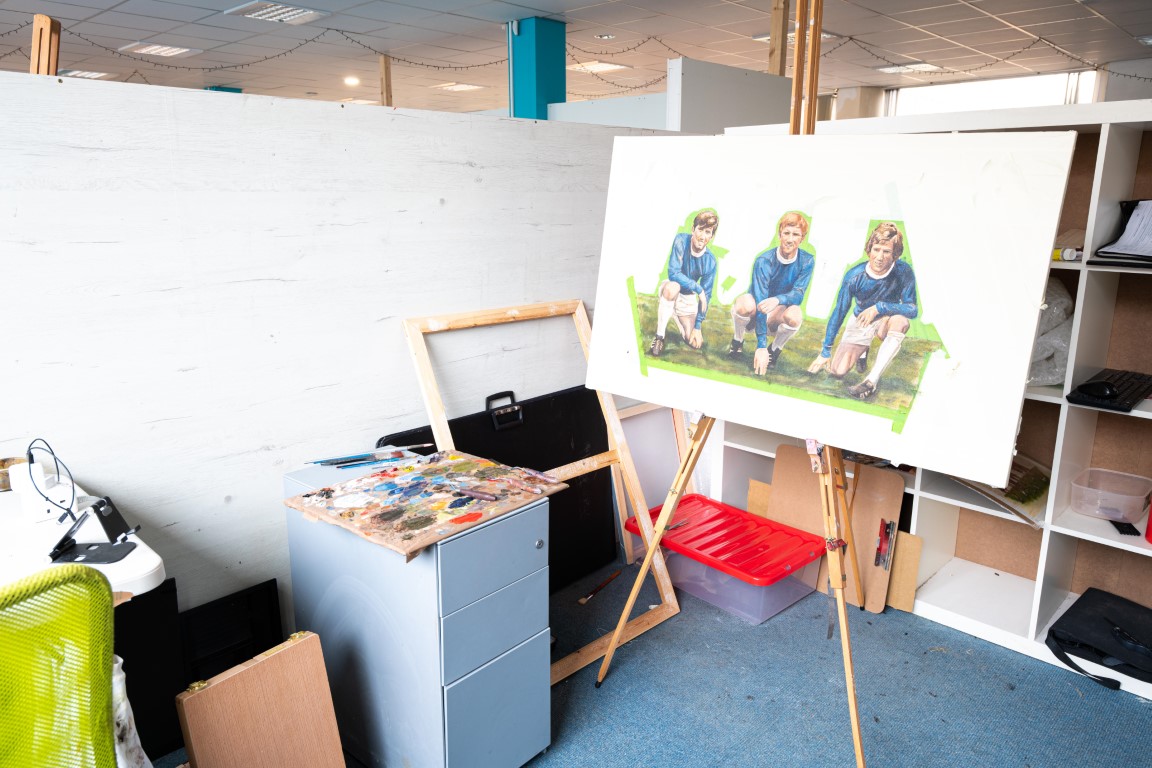
Make Hamilton Studios. Photo: Graham Smillie
The town’s history is the focus of another of Convenience Gallery’s projects. Ryan Gauge says: “The Uncovering Birkenhead’s Working Class History project is about championing local memories, stories and histories. Birkenhead is at a pivotal point in its cultural development and we want to ensure the people’s history is a part its future.” In the longer term, Convenience Gallery are also looking to open their own space.
All this cultural development isn’t happening in isolation; it’s part of a wider masterplan the Council say is the town’s biggest transformation since rebuilding after the devastation of WWII. Crucially, it does not fall into the trap of thinking that cultural projects alonecan regenerate a post-industrial town, as has happened elsewhere in the past. Connecting some of these developments up will be the new Dock Branch Park. Created from a long-abandoned freight railway line, the park will include space for outdoor exhibitions, installations, performances and education. As well as a new museum, The Transport Shed. These projects are particularly personal for me, as my dad worked for many years in the attached railway workshops.
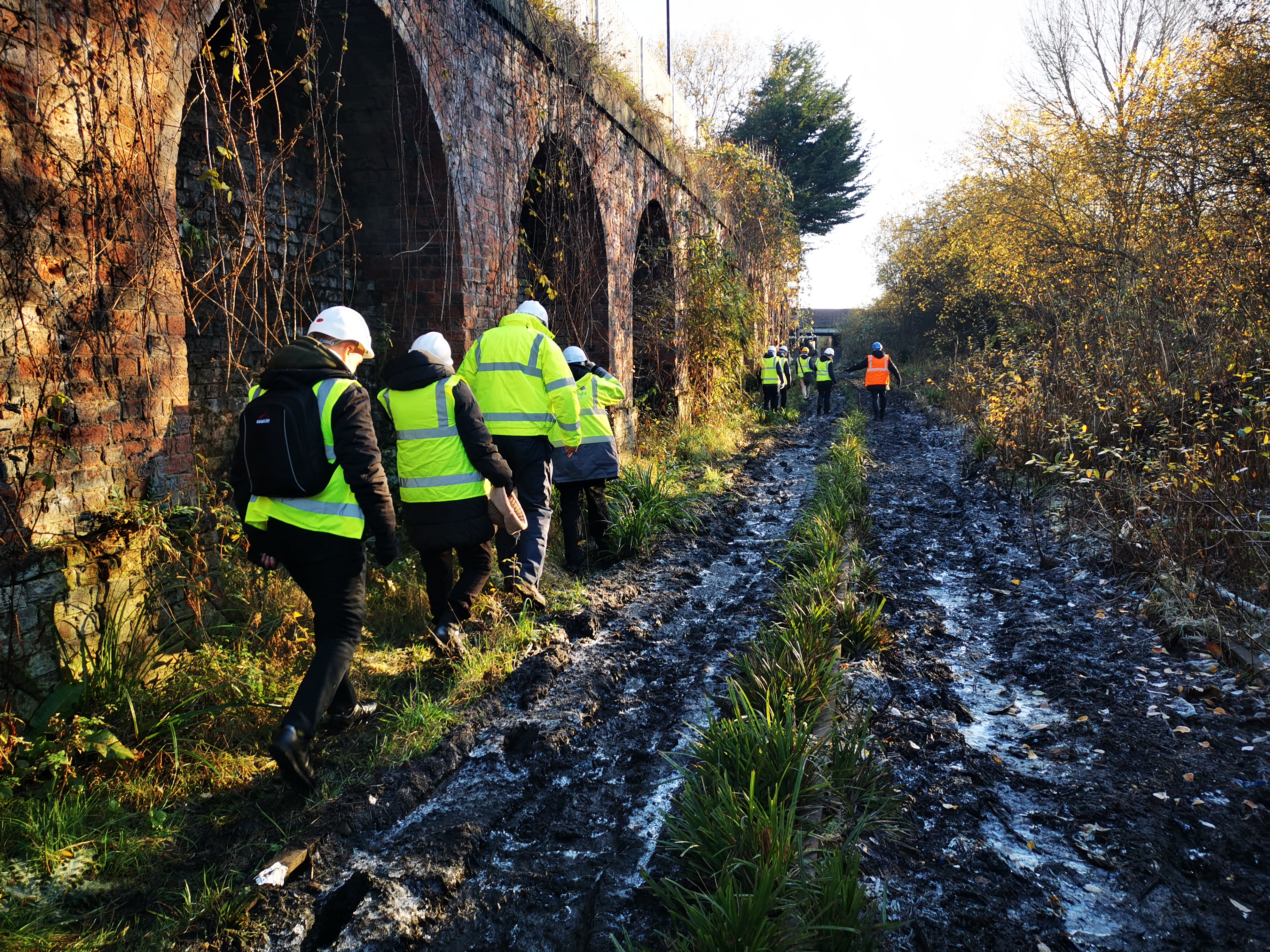
Dock Branch walking tour. Photo: PLACED
Architecture and design practice OPEN is working on plans for the area. Director Jaimie Ferguson says: “Dock Branch Park physically connects the key features in the town centre and provides unique new green spaces as part of a transformed public realm, but it also says a lot about how Birkenhead sees itself in the future.” He continues: “We’ve also been collaborating with artist Di Mainstone to develop ideas for a cultural programme around a bio-diverse revolution.”

Impression of Dock Branch Park. Image: Open
So far so good, but is some of Birkenhead’s cultural growth simply due to the extensive urban development that’s taken place in central Liverpool, so close by? Gentrification might be a concern. Yet as a phenomenon, gentrification tends to have its most negative impacts in cities (and their satellites) which have the largest concentrations of wealth and power. While it might one day become an issue for Birkenhead, it is currently a long way down a list of bigger challenges around employment, poverty, health, dereliction and access to opportunities and services. There of course is the crux that underpins many of the UK’s problems – intense over development in some places and deep-seated underinvestment in others.
I ask Craig Pennington what he thinks is needed to ensure everything achieved so far in terms of culture and community is built on: “Whenever you have a situation where profound change is happening in a place,” he says, “you have to be really, really mindful of the fact that local people are at the heart of shaping what that change is.”
Convenience Gallery co-founder Andy Shaw agrees: “Naturally with change comes some apprehension that it might be something not for local people, but Birkenhead feels like it’s doing it differently. It’s grassroots and community-led.”

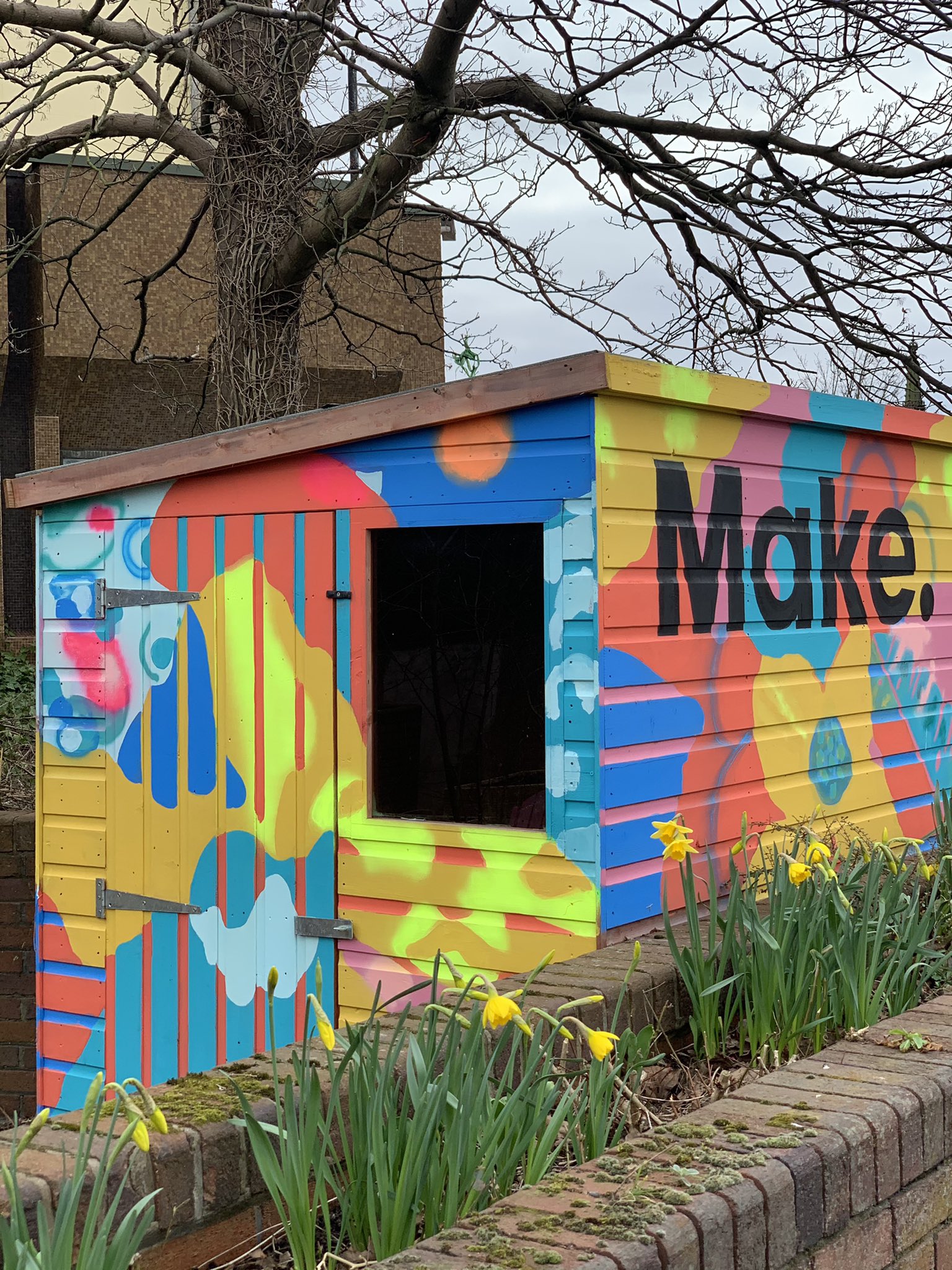
Make Hamilton Studios. Photo: Make CIC
If what is currently happening on the left bank of the Mersey means one thing for other areas, it’s that cultural development in post-industrial places has to be driven by local needs and opportunities. By specificity and originality. Not only will this serve local citizens better, uniqueness is also what attracts wider attention.
Ryan Gauge says: “We would love to see more jobs created locally and especially within the creative industries, passing on opportunities for the next generation to have tangible creative careers and to really see these as accessible and viable options.”

Future Yard outdoor space. Photo: Robin Clewley
This is a key point. To make a regular living form creative work, you usually need to be part of a wider infrastructure. Can this cultural growth lead to increased employment in the creative sector locally? Perhaps even five years ago, this may have seemed a pipe dream. Yet there appears to be some increasing dispersal of cultural jobs away from the south-east. That area’s huge dominance adds to the inequalities of the sector. Channel 4’s move to Leeds and the BBC to Salford have attracted attention, but organisations from Hachette to Art UK and EMI have also been shifting operations northwards, while smaller cities like Sunderland and Wakefield are developing their creative sectors significantly. Could this be the next step for Birkenhead?
While writing this, I began reading The North Will Rise Again by Tyneside based Alex Niven and kept thinking of a quote he opens with, taken from the processional banners of Durham miners:
”The past we inherit. The future we build.”
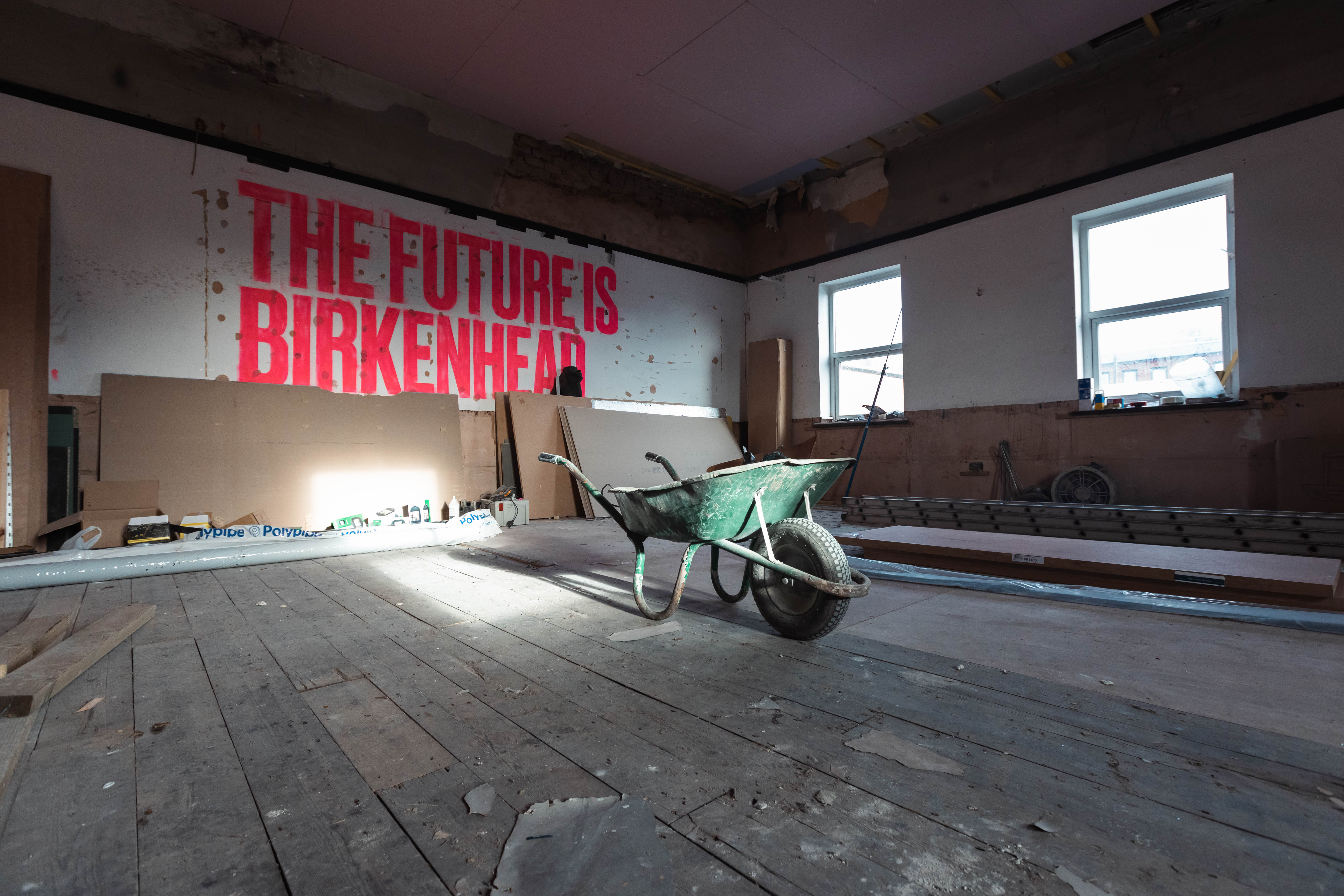
Photo: Robin Clewley
This piece was published by The Quietus in May 2023.



 Kenn Taylor