“I’m Exploring Life”: 50 Years of Tom Wood’s Photos of Britain

By Kenn Taylor

Lime Street, Lives Passing By. Photo: Tom Wood

Photie Man: 50 Years of Tom Wood at Liverpool’s Walker Art Gallery is the most comprehensive exhibition to date of the work of Wood, who is one of Britain’s most important image-makers. “It was something I wanted to do for the city,” Wood says. “The work was made here and I’ve had big shows all over the world; Moscow, France, China even, but not Liverpool.”

Wood’s images have until recently been more embraced by publishers and gallerists internationally. In the UK, he has sometimes been pigeonholed as a “documentarian of working-class Liverpool” rather than as a visual artist who creates striking, moving images that make people stop in their tracks, one of the issues being perhaps a middle-class dominated art sector struggling to grasp that working-class people could make and be the subject of great art without it needing to be social comment.

Boy with Fish, Secombe Docks 1980. Photo: Tom Wood.

“That lack of interest in Britain for a long time, it’s definitely partly a class thing. How I present myself but also the way photography is reviewed in a class way. ‘Not proper art’ and so on,” he says. For Wood, the contest between form and content was something interesting: “I thought a lot of stuff at art school, especially the conceptual stuff, was not real enough. It was like a game,” he says. “When I went out on the streets at the weekend, what I saw was more real and more interesting, but not in a documentary sense. I’m exploring my medium for sure, I’m an artist, but I’m exploring life as well.”

This expansive show features over 500 pictures, surveying his whole career, from images of his native Ireland and Leicester where he studied, to his current home in Wales and found photographs Wood collected as a young man. The largest element though are his photographs of Merseyside, where he lived for over two decades. One of Wood’s aims for the exhibition is to reconnect with some of the people he captured over the years and photograph them again. “That’s half the reason I have done the show,” he says. “To make that connection. You can leave details if you know people in the show.”

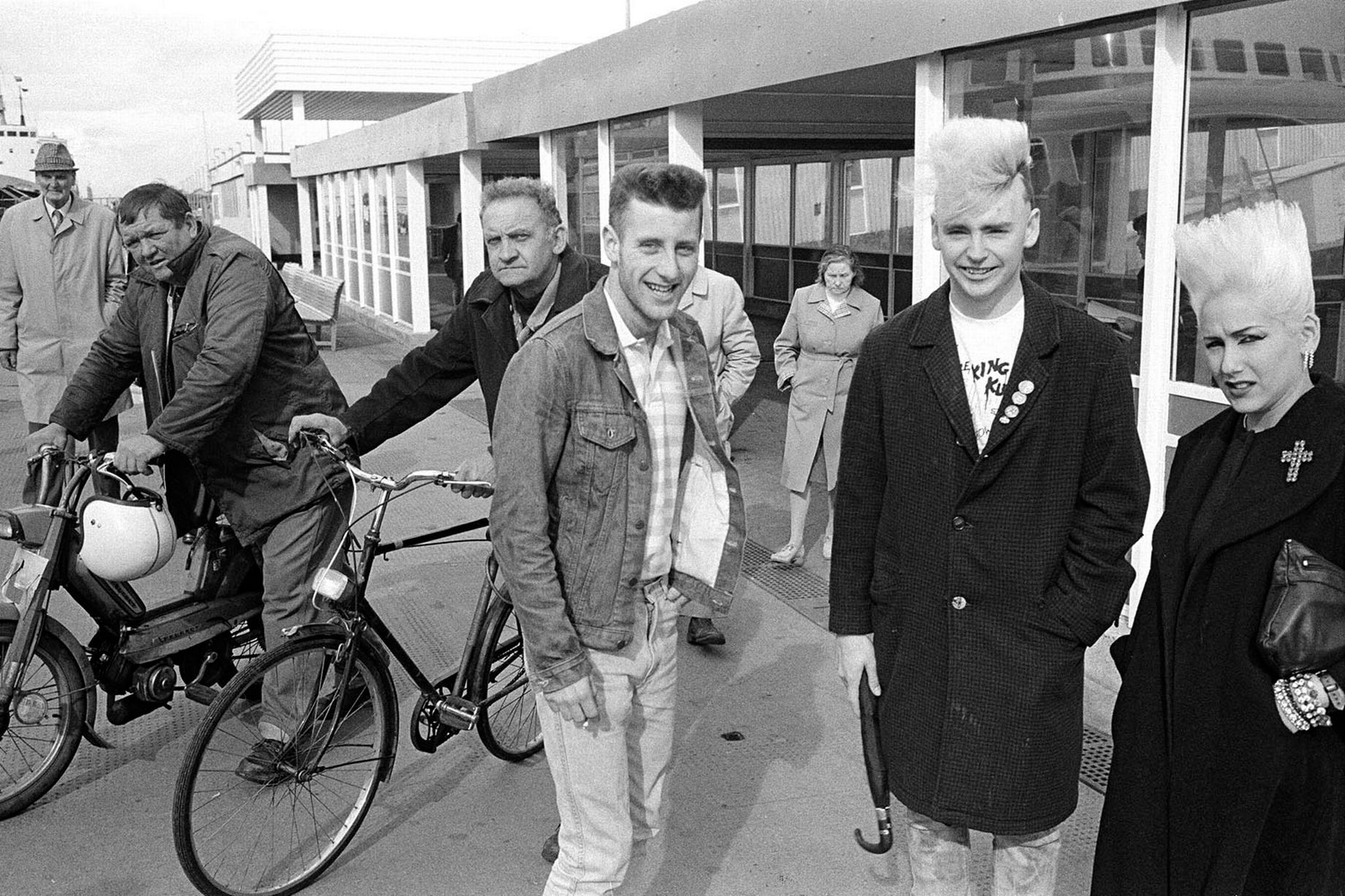
Lads at Railing, Scotland Road, 1987. Photo: Tom Wood.

The exhibition’s title comes from the nickname Wood was given in Merseyside as he became so familiar photographing the same communities repeatedly and building a reciprocal relationship with them. “I couldn’t do it otherwise,” he says. This extended even to taking wedding pictures for some of his subjects. Part of the power of his images perhaps comes from this deep familiarity. “Richard Feynman said he would not understand the real physics of a system until he had painstakingly isolated and calculated all the forces,” Wood says. “This is what I would tell myself as I was photographing the same subject year after year – whether it be women at the market, men at the football.”

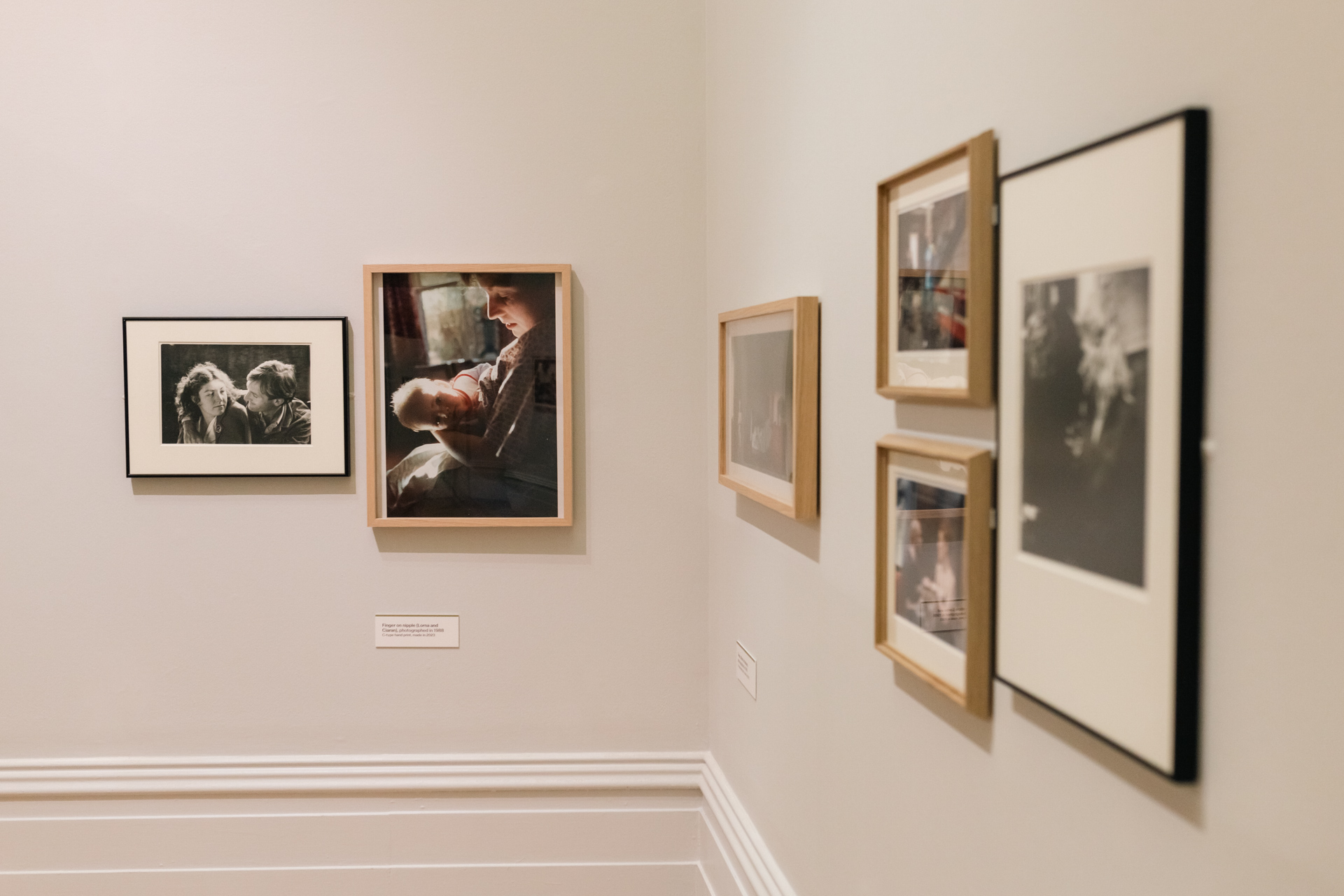
Image from Photie Man: 50 Years of Tom Wood, Walker Art Gallery. Photo: Robin Clewley

Has looking back on his vast archive for this show changed his views on it? “Yeah, that’s the thing about photography. It’s not fixed, and life is not fixed. Things change, how it’s read changes,” he says. Not least a culture sector that now values photography, and this kind of subject matter, more. In the 90s, Wood managed to get an Arts Council grant after receiving a letter of support from Lee Friedlander. “It said ‘wonderful pictures. As good a set of pictures you see every five or ten years,’” only for Wood to then struggle to find anywhere to show the work. Does he feel vindicated by the growing interest from all quarters? He has three books due out this year alone. “A little bit,” he says. “Having Friedlander on board kept me going for a few years. A lot of people have supported the work over the years, not least the people in the pictures.”

Image from Photie Man: 50 Years of Tom Wood, Walker Art Gallery. Photo: Robin Clewley

“There’s something about the work that people from all over the globe connect to,” Wood says. “It’s very strange. I’m not impressive as a person. I think the work itself, or maybe Liverpool, maybe the people, I don’t know. But it does connect with people.” 

Image from Photie Man: 50 Years of Tom Wood, Walker Art Gallery. Photo: Robin Clewley

This piece was published by AnOther magazine in June 2023.
Every Man and Woman is a Star

Photie Man: 50 Years of Tom Wood, Walker Art Gallery, Liverpool, 20 May 2023 – 7 Jan 2024

Photo: Robin Clewley

By Kenn Taylor

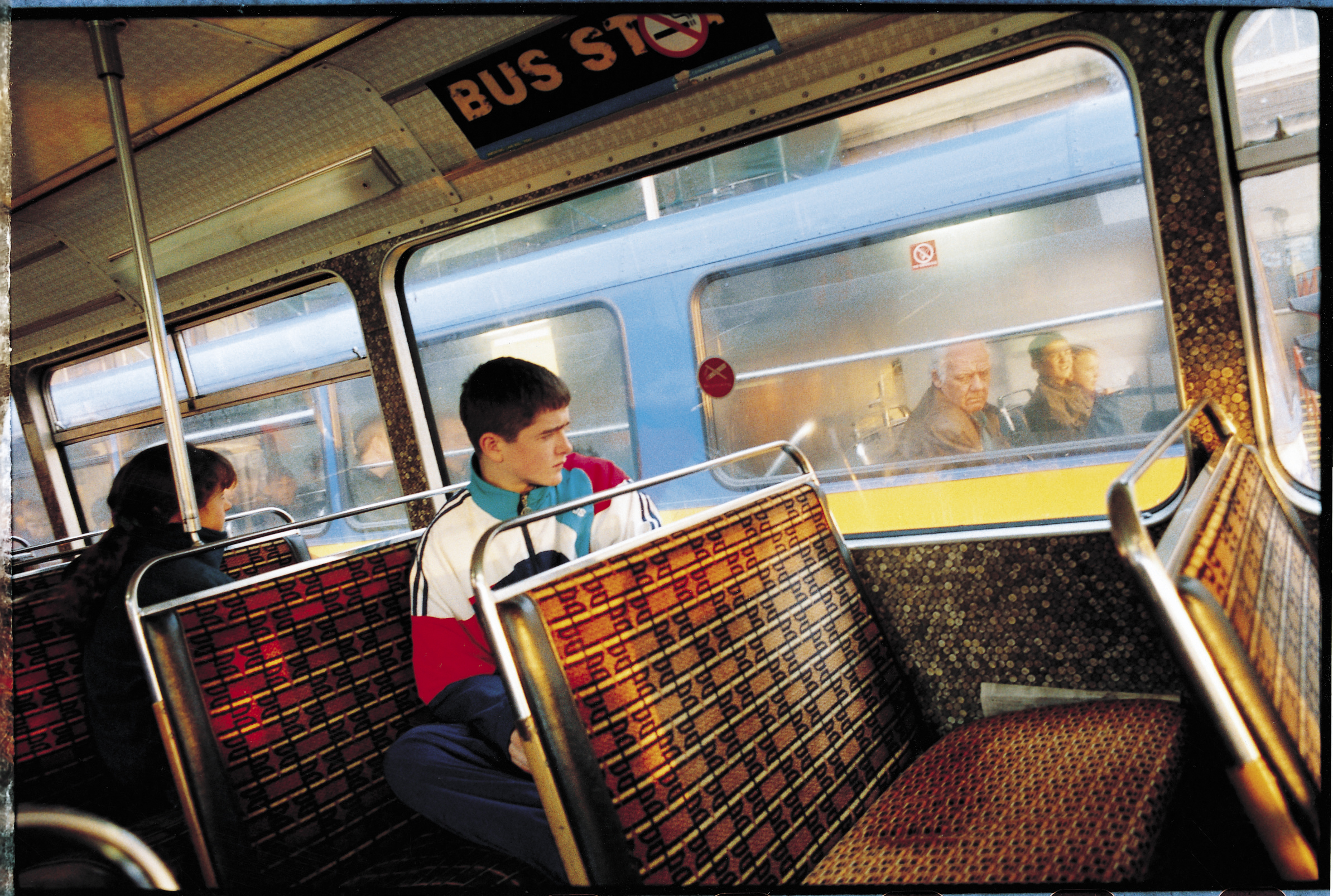
Even if you’ve not heard of Tom Wood, the photographer now subject to a huge retrospective at the Walker, you’re likely to have come across his images: young sharply-dressed folks confidently posing for the camera; dancers lit up by flash in an 1980s nightclub; a grandparent and child clinging to each other as they stare through a bus window.

Wood hails from County Mayo, in Ireland, and he’s exhibited everywhere from the USA to the Netherlands, China to France. Yet, as he’s best known for his images of Merseyside, it’s fitting this — the most comprehensive show of his work ever — should be staged in Liverpool.

Born in 1951, Wood moved from Ireland to Cowley, Oxford at a young age with his family. After working in a tax office and the local car factory, he was encouraged to take up art and studied painting in Leicester from 1973-76. He borrowed a camera, initially to record his paintings, and began to experiment with the medium that would dominate his creative life.

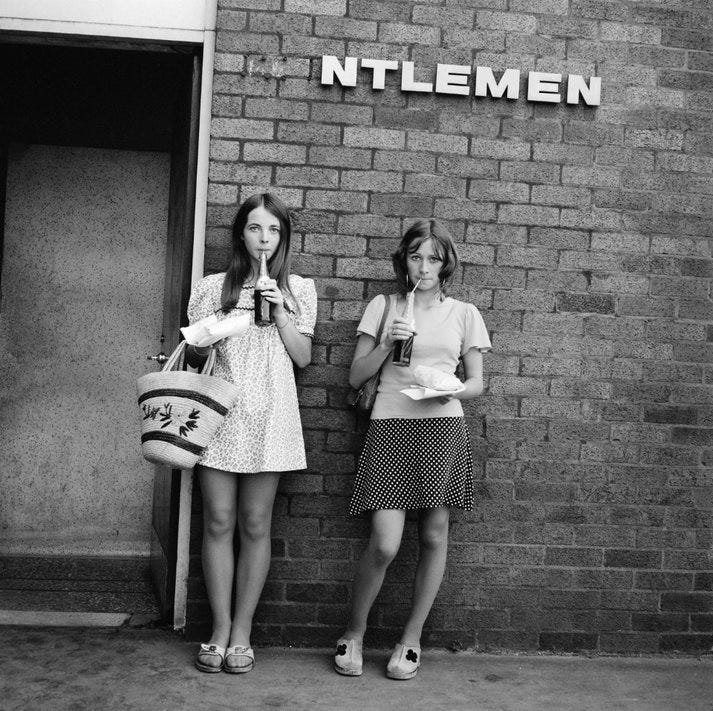
‘NTLEMAN. Photo: Tom Wood

The first gallery in the Walker show, ‘The 1970s’, covers Wood’s earliest work, much of it black and white. Even in these first pictures, his talent for capturing people’s character in a single shot is evident. ‘NTLEMAN’, featuring two young women posing beneath a broken sign for the men’s toilets, was taken by Wood in Cowley in 1973 on the second ever roll of film he shot; it remains one of his most well-known works. His ability is evident even in the small, now discoloured, prints from a season he spent working as a holiday camp photographer.

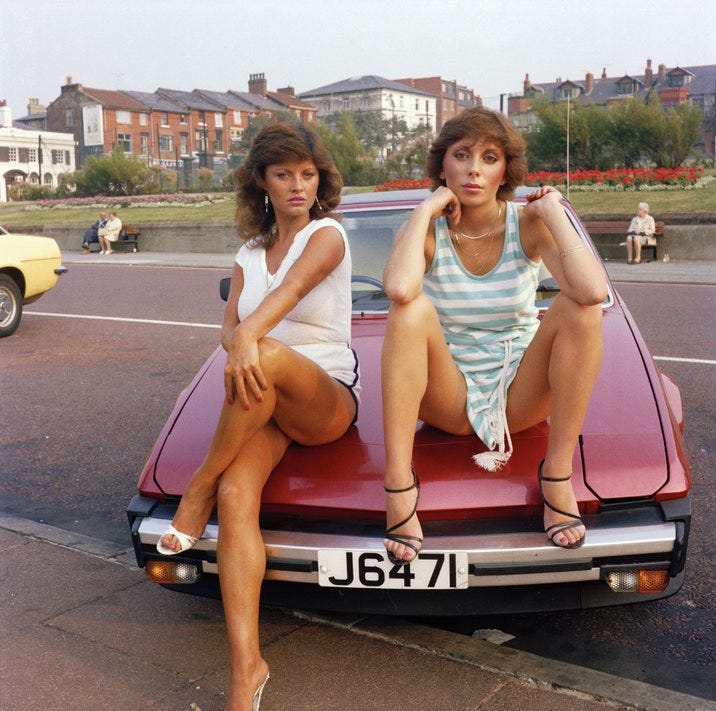
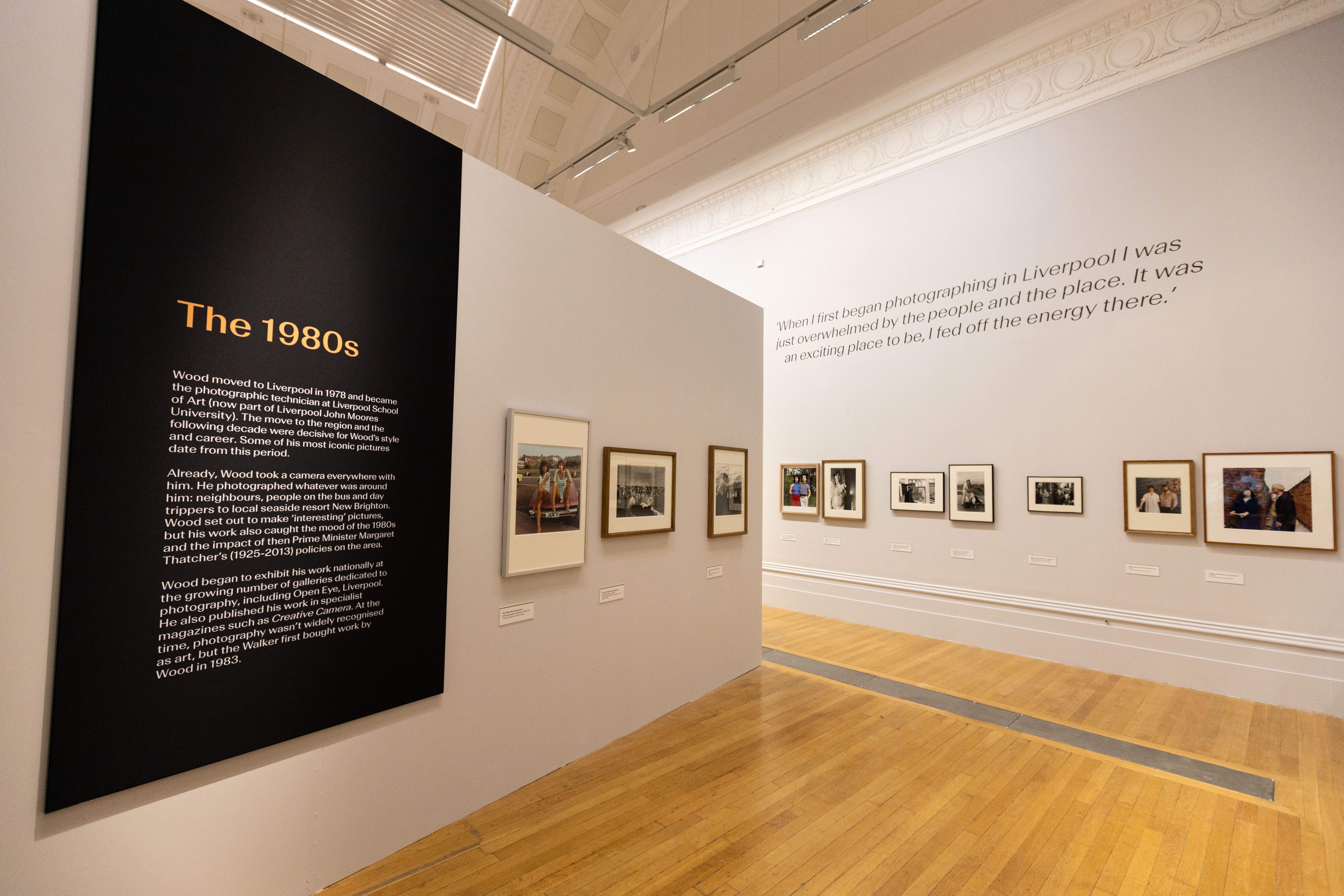
The second gallery, ‘The 1980s’, marks Wood’s move to Liverpool in 1978 after gaining employment as a technician in the School of Art (now LJMU). This period saw him starting to also work in colour, in works such as in ‘Not Miss New Brighton’ from 78-79. Colour was then still considered suspect in the world of ‘art’ photography, but Wood has said it was always important to him. 

Not Miss New Brighton. Photo: Tom Wood

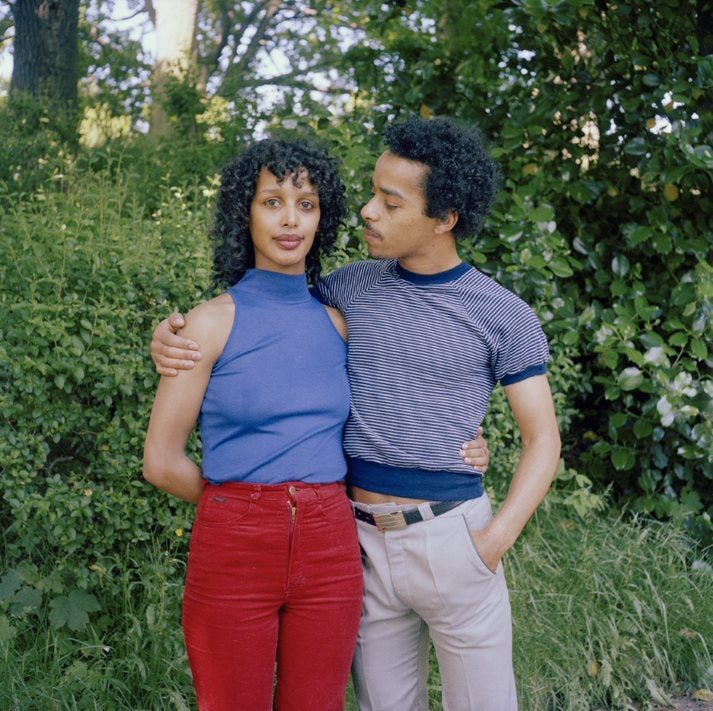
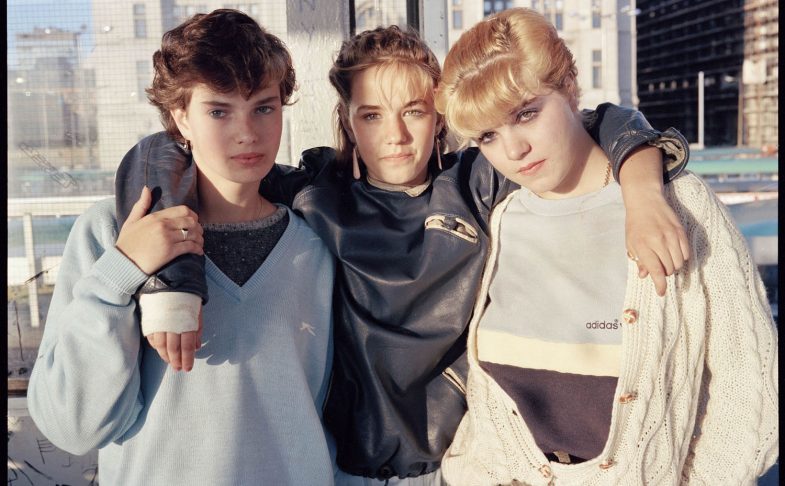
This, the largest gallery, contains some of Wood’s most well-known works from the 25 years he then spent living in and continually photographing Merseyside. While his images of cocky lads like ‘Mark and the gang’ and ‘Lads at railing, Scotland Road’ are some of the best photographs of that aspect of the area’s culture, unlike many image makers who briefly descend on Merseyside with only stereotypes in mind, Wood captures a much more diverse range of people and places across the region, from the sparkling ‘Furcoatsisters’ to the serious and proud-looking ‘The Staff of Secombe Café’ to the even more proud and pleased ‘Couple with new baby (actually first day out without the baby)’ and the 80s alternative fashions of ‘Mike and Kerrie — Every Man and Woman is a Star’.

Couple with new baby (actually first day without the baby) Photo: Tom Wood

The exhibition’s title reflects the fact that Wood became known as ‘the photie man’ in the area, a figure so familiar that people willingly posed for him or at least didn’t bat an eyelid when he was snapping away. Wood offered prints to many of his subjects and took pictures at local weddings and christenings, charging only for the price of the film, all of which helped him to develop an important reciprocal relationship with his subjects. Some of Wood’s most evocative images, like ‘Seaview Cafe (Not many Saturdays off)’ from 1984 are of families on days out in New Brighton. The openness people display within Wood’s viewfinder speaks time and again to an ease and familiarity between photographer and subject.

Some of Tom Wood nightclub images from the exhibition. Photo: Robin Clewley

The pictures he took in New Brighton’s nightclubs, candidly capturing those fleeting moments of flirtation, rejection, humour and introspection, were facilitated by Wood being a regular face in those clubs. These images received international acclaim when they were published in 1989 as the photobook Looking for Love. His ‘Untitled (sea of bodies, Grand Hotel, New Brighton)’ almost elevates the scene of a packed nightclub to the level of an epic history painting. And in All Zones Off Peak, the photographs Wood took on his innumerable bus journeys around the region have a powerful quality of light, such as ‘Towards Netherton’ and ‘Vauxhall Circular’, in which the red hair of the subject is echoed by a touch of sunlight on the seat fabric. 

Towards Netherton. Photo: Tom Wood

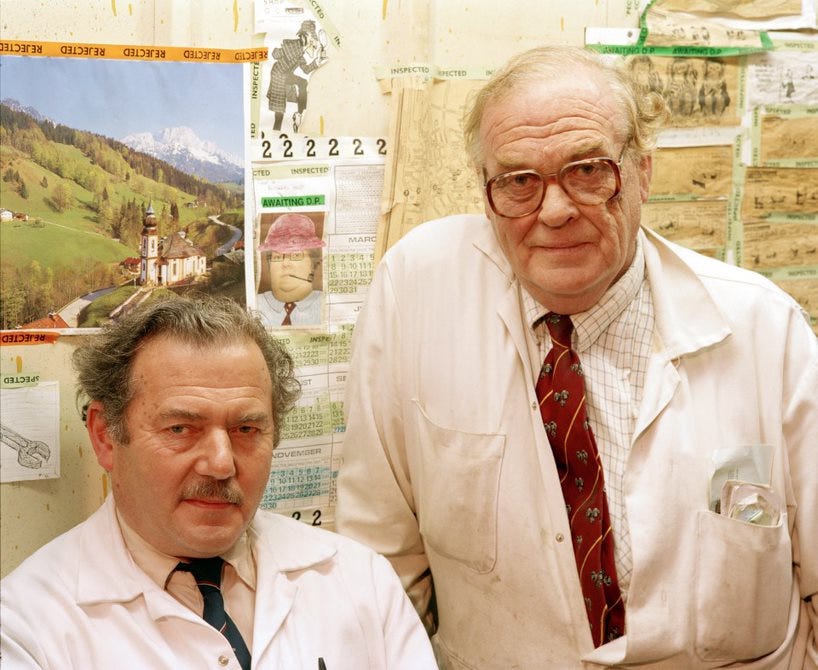
Wood rarely undertook commissions, but two that he did take on resulted in some of his most poignant images. For these he entered two closed worlds in Merseyside, Birkenhead’s Cammell Laird shipyard and the large psychiatric hospital at Rainhill, photographing the end of these institutions in their original form. Wood’s recurring theme of the space between generations comes across more powerfully in his Laird’s images. Picturing the yard’s last batch of young apprentices and an older man at the same workbench used by his father before him, Wood captures them all facing uncertainty as the endpoint is reached of nearly 200 years of employment and social structure.

From the Cammell Laird series. Photo: Tom Wood

The images from Rainhill Hospital are prudently placed in a discreet area of the gallery. All these photographs were taken with permission from patients or their families. Most of the residents are older and, while the majority should have never been institutionalised, Wood depicts them also facing an uncertain future as the place that in some cases they’d known for most of their lives closes around them. Wood was contracted to take pictures at Rainhill for six weeks; he ended up engaging with the community there for two years.

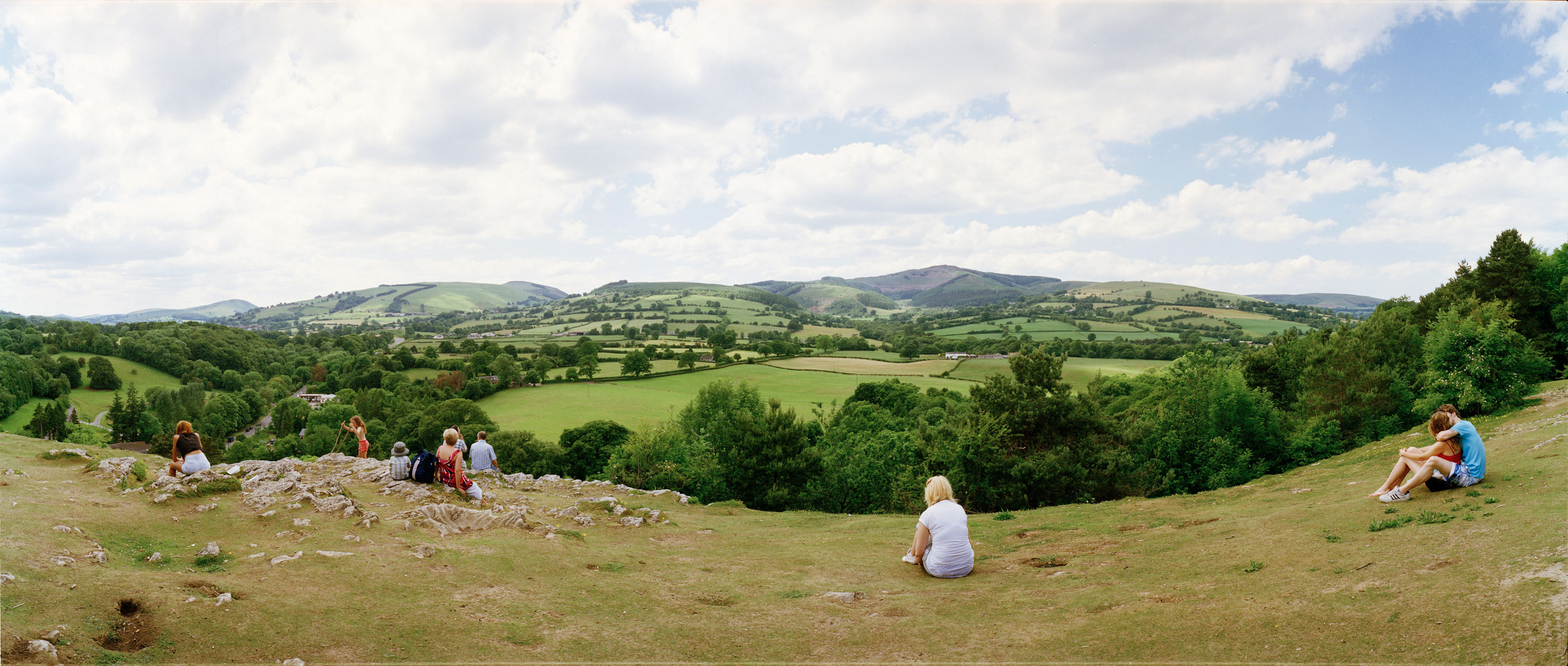
The final gallery contains Wood’s work from 2003 onwards, when he had left Merseyside and moved to Wales. While his scenes of village and town life in Wales and his native Ireland have a similar tone to that of his Merseyside work, Wood’s panoramic landscapes from the period have an expansiveness which contrasts with the intimacy of his portraits. Yet they still evidence a strong eye for detail, as in the tractors rendered tiny by the imposing landscape of ‘Moon Moving Over Iron Age Farming’ from 2006.

Loggerheads Clifftop, Towards Moel Famau, 2010. Photo: Tom Wood

Surrounded by the varied images of the exhibition, some words keep coming back. Words like strength and dignity. Humour too, his work isn’t po-faced, nor overly sentimental. Wood’s images are inherently about the variety and commonality of the human experience. Youth and age. Passion and boredom. Waiting for a bus or to be served a hotdog made epic.

The exhibition’s concluding section includes ‘The Hospital’, a poem by Patrick Kavanagh, which Wood says reflects some of what motivates his work. Its closing lines are:

For we must record love’s mystery without claptrap, 

Snatch out of time the passionate transitory.

Tom Wood is undoubtedly one of the most respected and important visual artists to have been based in Merseyside in the past fifty years. The region is lucky to have had a photographer of such powerful talent capture its life over a couple of decades, reflecting Merseyside in artworks that have resonated around the world. At the show’s exit, Wood acknowledges his indebtedness to all those who appeared before his camera and inspired him to create these photographs.

Photo: Robin Clewley

After all, to borrow from one his titles, in Wood’s images, every man and woman (and child) is a star.

This piece was published by the Liverpool Post in June 2023.

Time and Tom Wood

DZSkWp5WsAESiIn.jpg large

Text Kenn Taylor
Images Tom Wood

The Pier Head – Tom Wood
Open Eye Gallery, Liverpool
12th January – 25th March 2018

“They were outside the groove of history and it was my job to get them in, all of them.”
The Invisible Man, Ralph Ellison

The thing that gets me most in Tom Wood’s series of images on and around the Mersey Ferries is the intensity of the eyes. Across years, generations, genders, locations, so many of his subjects in these photographs either look intently into the distance or, more strikingly, straight into the lens and into you. I’m drawn to an old video clip of former Open Eye Director Paul Mellor – an early champion of Wood’s work in the gallery he has returned to with this show: “I think he has a care and empathy for the subject matter and the people. I think he’s a humanitarian photographer, if there is such a thing.”

Full disclosure, seeing Wood’s images years ago and how they captured places, people and an era so familiar to me in such a powerful way, was one of the things that drew me into visual arts. Merseyside, like many deprived areas, has had no shortage over the years of photographers keen to bob in and capture ‘poverty porn’. Which when you know a place well, its layers and complexity, can become deeply tiresome. Even if the photographer’s intentions are well meant, their ‘truth’ is usually two dimensional.

Wood is one of a few whose work stretches far beyond this, no doubt in part due to his deep familiarity with his subject, having photographed the area as a local resident over decades. In contrast to others, Wood captures his subjects not as types, but individuals as significant as in any high society or celebrity portrait. Sure, in some expressions or behaviour is humorous, but in others it is sad and still more it is powerfully dignified as he gets that shot of the confidence of youth, the resigned wisdom of old age, the cynicism of having been pushed to the fringe of society. And of course, the boredom of waiting.

Woodside-Ferry-Terminal-From-_The-Pier-Head_-Series-Tom-Wood-1979-Tom-Woodweb-res

Like his previous work that focused on bus travel, All Zones Off Peak, here Wood captures the commute and its varied humanity. His Pier Head images differ from All Zones though in that the ferries and their terminals were, much more than the busses, also a ‘sit off’. Somewhere for the young and old especially to hang around, mess about, chat, linger. He photographs friends, couples, individuals’ heading somewhere or just passing the time. Snapping different generations over several decades, Wood captures continuity and change. Faces seem ever familiar. In contrast, fashion and hair styles shift rapidly. It was a particular part of the poisonous stereotypes pushed to the area in the 1990s to attack Scousers for a fondness for sportswear. These images remind that was only part of the fashion story. Not to mention that the often unique ways clothes were worn in the area was done with an originality rarely matched when such looks were copied elsewhere. Again, the particular detail of fashion in cruder hands could become voyeurism, but not here. You look at his subjects and their styles, but they look back into you.

Above-Pier-Head-Terminal-From-_The-Pier-Head_-Series-Tom-Wood-1985-Tom-Woodweb-res

People are the heart of Wood’s images but the background detail is important as well, as much a part of their role now as social document as the fashions. While the images here span from the 70s to late 90s, the bulk are from mid 80s to mid 90s. This is a time in Merseyside history that artists, writers and academics rarely look too, preferring to tap into the swinging, for some, 1960s, the radical era of the late 70s and early 80s, or the more recent, if patchy, renaissance. Yet the period between the 80s and 90s that Wood captures so powerfully is important as well as it was perhaps Liverpool’s nadir. Coming as it did after the collapse of the brief Militant period when Merseyside was largely cut off and left to rot. Treated so often nationally with either contempt or indifference, negative stereotypes about the area came to the fore even in supposedly polite and liberal circles.

DXqy-pBWkAE67T7

This was the Merseyside I grew up in. Almost nothing new was built. Most of the theatres and gig venues closed. So much seemed of the past, decaying, like the ageing, smoky 1960s busses and ferries we waited for, while opportunity, change, a positive future, seemed distant, if not impossible. The local media became deeply nostalgic for ‘the better times’. What radicalism existed largely retreated to educated urban circles and had little impact on the city’s poor and unfashionable fringes.

Wood, intended or not, captures this atmosphere. Both the crumbling grandeur of the Victorian docks and jetties, rusting, grassed over, silent. But also the decay of 1960s optimism as exemplified by the rotting Modernism of the graffiti covered Pier Head terminal. Today its concrete and steel would be lauded by fans of once-again fashionable Brutalism, its Formica’d cafe turned into a themed eatery. Then, it was just a reminder of how everything had fallen apart. The Merseyside of today still remains highly deprived and faces numerous challenges, but it has come far from being so unrelentingly crushed in a way that people who came to know the area later on struggle to grasp.

1987-79-S16 001

What Wood also captures though is that, despite the national mistreatment, life in Liverpool did indeed go on. People survived and even occasionally thrived despite the shit they had been given. Not crude stereotypes or even that other media trope, ‘sympathetic victims of a cruel system’, but individual human beings with their own stories, part of a culture that carried on despite seemingly impossible odds.

The landscape of the river and those who travel across it, as they have done so since around the 12th century, has now changed from that photographed by Wood. Just as the young, moody people in sportswear in 1987 confused and in turn were confused by the older people sporting headscarves and flat caps, so young people today must look these images with a distance hard to bridge. The differences in fashion and scenery though are just the visual demonstration of the bigger gap. That of experience and understanding between generations in an ever faster rapidly changing word, each one with its new sets of opportunities, joys, problems and challenges. Wood captures his subjects with dignity, young and old, but the generational gap remains for them as it does for all of us. We look at them, they look at us, but never quite understand what the other has seen and felt, like looking across a river into the distance.

Pier-Head-Landing-Stage-From-_The-Pier-Head_-Series-Tom-Wood-1985-Tom-Woodweb-res

This piece was published by Corridor 8 in March 2018.