Art Station

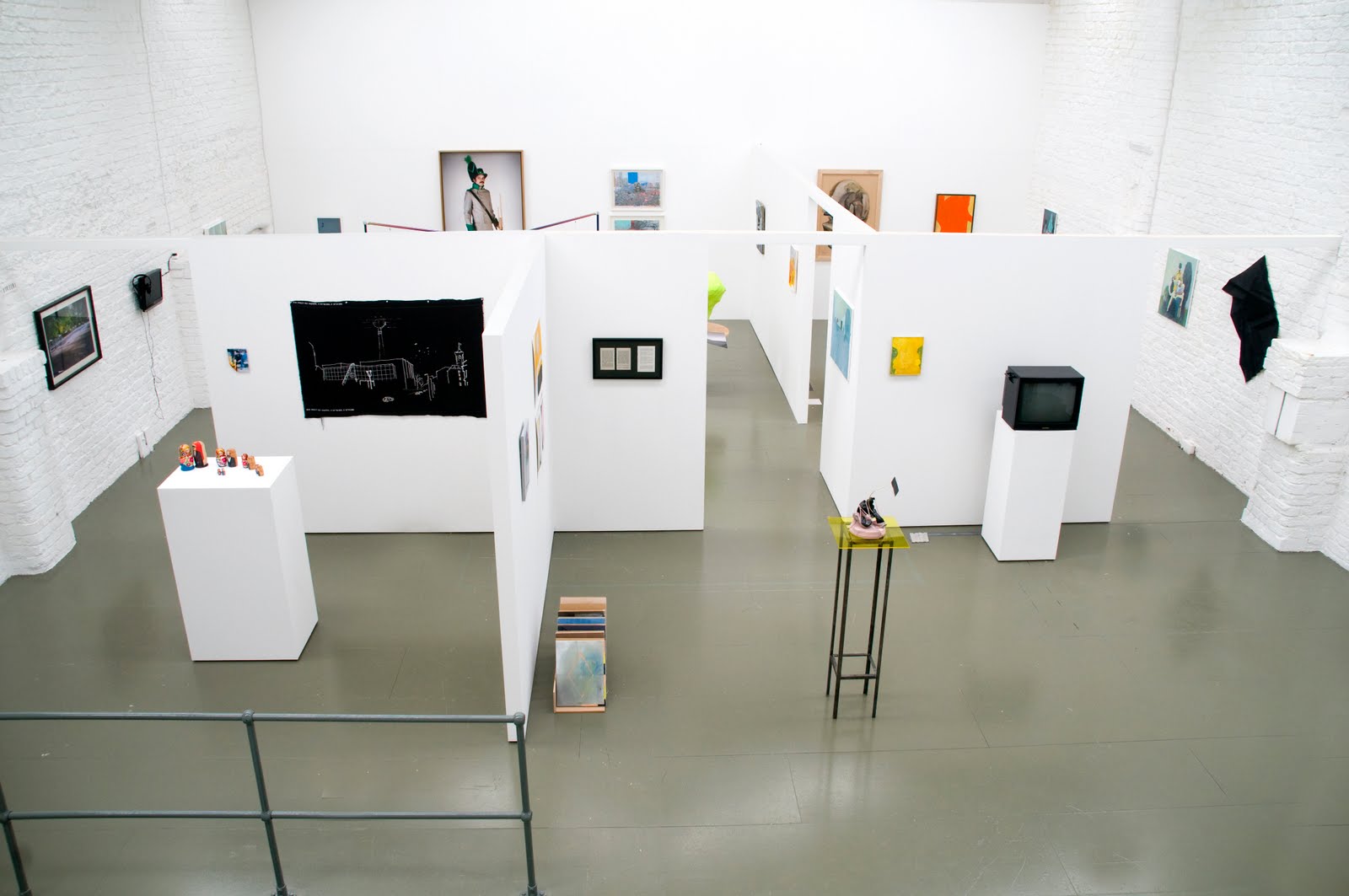
Sat in a circle in the world’s oldest operational passenger railway station, Liverpool’s Edge Hill, are a disparate group of individuals united under the banner ‘Future Station’. As trains rattle past regularly, the group, a diverse mixture of ages and backgrounds, debate, discuss and crack jokes about creative projects, plans and ideas, helping to animate this historic space operated by art organisation, Metal.

Metal was founded in London in 2002 by Southbank Centre Artistic Director, Jude Kelly, as an artists’ residency space in a former metal workshop. The organisation came to Liverpool soon after, when current Director Ian Brownbill visited the London space and decided that Edge Hill, a central but deprived district of Liverpool he was working in, could do with such a facility. Beginning in a nearby house, Metal Liverpool moved into the underused station buildings in 2009 after their careful restoration. The larger space allowing the organisation to develop as a community-focused, multi-arts’ centre.

Metal seems to have managed that rare knack, of being popular with local people and attracting arts fans from far and wide. Project Manager Jenny Porter says the reason the organisation has been successful at engaging the community is pretty simple:

“I think we just make sure to listen and support people’s ideas. It helps being a small team and having built up a reputation in the area over the five years we’ve been based here. We don’t think people should have to always travel to city centres to access culture and that in the future it will become increasingly important for cultural provision to exist within towns and neighbourhoods.”

Metal Edge Hill is many things to many people. Its space home to several artists’ studios alongside activities and organisations as diverse as the annual Liverpool Art Prize competition, Suitcase Ensemble, who run a range of popular cabaret nights, and even a recent celebration event about Liverpool’s infamous 1911 Transport Strike.

Metal has also been keen to more deeply reflect the area in which it is located. The Edge Hill Archive Project, launching in November, is the culmination of two years’ work to record the history and culture of the local area for posterity, both online and in a permanent installation at the station.

Jenny says: “It will be exciting to finally see something permanent in the space that conveys its magnificent history. Hopefully it charts some of the many changes that have already happened in the area at a time when it is undergoing another transformation. It is as much about capturing the present as it is the past.”

The Future Station group acts as an entry point and steering group for Metal, and has managed to unite local residents, international artists, heritage enthusiasts and many others besides. Jenny explains more:

“Future Station is important in that we try to encourage in the group a sense of ownership by allowing them to bring their own ideas to the space. We also hope that the meetings help give the members of the group the confidence in their own creativity, no matter how extensive their past experiences are, as well as offering the support needed when it comes to setting up their own projects and ideas.”

Local resident Terry Eagles, who created his first art installation for the recent Future Station Festival, which showcased the group’s work, sums up why the arrival of Metal in the area has been important for people like himself:

“My background, I never had an art lesson in me life. But I always had an interest in it, and it’s been fascinating to me to stick it out down here, because I was something of a fish out of water when I first came down. I’m filling that gap now, and quite enjoying it, so that’s what I’m getting out of Metal now.”

This article appeared in the 29th September 2011 edition of The Big Issue in the North.  

Local and Global – contemporary art centres in the UK regions

There were many booms in the years leading up to the Credit Crunch, but one of the most visible was undoubtedly in the arts. After years of chronic underfunding by the previous Conservative administration, New Labour’s victory in 1997 saw a massive increase in funding for arts and culture in the UK. Museums were made free again, large-scale public commissions like Gateshead’s Angel of the North became commonplace and every city scrambled to organise a range of cultural festivals and open new arts facilities.

The increase in funding was especially prevalent in more contemporary, avant-garde and esoteric avenues. Up until this point, ‘modern’ art, especially the conceptual, was a largely London-based phenomenon. Save for a few brave regional municipal galleries and usually poorly funded ‘alternative’ spaces.

As the money ramped up, a plethora of new contemporary arts spaces was opened across the UK. Such facilities were promoted as the catch-all solution to a host of problems in these areas; combating social exclusion and economic weakness, regenerating derelict land, increasing tourist revenue and re-branding downtrodden areas suffering from negative stereotypes. This belief was encouraged by many of those that had been operating with success in the ‘alternative’ sector in the preceding years and held sway with local authorities inspired by the oft-quoted ‘Bilbao factor’, after the regional city in Spain that saw visitor numbers soar after it became home to a branch of the Guggenheim.

This trend of using public art galleries as a regeneration tool in the UK can be seen to have started in Liverpool. With the Tate pushing for more exhibition space, the then Conservative government directed them to open a gallery in Liverpool’s redundant dockland warehouses in the aftermath of the 1981 Toxteth riots. Tate Liverpool, which opened in 1988, has since provided a model for not only Tate Modern at Bankside, but also abroad, including the regional Pompidou Centre in Metz, France and Moderna Museet in Malmö, Sweden amongst others.

Tate Liverpool also helped to provide the inspiration for similar schemes across the UK and, since 1997, contemporary arts centres have been opened in Middlesbrough, Gateshead, Walsall, Glasgow, Nottingham, West Bromwich, Manchester, Wakefield, Sheffield and Margate amongst others.

The opening of such institutions was a success in many ways, and helped increase access to, and interest in, contemporary art across the UK. Yet, as this expansion trundled on, the flaws in such cultural regeneration plans became more apparent and problems began to set in. As contemporary art emerged in the regions it began to face tensions it wouldn’t have done in London, with its guaranteed middle-class art-going audience.

Despite the well-meaning behind the new arts centres, many quickly became accused of not bringing the regeneration benefits they promised and of being elitist islands of art in places that otherwise remained unchanged. Such centres were derided for being unreflective of ‘local’ culture, and of ignoring audiences beyond the artistic elite. Many were also criticised for only employing small numbers of highly educated ‘outsiders’ and ignoring artists in their vicinity in favour of international ‘star’ names.

Having helped begin the trend for culture-led regeneration in the UK regions, Liverpool was also the place were these issues came to a head twenty years later. The city’s European Capital of Culture celebrations in 2008 prompted many to examine the conventional logic of such schemes and the tension between bought-in ‘international’ culture and the reality for those living in many of these deprived towns.

Directors, Curators and Programmers have had to increasingly face this tension and criticism, and it has only worsened since the Credit Crunch. With local authority and Arts Council funding being cut and private sponsorship hard to come by, such facilities have had to increasingly justify their own existence much harder than they had ever done before.

As such, those in charge of these institutions are now undergoing a rapid re-assessment of their role and future sustainability in these changed times. They face a tough challenge of finding a balance between local needs, sound financial footings and high-quality artistic integrity.

Although difficult, this can be achieved with skilful programming, much in the same way that regional theatres have operated for years. A mixture of ‘blockbuster’ shows, experimental and risk taking shows and something with a local focus can all be done in a year. This must be coupled with providing opportunities for local artists and a proper engagement programme for the wider community that is taken seriously and not treated as an ‘add-on’.

Operationally too, there has to be a happy medium between employing the best staff from wherever, and enough local people to, not only provide opportunities that they would have once had to move to London for, but to help shape programmes with knowledge of, and concern for, local audiences and their tastes and quirks.

Achieving such a balance is not an easy task, especially in an era when budgets are being cut to the bone. The fear is that some will panic and sway their centres into lame, crowd-pleasing parochialism or, equally bad, rampant naked commercialism. While it is important for such venues to have different income streams such as corporate hire, becoming a conference venue with some nice, unchallenging stuff on the walls would defeat the object of its existence as a public arts institution.

These are challenging times for cultural venues, but they also represent a real chance to do things differently, to take the opportunity that has been created by opening such centres in deprived areas and for them to really make a difference, in artistic, social and economic terms, to their locality. The cuts should prompt a new openness and new ways of working, forming links across the community to provide programming for all.

Those institutions that don’t adapt can’t complain if public sympathy for their cause is limited after so much money was spent, and now so much money is being cut back from all areas of public life. Now can be the time of real flourishing for cultural centres in the regions, for those that pursue their own identity with focus and openness and have one foot in the local, one foot in the global, not merely be regional franchises of the international art word.

This article appeared in the September edition of Object of Dreams magazine. An abridged version also appeared in Arts Professional.

Memory of a Hope

Ceri Hand Gallery, Liverpool

Until 3rd September 2011

The Ceri Hand Gallery has blazed a trail as a high-quality commercial gallery in Liverpool, its exhibitions often out-classing that in some of the city’s public venues, this despite its location on the fringes of the still un-redeveloped northern docklands.

This exhibition, one of the largest to have been staged in the former warehouse which has been nicely converted into a white-cube type space, features over 100 works and has been curated by the gallery’s artists themselves.

Based on the philosopher Henri Lefebvre’s concept of a ‘memory of a hope’, the theme was chosen by sculptor Matthew Houlding, drawing apparently on ‘reflecting spaces caught between construction, destruction and nostalgia’. Each artist involved picked two other artists whose work they would like to see in the exhibition alongside their own, with the show put together from the pieces subsequently submitted.

As with any group show, especially one as crammed as this, the works on display are hit and miss and dialogue between pieces often limited. Works of note include Geraint Evans’s ‘Homebase’ (2011), an oil painting of a log cabin display in the corner of a DIY store. It captures in vividly the attempt at an idealised, ‘take-home’ aesthetic, marred by a collapsed corner of the cabin’s flimsy picket fence and the shop’s grim utility.

Curious in its technique and vision is Kim Rugg’s ‘This is War Kid’ (2008) a comic book carefully cut up and re-assembled fractured, creating a multi-textured work that is almost sculpture. Also of note is Mary Griffith’s ‘Where Few Dwelled’ (2010/2011) series, a collection of detailed graphite on paper works, formed from interlinked patterns and shapes, which moodily recall the infinite world of space and physics.

A highlight is Riccardo Baruzzi’s ‘B_2134567’ (2011). Apparently a screen grab from the Head-up display of a military aircraft after its weapons have hit their target, the materials are shaped into a stark 3D topography that could be a representation of the landscape that is being devastated. Its content, form and colour are all riveting.

Oddly compelling is Tessa Power’s ‘A Happy Death’ (2011) a film work across three separate CRT monitors of a horse, on each monitor red, blue and green respectively, collapsing, dying and then getting back up.

Another couple of works fascinating in detail and technique are Elizabeth Rowe’s ‘Rock Walks’ and ‘Nail House’ (both 2011) made from newspaper sheets obliterated and enhanced by colour and patternation – a complex and intense re-appropriation of a mass media product.

Memory of a Hope is an interesting curatorial experiment which has created a varied and interesting show that has managed, just, not to be overwhelming, in this compact space.

This review appeared in Aesthetica magazine August 2011.

Semiconductor: Worlds in the Making

FACT, Liverpool

Until 11th September

UK artist duo Semiconductor, otherwise known as Ruth Jarman and Joe Gerhardt, are, as their name suggests, fond of the use of cutting-edge technology. Yet their works look not just at the possibilities of their chosen medium, but at the very foundations of the physical world.

Gallery 1 is taken up entirely by the eponymous Worlds in the Making (2011) a huge three-channel, 23 minute moving image piece. It utilises filmed footage alongside scientific information, taking seismic data and translating it into audio and animation. Its sheer scope is impressive, but for all its size and high-tech tricks, the film is perhaps at its most compelling in the small details, the intense focus on the seismic needle and the slow panning shots across the fractured landscape.

In Gallery 2 meanwhile is Inferno Observatory (2011) an installation utilising old CRT televisions placed at various angles, displaying an array of archive footage found during Semiconductor’s fellowship at the Smithsonian National Museum of Natural History in Washington DC. The juxtaposition of the massive scale and forces of these volcanoes with the mundane, repetitive human tasks of the volcanologists studying and monitoring them is fascinating and curious.

Semiconductor have used digital tools to examine the very core of the material world, the minerals at the heart of every bit of modern technology, and remind us the epicenes and importance of much of what we may perceive to be irrelevant to our lives, like geology, but also the banality behind much of how we understand this world. This is a compelling media art exhibition that’s worth experiencing.

This review appeared in the August/September issue of Aesthetica magazine

Look11

Liverpool, various venues

May – July 2011

A new entry on Liverpool’s cultural calendar, Look11, is a vast photography festival encompassing exhibitions, events and projects over several months. Like the similar but larger Liverpool Biennial, it has taken over many of the city’s arts venues for the duration and has an over-arching theme – ‘photography as a call to action’.

Open Eye Gallery has been promoting photography in Liverpool since it was founded in the 1970s. This will be the last exhibition in the Wood Street space that it has occupied since the early 90s, before it moves to a new, larger home on the waterfront. Appropriately, Uncommon Grace features images chosen from Open Eye’s archive, curated by American photographer Mitch Epstein, who will have his first UK solo show at their new space.

The shots are very much of their time, nearly all from the 1980s; they feature some of the most influential British photographers of the period, many of whom cut their teeth in Liverpool, including Tom Wood and Martin Parr. The lives of the working-class and the decaying fabric of the industrial north are the inevitable main themes of many of the images, with photographers like John Davies and Parr finding truth and beauty where others would see only ugliness and squalor. It’s a timely show, and you wonder what such photographers would think of Liverpool’s startling regeneration, and the Open Eye’s shiny new home.

Bluecoat has perhaps the most successful exhibition of the festival overall. Taking ‘Containment’ as there own ‘theme within a theme’, the show is varied, but high-quality and coherent. Ben Graville’s ‘In and out of the Old Bailey’ (2002-09) features ‘papped’ shots taken of prisoners through the mirrored glass of prison vans on their way into the UK’s central criminal courts. The images raise issues of privacy, media intrusion and voyeurism. Beyond this though, their power as portraits is undeniable; the garish colours, lack of focus and the candid poses, some defiant, others cowering, adding to their disconcerting fascination.

In total contrast, David Maisel’s ‘Library of Dust’ (2006) project records the corroded copper containers that hold the cremated remains of patients who died whilst in the Oregon State Mental Asylum. Dating from between 1883 and the 1970s, these ashes were never collected by the families of the deceased. The large and vivid images detail the copper decaying in rich greens and whites, only the faded institutional labels revealing their true grim purpose. That these works highlight the containment not only of human remains, but those who society deems as ‘other’, so much so that many were rejected by their own families even in death, is as poignant as it is troubling.

The vast Novas Contemporary Urban Centre is, as usual for festivals like this, filled to the brim with several different exhibitions. Its basement crypt holds the largest exhibition, which appears to have a documentary focus. Robert Polidori’s ‘New Orleans After the Flood’ (2005-6) is a series of large images of the destruction wrought on domestic environments by Hurricane Katrina. Featuring the bright colours of family homes wrecked with the dank grey floodwater and filth, the images are shocking in their epicenes and fascinating in there detail.

On an even larger scale, are Ed Burtynsky’s trademark large-format photographs of landscapes altered by man. ‘Oil Spill’ (2010) taken after last year’s Deepwater Horizon disaster in the Gulf of Mexico, are some of his most recent images and, like so much of his work, are stunningly aesthetic in there approach, but terrible when you consider what they feature. His black and white images of ship-breaking in Bangladesh meanwhile, are even more gripping, featuring dirty, dishevelled human figures in a mess of mud and rotting metal, overwhelmed by the vast vessels they are dismantling. Closer to home, Ian Beesley’s shots from Hay Royds Colliery in Yorkshire highlight that similarly dirty work continues in the UK, despite what many think.

These are just three of the more interesting shows in Look11, whose venues encompass everything from Café walls to the city’s main Walker Art Gallery. The organisers have done a good job in pulling it all together. However, ‘photography as a call to action’ doesn’t seem to quite fit with much of the work exhibited.

While many photographers share this aim, many don’t, they want to represent the world in a certain way, a world that is complex and multifaceted. The decision to try and show differing work in pairs, or at least close context, is a good one, helping to create dialogue and ask questions of different images and photographers, rather than presenting any views as a singular truth. This seems to me a far better framing notion for this disparate collection of exhibitions than attempting to graft ‘a call to action’ onto them.

Nevertheless, Look11 is an impressive programme that it a must see for anyone interested in documentary photography. Hopefully the festival will get the chance to continue to develop over the next few years, despite the arts cuts, and continue to use photography as a tool to examine our complex, ever-shifting world.

This review appeared in Aesthetica magazine in June 2011.

A Sense of Perspective

Tate Liverpool

Until 5th June 2001

A Sense of Perspective is an exhibition of works from Tate’s collection, curated by the member’s of Young Tate, the gallery’s engagement programme for 16 – 25 year olds. The exhibition is part of a wider partnership, Youth Art Interchange Phase II, with other galleries around Europe.

Programmes such as Young Tate are increasingly common in institutions up and down the UK, with participants frequently adding contextual ‘add ons’ and interpretation to core exhibitions. Here, Tate Liverpool takes things a step further with an exhibition in its ground floor gallery curated entirely by Young Tate. Everything from the theme to the layout and the public events has been programmed by them, albeit guided by Tate staff and the criteria for the project’s European funding (Which was, as you might expect, ‘European citizenship, identity and cultural democracy’).

Through a series of workshops and debates the young people at each of the four participating galleries, in Liverpool, London, Paris and Helsinki, came up with a unifying theme, A Sense of Perspective, with each group then free to interpret this in there own way. Young Tate decided on three sub-themes of ‘between generations’, ‘between cultures’ and ‘between spaces’ and to use the Tate collection to explore the complex and shifting nature of contemporary identity.

Young Tate state they chose the works that inspired the most discussion amongst them, with their ideas often distinct from the artists’ own stated intentions. They have selected both British and international artists and included several new acquisitions. Photography, video art, contemporary sculpture and mixed media works dominate, reflecting perhaps the most relevant fine art mediums for this age group, or simply the most relevant mediums for their ‘in between’ theme.

The exhibition is well laid out, with pieces working successfully next to each other despite the variety of artists and mediums. Stand outs include Mother Tongue (2002) a video work by Zineb Sedira. In it, Sedira speaks in French to her mother, who answers in Arabic, and to her daughter, who answers in English, reflecting starkly the inevitable evolution of culture between generations, exacerbated by globalisation and the speeding up of technology.

Meanwhile, Sarah Jones’s constructed reality images of teenage girls seemingly stuck in suburban middle-class mediocrity, Sitting Room (Francis Place) III (1997) and The Dining Room (Francis Place) I (1997) quietly notate the angsty experiences of millions of the young and artistic, while apparently ‘provoking considerable discussion within the group, raising issues of gender, class, age and entrapment.’ Adjacent, two shots by Wolfgang Tilmans of contemporary ambiguous sexuality The Cock (kiss) (2002) and Lutz and Alex sitting in the trees (1992), chosen as a companion to Jones’s images show instead young people confident, unabashed and raw.

A less well known gem is Martin Boyle’s Gate (We don’t meet here. We are always together first) (2004) fabricated from the type of cheap mesh and steel tube that guides the paths of millions of young people around schools, youth clubs etc. The artist’s own view is of the object as a direct physical link, an ‘aide-mémoire’, to youth, a time of increasing freedom yet still framed by adult barriers. Young Tate though see deeper, with the structure as a symbolic gateway between different generations and cultures.

Olafur Eliasson’s Yellow versus Purple (2003) features interchanging circles of yellow and blue light, slowly merging to form a purple sphere. This was interpreted by Young Tate as symbolising the pointlessness of attempting to view the world in binary extremes; left versus right, good versus evil, black versus white, when so much is indeed, two sides of the same coin. The work is both beautifully simple and visually striking.

Although a catalogue provides more detail on the project, there is a frustrating lack of contextual information in the exhibition itself about how it was brought together. Young Tate may have wanted their selections to speak for themselves, but as the curatorial process was just as much a part of the reasoning behind this exhibition, surely this is an oversight?

The participants of Young Tate have been given a golden opportunity, to curate a show at one of the country’s largest galleries, and in short, they have delivered. Not all of the works here are outstanding, but crucially they work in context of both the theme and the gallery space itself. There are some obvious choices, but there have also been some obscure works chosen that really resonate, the sign of a good curator if ever there was one.

Are such shows then perhaps the future of museum education? Young people taken on as by-proxy apprentices? It may offer a solution to the spiralling cost of art education, though if always thrown in at the deep end, will participants ever be able to explore wider ideas beyond the practical delivery of an exhibition?

The cards featuring the personal responses of the Young Tate members are perhaps the most interesting aspect of the show, veering as they do between talking from the heart and typical ArtSpeak. The key test of such programmes will be if the members of Young Tate will be able to learn such terminologies so they can forget them. If they can retain the originality they show in how they have created this show within Tate’s systems and not be entirely absorbed and overwhelmed by the current dominant trends and ideas of cultural institutions, instead taking what they have learned and staking there own path.

This exhibition works on its own an interesting thematic interpretation of the Tate collection, but it’s worth seeing even more if you want to see something of the future of arts engagement and curating and a younger perspective on contemporary art and culture.

 This review appeared in Aesthetica magazine in April 2011

Lark Lane

The thoroughfare that spans the city
Doused in greenery
Yet inches from poverty
The trees and the neat little boutiques
The tacky bars and the scaby kebabs
The uneasy alliance between the
Liverpudlians and the Liverpolitans
Mutual need and disdain
as they rub shoulders
Trying to move
down and up

Between the shop-bought quirkiness
and the exotic cheese
in the deli
Is the queue
for the dole
And the flowers
laid out
for the dead
Smackhead

This appeared in Slacker zine February 2011

Closing Time?


By Kenn Taylor

“An epoch or a civilization cannot be prevented from breathing its last. A natural process that happens to all flesh and all human manifestations cannot be arrested. You can only wring your hands and utter a beautiful swan song.”

Renee Winegarten

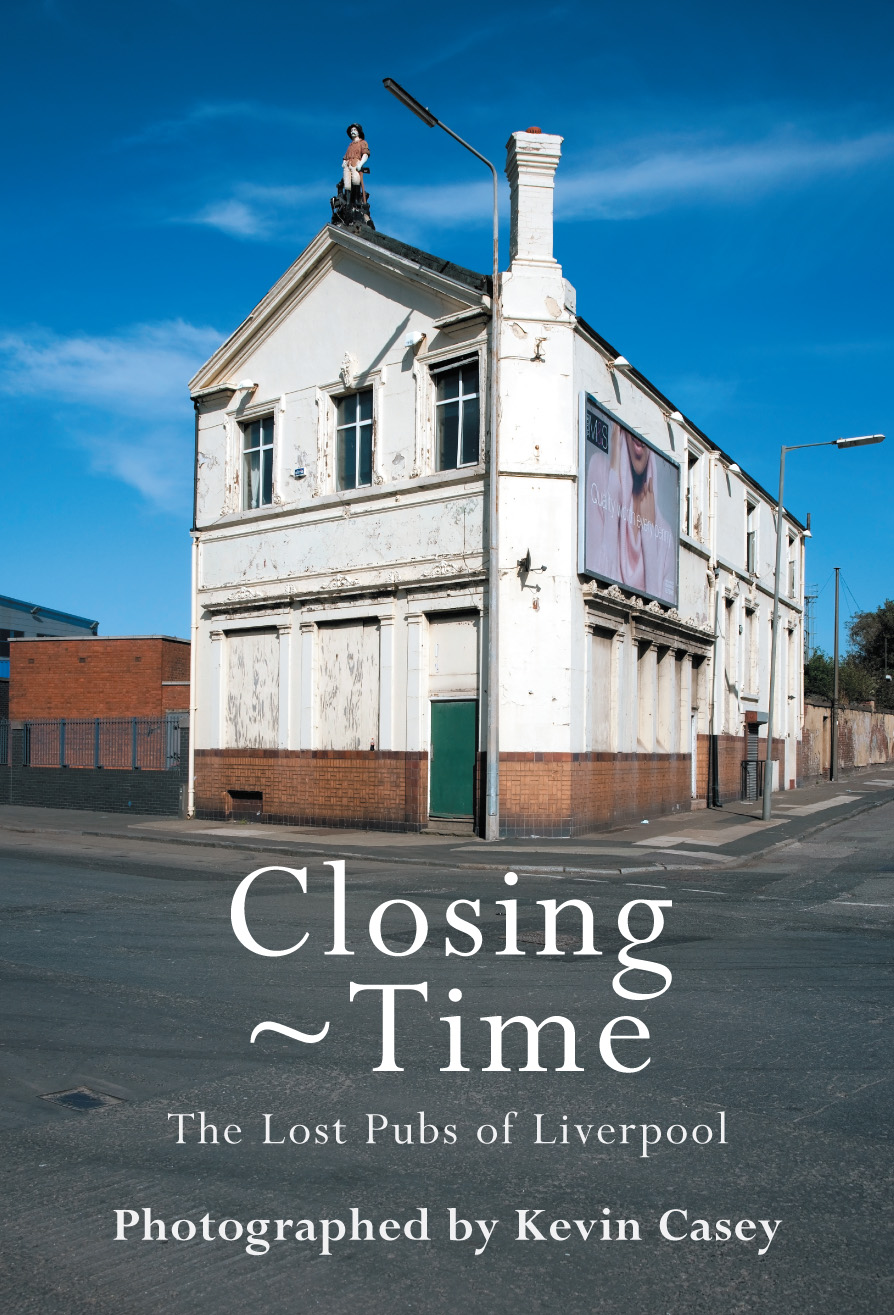
THROUGHOUT THE HISTORY OF PHOTOGRAPHY, the medium has often been used as a way of capturing what will soon be lost.There is a long tradition of photographers trying to preserve something of both landscapes and people at the point before they are gone forever. Kevin Casey’s images of abandoned public houses in Liverpool fall into this tradition.

These photographs are a systematic archive of the disappearance of what were once, both culturally and architecturally, a key feature of local communities across the country. They are also a lament, and a tribute, to what was contained within these public houses. After all, though we may admire old pubs for their cornices, brass rails, wood panelling and frosted glass, it was the life and community spirit that once existed within these now abandoned buildings that makes most people nostalgic for them.

These photographs are also a stark reminder of the urban decay that, far from being turned around by the regeneration schemes of the 1990s and 2000s, has continued apace in most areas of Britain. The uniformity in composition and the repetition of form in these images bring to mind the work of German photographers, Bernd and Hilla Becher. Except that while, in the 1960s, the Becher’s documented post-war industrial expansion and the increase of automation, here Casey documents the decline of Western industrial culture and the communities that relied on it. Yet, despite the frank depiction of the current state of these buildings, there is also a sense of empathy in the images. An empathy that could only come from a photographer native to Liverpool who had personally witnessed the decline of many of these pubs and their communities.

The number of pubs in the UK has long been in decline, as patterns of life and work have changed. However, the rate of closure has increased in recent years, with over 6,000 shutting down since 2005. Those that remain are now being battered on all fronts. The smoking ban, cheap alcohol in supermarkets, high tax rates on alcohol, problems with entertainment licences, big-money video gambling machines in bookmakers and the inability to tap into the lucrative pub/restaurant market have all hit many local pubs. Added to this is the domination of the pub industry by large, ruthless pub companies, keen to maximise their returns on supply charges and rent, leaving tenants struggling to make a profit. In turn, these power blocks of pub companies, with their collective buying and bargaining powers, are squeezing out the smaller operators. Above all, the deep recession we are currently experiencing, has driven down money for leisure right across the social strata, making people rethink how they spend their more limited incomes.

Pub closures in the UK peaked in 2008 and, although levels have since reduced, the number of pubs going out of business remains depressing. At the time of writing, closures are running at the rate of 39 a week, with a total of 2,365 pubs lost during the whole of 2009. This shocking rate raises a variety of big issues, from job losses and reduced tax revenue to abandoned real estate rotting away, but the effects are felt most in the communities that these pubs once served.

The Campaign for Real Ale (CAMRA) estimates about 40,000 of the UK’s 60,000 public houses are ‘community pubs’ – those which serve the people who live or work around them. CAMRA suggests that the benefits of having a pub in your local area include support for local charities and sports teams, having a space for social interaction and providing a place to drink in a safe, regulated and controlled environment. This shows the profound effect the loss of a local pub can have on a community although we should also be careful not to romanticise the local pub entirely. It is easy to look back with rose-tinted spectacles at the glazed tiles, wood-block flooring and frosted glass and forget that the tiles and wood block flooring were easier to wipe the blood and spit off and the frosted glass meant that the man of the house could drink away his wages unnoticed while his wife and children starved.

Even today, it must be acknowledged that pubs can also be a blight on a community, and many welcome the shutting-down of problem establishments in their area. There has been a history of some pubs being centres for criminal gangs, drug dealing and violent incidents, not to mention anti-social behaviour, vandalism and theft from those leaving the pub at the end of the night. For some urban communities, these pubs add to their many and complex problems, not help solve them.

This highlights the fact that the photographs in this book also reflect something wider, that of the changing nature of Britain’s urban communities in the 21st Century. From the Great Depression of the 1930s, through the 1960s slum clearances to the present day, photographers have been drawn to the inner-city and its people. Liverpool, in particular, with its striking urban changes, has often been a favourite subject.

So what does this latest survey of our changing urban environment tell us? What else can we see in the landscape where these abandoned pubs sit? It is not a happy story wasteland, boarded-up houses, crumbling industrial buildings, local shops as abandoned as the pubs. In some photographs, the signs of communities clinging on despite all of this can be seen, but nowhere in these pictures is thriving and, in many, the communities themselves are struggling as badly as the pubs on their corners.

It may not be a happy story, but it conveys a truth that reflects not just on Liverpool but much of the UK. These dead pubs are simply the most prominent examples of dying communities, a dying culture even. For generations, cities like Liverpool grew on the back of their commerce and industry. Now, as the industries have declined, the culture and way of life that surrounded them has slowly ebbed away, despite the best efforts of many within these communities. The Victorian architecture of the pubs, and the rows of terraced houses and industrial buildings that usually surround them, are a marker of a time past, a culture now gone, that will soon be as much a memory as the rural and agricultural Britain that the Industrial Revolution replaced.

As patterns of life and work change so inevitably will behaviour and culture. The consumer dream of choice that Britain has bought into has reduced the need for community pubs. Fifty years ago, in cramped family-filled houses with no central heating and limited home entertainment, the pub was one of the few escapes for many.

Now, why go the pub when you can buy cheap alcohol from the local supermarket, relax on your sofa, watch the match on your own big-screen television or play computer games, in the comfort of your own home for as late as you want?

There is, however, also something of a fightback on behalf of pubs. There have been many innovative solutions to stave off closures including co-operative community takeovers with pubs also taking on the role of general stores, cafes and even post offices. Most of these successes, however, have been in rural communities, often home to a wealthy commuting population. A CAMRA survey meanwhile suggests that over 80% of pub closures are urban.

In other UK cities, closed-down pubs have found new uses, everything from restaurants to money transfer facilities and even a canoe centre. There are some examples in Liverpool – one former pub in Seaforth has now found a new life as a branch of KFC, while another, The Clock in Everton, is now a successful community centre. Many more lie empty though, symptomatic of Liverpool’s perpetual economic malaise. Can these measures to save pubs succeed when the culture pub-going was based on has fundamentally changed? Can we, or do even want to, preserve in aspic what was a once-lively culture that is now in decline? Or, should we just accept that things will always change, and that there is a different future for drinking establishments? That will concern the traditionalists but let us remember that the grand ‘gin palace’ pubs we now revere, like The Vines and The Philharmonic in Liverpool, were viewed in similar ways by Victorian and Edwardian society as today’s media tend to view our ‘vertical drinking establishments’ – as garish and decadent places whose false glitz and glamour seduces the lower-classes to drink and doom.

Today, most young people in Merseyside prefer drinking in city centre-based bars and clubs and this poses problems. As much as drunken and violent behaviour happened in local pubs, the fact that they were still located within the communities that people lived in, with different generations drinking together, usually put a brake on such outbursts. City centre bars don’t have this self-regulation, and it has been suggested by the police that areas of concentrated bar development, such as Concert Square in Liverpool, actually intensify unruly behaviour by containing a large number of drinkers in a small area.

Concert Square was one of the pioneering developments in the UK for modern bars with dance-floors and outside drinking areas. Its developers advocated they wanted to give Liverpool the kind of ‘sophisticated’ outside drinking area that they had seen in Europe, and the development was replicated throughout the UK. Any visitor to Concert Square on a Saturday night could easily see that this has not come to pass, and that the violence and destruction that are features of weekend nights across the UK is at least partially a result of this failed aim. British culture is simply not like that of continental Europe and introducing 24 hour city-centre drinking will not covert British drinkers to slowly sipping a red wine on the terrace.

Liverpool might be the focus for Casey’s photographs but this city is merely at the extreme end of a national phenomenon. Social disorder and urban decay is prevalent, in varying degrees, from Burnley to Nottingham, Stoke to Newcastle, and Swansea to Ipswich. Leisure-led regeneration has been trumpeted as one of the answers to problems of urban decline since the 1980s but, once again, Liverpool has shown the rest of the country the error of its ways.

Since the credit crunch, the leisure-led regeneration myth has largely been debunked. Luxury flats, art galleries and shopping centres may improve cities but they will not, on their own, renew the communities that live next to them and, without wealthy residents to move into these new developments, they will not even replace those communities as they have done in places like London and New York.

Post-industrial cities of the kind that are now found throughout Britain are a relatively recent development. The future of urban areas, like the ones Casey has photographed, is uncertain. Many of these places, such as Kensington, Anfield and Seaforth, were once fields or sand dunes. In these pictures we can see grass and foliage slowly reclaiming what was once built over in the rush for a growth that is now retreating. Perhaps, one day, these streets will be fields and dunes again. Maybe the glass and steel bars that have transformed our city centres will eventually spill out into the districts that surround them. Yet, all of the issues that surround climate change seem to indicate that we could once again become more dependent on community. Most people seem to agree that we have lost something in our consumer-led, individualist culture that is unsustainable. Perhaps, then, the local pub has a future?

Indeed, it must also be pointed out that, despite this photographic survey, CAMRA recognises that Liverpool has, perhaps, the best collection of traditional pubs in the UK outside of London, though most are in the town centre and the wealthier suburbs.

The irony is that Liverpool’s poverty has actually helped preserve many of these pubs, which in wealthier cities would have been swept away by money-generating developments. These pubs, coupled with Liverpool being one of the few cities to retain an independent local brewery, Cains, has made the city a hotspot for ‘real ale tourism’ – a growth area for pubs. Real ale fans tend to be financially better off and might keep these pubs alive. Ironic, perhaps, that in the 1980s, it was the middle classes who appeared to favour the new style of bars over the traditional working-class pub. Whatever happens, this photographic survey of pubs, of Liverpool, of Britain’s urban environment in 2010, will remain a poignant document of its particular time. Casey’s efforts in scouring Merseyside for these buildings, in some cases on the day they were being demolished, are to be admired and have resulted in an important book that will be increasingly appreciated as more of our traditional landscape is lost in the coming years.

This essay was one of several pieces of writing by me that appeared in the book Closing Time (ISBN 9781904438854) published by Bluecoat Press in December 2010.


Carey Young – Memento Park

Cornerhouse, Manchester

Untill 20th March 2011

Born in Zambia in 1970, Carey Young grew up and studied in Manchester. She now works internationally utilising a variety of different media and settings. In particular though, her works critique contemporary culture and its prevailing systems. Memento Park is largely a retrospective, however the title comes from a new piece commissioned by the exhibition’s organising partners.

Gallery 2 is dominated by the large photographic prints that make up Body Techniques (2007) featuring Young, as she recreates scenes from a variety of well-known performance works by the likes of Bruce Nauman and VALIE EXPORT. The artist appears as a solitary figure amongst the vast construction sites of ever-expanding Dubai. The impermanence of such works sits uncomfortably with the flimsiness of such contemporary constructions rising rapidly out of the desert. However, whether Young is questioning is the landscape or merely using it as a canvas remains unclear.

Product Recall (2007) meanwhile, is a video of the artist laying on what resembles a psychiatrist’s couch, and as an analyst figure reads out a series of advertising slogans, she attempts to recall which corporation they relate to. The work forces you to consider how much advertising permeates our consciousness, however the effect is dimmed slightly by the fact that Young can’t seem to recall that many. Another interesting piece, Inventory (2007), sees Young collaborating with two scientists to work out the levels of all the elements in her body and subsequently their current market value, giving the artist a “price”. A clear take on the market value of art, artists and the individual.

In Gallery 3, several works deal with a world obsessed with legality, contracts and claims. A stand out is Terms and Conditions (2004) where a suited figure reads out a long legal disclaimer to those who wish to enter an idyllic beauty spot behind her, the text apparently culled from a range of corporate websites.

The title piece, Memento Park (2010), a film projected on a wall-sized screen is the most visually striking and subtly engaging work in the exhibition. The piece was filmed in Budapest’s eponymous Memento Park, where Soviet-era statues from across Hungary were deposited after the fall of the Berlin Wall. Shot in the intense light of dusk, it is startling to watch this slow, meandering film survey these huge, aggressive monuments to social realism reduced to gathered curiosities in a tatty park on the edge of town. Traffic and birdsong fight to become the soundtrack as Carey shows disembodied sections of the sculptures, a beard here, a fist there, looking as oddly out of context as the statues themselves.

As a whole, Young’s work seems to point towards the political, but her intent remains obscure and ambiguous. Many issues are raised through the different mediums, but frustratingly nothing is really said about any of them. Perhaps that’s the intention, the artist appears to be engaged in a passive resistance with the corporate world, but that passivity leaves many of the works feeling as cold and ambiguous as the actions of the corporations she questions.

By Kenn Taylor

This review appeared in Aesthetica magazine February 2011.

Nam June Paik

Tate Liverpool  and FACT (Foundation for Art and Creative Technology) Liverpool

Untill 13th March 2011

As we move into the second decade of the 21st century, it appears as if “media art” is finally being accepted as a high art form. It has been nearly 60 years since Nam June Paik’s first experiments with sound, television and video emerged into the international art consciousness, and so reaching a point of major institutional recognition highlights just how far ahead of his time he really was.

Perhaps more profoundly, this first major retrospective since his death in 2006 signifies how so many of his ideas predicted our present day multimedia world, which is saturated with technology, information and interactivity.

Exhibited across both Tate Liverpool and FACT (Foundation for Art and Creative Technology), Tate does what it does best with a grand narrative retrospective, while FACT does what it does best with a focus on examining Paik’s use of video and cutting-edge mediums from the 1970s onwards.

Paik began his creative work with music. The first section at Tate examines, how his relationship with the radical composer John Cage informed all his later work and how, despite not considering himself a “visual artist”, he began to move into new mediums saying: “I knew there was something to be done in television and no one else was doing it.” Despite this, in his later work, he retained many of the concepts he learned whilst composing avant-garde music; chance, interaction and pushing the limits of technology.

From his earliest works Paik wanted to break down the boundary between artwork, artist, and viewer and viewed. The great hulk of Video Synthesiser 1969 (1992), developed by Paik and engineer, Shuya Abe, to allow participants to manipulate images on a screen without specialist technical knowledge, is startling. A lump of knobs, dials, leads and CRT monitors, it allowed, the general public (perhaps for the first time) to do what previously only broadcast engineers could do and what today any kid with a basic computer and internet connection could do.

As with so much retrospective documentation of performance and experimental work, the old televisions and tape machines detailing early works can only hint at the experience of witnessing or using them at the time. It’s hard to imagine when these common devices were cutting edge pieces of technology that were being used in a radical way, particularly now, because analogue TV sets and tape machines look like nothing more than junk-shop relics.

The best of Paik’s work though, transcends this. TV Garden 1974-77 (2010) one of his first large-scale installations, a series of televisions placed among a myriad of tropical plants each showing a mesmerising television mash-up Global Groove (1973) that could be a proto-YouTube video. Its continual, rhythmic flickering colours and sounds are beautiful, illuminating the foliage in the darkened room, and a prominent example of how Paik wanted to break down the barriers between the natural and technological.

Underpinning this were Paik’s Zen Buddhist beliefs. Often highlighted as his signature motif, his collection of “TV Buddhas” epitomises much of his art and philosophy. The ancient Buddhist symbol, in a variety of guises, sits watching a TV screen, displaying clearly, the interaction between humanity and technology and the contrasts he so loved; the Eastern and the Western, the old and new, the technological and the spiritual.

The contextual information in the gallery further highlights Paik’s desire for global human connectedness through technology. He is credited with coining the term “Information Superhighway” back in the 1970s. His foresight is also highlighted in 1994’s Internet Dream, a video wall displaying a constant stream of rapidly changing garishly coloured scenes to hypnotic effect shows his early awareness of our move towards information saturation and his celebration of its constant expansion with every shift forward in technology.

At FACT meanwhile, the cavernous Gallery 1 is entirely taken up by the spectacular installation Laser Cone 1998 (2001). A tent-like structure you lie beneath and experience an overwhelming, intense laser show. Like Internet Dream, it seems to reflect Paik’s interest in subjecting the viewer to the beauty inherent in visual overload.

Gallery 2, by contrast, is set out like a chic lounge where, armed with remote control, you’re invited to flick through hours of Paik’s video works. Some of Paik’s riffs on the potential of the medium and his love for pushing it to its limits look retro, in some cases, just boring, compared to today’s potential for intervention and experiment with media. However, their influence, on everything from MTV to Skype and today’s video artists, is clear and profound.

This retrospective is comprehensive, but not overwhelming, and, even spread across two venues, it’s easy to navigate through the artist’s life and career. This enables visitors to clearly see how his work morphed and changed with the times and advances in technology.

Paik was a pioneer of “media art”, yet it seems he always wanted what we have today. Not only did he realise the potential for technology to be used in art, but its potential to allow the viewer to take a more active role, for mediums to merge, and for anyone to make or manipulate the content. Paik understood that technological art needed to move beyond the medium, and like all great art, to be about humanity and its relationship to the world.

By Kenn Taylor

This review appeared in Aesthetica magazine December 2010.