A Brief History of Edge Hill

This is a book I wrote to accompany the Metal Culture project, The Edge Hill Archive, which looks at the history and culture of Edge Hill, Liverpool 7, and the work that Metal is doing in the area now. The project and the book’s publication was supported by the Heritage Lottery Fund. The design is by Ultimate Holding Company.

You can read A Brief History of Edge Hill at the Issuu link below or download the PDF. For further information on the wider Edge Hill Archive see also the link below.

Edge Hill: the place where an industry began that changed the world.

http://issuu.com/kenntaylor/docs/a_brief_history_if_edge_hill

A Brief History of Edge Hill PDF

www.edgehillstation.co.uk

From the Ground Up: Radical Liverpool Now


By Kenn Taylor

This book tells the story of a century in the life of a radical city. One hundred years of turmoil, extreme change, alternative ideas and independent action. Different radical currents have flown through Liverpool over the years but underneath it all the city’s inhabitants seem to have developed a fiercely independent nature that defies any attempt to pin it down – a nature that mistrusts external authority, frequently defies conventional logic and seeks practical solutions to seemingly intractable problems.

If you talk about radical politics and activism in Liverpool, there is an inevitable harking back to the radical socialism that was a key component of the city’s identity after 1911 – especially during the 1980s, when a local authority dominated by the Militant Tendency infamously refused to set a legal budget as an act of resistance against a hostile Conservative government. This, along with the radical trade union activity throughout the city and the Toxteth riots of 1981, helped cast a view of Liverpool as a hotbed of revolutionary socialism that still persists today.

Yet, as documented elsewhere by John Belchem, this was far from representative of Liverpool’s grassroots politics throughout its history. If 1911 was the year that marked Liverpool’s shift towards a form of socialism, then the 1980s were perhaps its peak. And almost as soon as this aspect of the city’s character entered into the national consciousness it had begun to decline.

Contributing to this, no doubt, was the failure of the Militant council to bring down the Conservative central government and fund the municipal socialism they promised – not to mention distaste within the city for some of their methods. This, along with a decline in trade union membership and disappointment in thirteen years of New Labour government, has considerably reduced the influence of the labour movement in Liverpool at a grassroots level. It has been suggested in light of this that the city has lost its radical nature and become overwhelmed by apathy. Indeed, Liverpool has some of the lowest voter turnouts in the UK. However; this chapter will argue that this decline has seen an emergence, or perhaps a re-emergence, of a different type of radicalism in the city.

In recent years, large sections of Liverpool have been transformed, mostly in a positive way. But beneath this brave new regenerated city there are still many problems and, with them, a vast undercurrent of grassroots activism that is fighting to rebuild the city from the ground up. The radical spirit that has over the years fuelled protests, riots, strikes, occupations and takeovers, remains. As do the skills, in organising, protesting, publicizing and delivering action. Though much of this is still organised and influenced by those who were part of the labour movement, the landscape has changed.

This spirit perhaps harks back to something older and deeper in the psyche of Liverpool’s citizens: to the culture forged in the dire poverty of Victorian Liverpool, when the character that came to be known as ‘Scouse’ was being formed and the gulf between rich and poor was so vast.

Perhaps the best-known example of grassroots community activism in Liverpool during the last thirty years has been that surrounding the development of the Eldonian Village. Here, in deprived Vauxhall, a celebrated, self-organised community grew up on wasteland, against the odds and in the face of an actively hostile local authority. In Liverpool it has frequently been individuals rather than movements that have defined the city’s activism. This is exemplified by Tony McGann, who led the residents of the Eldon Street and Burlington Street tenements to develop the Eldonian Village. His actions were driven by a desire to prevent their community being broken up and dispersed to estates on the fringes of the city – the fate of so many other working-class communities in Liverpool due to successive slum clearance programmes from the 1930s onwards.

Encouraged by the then Liberal-dominated city council in the early 1980s to form a housing co-operative, the residents that were to become known as the Eldonians had their plans undermined when Labour gained control of the city in 1983. Coming up against a local Labour party keen that it alone should control housing and community development, the residents nevertheless battled on. Determined that they knew what was best for the community, they had come to mistrust the council, of whichever political stripe, for having failed to deliver the services they had promised.

In order to bring their plans to fruition, McGann and his fellow community association members worked not only with the labour movement but also formed alliances with everyone from Conservative ‘Minister for Merseyside’ Michael Heseltine to major construction companies, architects, social landlords and even royalty, developing the new ‘urban village’ over a number of years and many hurdles.

From a humble start the Eldonian Village has grown into a development renowned around the world, even winning the UK’s first United Nations World Habitat Award in 2004 for creating ‘an internationally recognized model of community-led sustainable regeneration’. The Eldonian Community Trust and its various subsidiaries have since expanded into many other areas beyond housing, establishing a local leisure centre, nursery and village hall. They have also worked with private developers and other partners on expanding the area and encouraging younger families to move in. The result is a ‘self-regenerating community’.

The Eldonian Village was a radical project at the time, but it was not Liverpool’s first attempt to create better lives through buildings. Poverty has meant that problems with housing have dominated the city for much of its existence, as have attempts to find solutions to them. Liverpool Corporation is noted as having built the first local-authority-owned housing in the UK in 1869, thus bringing new standards into the housing of the poor.

Later, between the wars, the city pioneered continental-style tenement blocks and developed out-of-town housing estates. As such initiatives moved from being radical to the norm in the post-war era, Liverpool also became home to some of the largest housing associations in the UK, these largely focused on regenerating older, abandoned city-centre properties that had been left to rot by the council. However, the well-meaning that had seen the city pioneer the first municipal housing eventually became lost among council bureaucracy and limited funds. Even the housing associations morphed to become huge public corporations, now often perceived as being as remote as local authorities themselves.

With the emergence of the Eldonian Village, Liverpool also became a test bed for large-scale co-operative urban development. For many years the city had searched for solutions to its housing problems and come up with groundbreaking ideas that were later adopted nationally; the Eldonian solution, however, was developed from within the community itself, not imposed by outside ‘experts’.

The Eldonians realised that rebuilding housing was not on its own enough to tackle deprivation and create a sustainable community. Control by local people over their own environment and long-term, multifaceted thinking were key. This was in contrast to the zealousness with which Liverpool city council had pursued its flawed modernist-influenced housing developments in the 1950s and 1960s. Whilst acknowledging that the dire post-war housing shortage contributed to this, these schemes, developed by outsiders with utopian ideals and often rigid beliefs, were frequently ill thought out and badly built. Such estates were imposed onto people with little thought for the fragile ecosystems that provided support in poor communities, creating untold damage, the effects of which remain today.

The failure time and again of such grand plans and ideologies dreamt up by outsiders to improve the lives of the poor in Liverpool, be they from politician, academic, architect or otherwise, has helped create a mistrust of such ideas in the city, fostering instead a do-it-yourself mentality where disenfranchised communities have taken matters into their own hands.

The work of Tony McGann and the Eldonians prompted Prince Charles to remark, ‘Men and women, through the power of their own personalities, can achieve more than millions spent through committees’ – a comment no doubt with which many citizens of Liverpool would agree.

It took the prospect of their community being broken up and dispersed to galvanise the residents of Eldon Street and Burlington Street into creating the Eldonian Village. A similar crisis in the Croxteth area of the city was to prompt equally radical action at around about the same time. In 1980, Liverpool city council stated its intention to close Croxteth Comprehensive School, doing so without consulting the local community or even informing the school’s head teacher.

Croxteth was one of Liverpool’s rapidly built, post-war peripheral housing estates and the school was one of the few facilities the deprived community had. Numerous intense protests against closure were quickly organised, but when these came to nothing, parents and local residents took the decision forcibly to occupy the school on the day before its planned closure in 1982. This radical action sent shockwaves through both the community and the authorities, as recalled by local resident Irene Madden: ‘I’ve never known an atmosphere like it … I think the Council and the government got the shock of their lives, you know when we stood up to them.’ Unlike the Eldonians, those involved in the Croxteth occupation were fighting the then Liberal-dominated council and had the support of the Labour group, but once again they were defying the power of a local authority they perceived as remote to try to protect the interests of the local community.

Soon after the occupation, the Croxteth Community Action Committee took the decision to open their own community school in the building, despite overwhelming odds and no real funding. The committee was led largely by Phil Knibb, like Tony McGann, another tough individual who commanded the respect of the local community. It organised and operated all aspects of the school and its round the clock occupation in partnership with parents and pupils. Volunteer teachers came from across the country, donations were successfully sought and supplies given by local factories.

They received widespread media coverage and even won celebrity backing from Vanessa Redgrave and UB40 – all this in the face of legal threats from the council and the electricity being cut off. The current UK coalition government are keen on ‘free schools’ and communities setting up and running their own educational establishments, but in 1982 Liverpool was once again pushing a radical idea that was attacked by many in politics and the media. The Daily Mail even suggested that ‘the strange Indian cult Anada Marga’ was at work in the ‘school of chaos’.

After Labour won control of the city council, Croxteth Comprehensive was taken back fully into local authority control in 1985. However, the occupation had helped create a new sense of community activism and empowerment in the area. Early in the occupation the Action Committee formed several subcommittees to work on wider local issues, including providing activities for young people, tackling the area’s heroin problem and providing support for older members of the community – work that was to continue long after the school campaign had ended.

In 1999, an old people’s residential home in the centre of Croxteth became available for purchase and a number of Committee members pooled their savings and redundancy monies to buy it and turn it into a community-based education centre. Since then, the now Alt Valley Community Trust, still led by Phil Knibb, has grown beyond all recognition.

The old people’s home has been turned into ‘The Communiversity’ and is the main base for the organisation’s work. Social businesses have been set up in local shopping units purchased by the trust and a vocational skills training centre for young people has opened in the former St Swithin’s Church – a project that is now entirely self-financed through contracts.16 Even the local leisure centre has been taken over by the trust through asset transfer.

Croxteth Comprehensive School was once more threatened with closure by the city council at the end of 2008. The decision again sparked outcry in the local community, which refused to accept the verdict. This time there was no occupation, but they became among only a handful nationally who managed to take their case to the High Court in an unsuccessful bid to challenge the ruling. However, having lost that battle, members of the community are attempting to turn something negative into something positive. At the time of writing, the Alt Valley Community Trust is in discussions with Liverpool city council to take ownership of the modern technology and sports blocks of the school to expand its own education provision. Croxteth is another example of a community being pushed into taking control of its own situation, no longer allowing itself to be at the mercy of external forces. This recurrent theme of recent activism has arguably filled the vacuum left by the decline and failure of the overarching ideologies and systems that such communities had come to rely on.

The mistrust of grand schemes within Liverpool has manifested itself most recently perhaps in campaigns around the city’s European Capital of Culture 2008 designation. Winning the status in 2003 was one of, if not the, biggest things to happen to the city in the last twenty years. Property values rose overnight and there was nothing short of euphoria in some quarters that Liverpool’s importance finally seemed to be officially acknowledged after so much decline and derision. In particular the city’s cultural community, which had struggled to survive through years of austerity, felt that its role was finally being recognised.

But it all soon began to slip. The Culture Company running the year was perceived as remote, the programme for 2008 was accused of not acknowledging ‘local’ culture and links between the title and wider development plans began to emerge. Rightly or wrongly, building developments such as Grosvenor’s Liverpool One and the Housing Market Renewal Pathfinder programme instigated by the government were lumped together with the award as the city went through an intense period of growth it had not experienced in years. This development was fuelled not only by the culture title but by increased inward investment and the global easy-credit boom.

As rapid development continued in the build-up to 2008, the city’s artistic fringe found itself being pushed out of its studios and venues by the rapidly developing legions of bars and flats. Ironically, however, the Capital of Culture title also provided a hook for the city’s artistic grassroots to resist these developments, which, with the credit boom and the like, would probably have happened anyway, as it did in other cities across the UK. A loose anti-2008 movement emerged, questioning not only how plans for the year were being handled but the whole notion of regeneration and the Capital of Culture status in and of itself.

The big spark for all of this appears to have been the fight against the proposed closure of the Quiggins ‘alternative’ shopping centre to make way for the Liverpool One development. Ultimately, the campaign did not succeed, though the shopping centre has since been moved elsewhere in the city, but it became a powerful symbol and rallying point of the ‘independent’ and ‘local’ against the ‘corporate’ and ‘global’, even if the Liverpool One development has subsequently proved very popular in the city. Similar campaigns were mounted around the Picket music venue and the Parr Street Studios recording complex, both threatened with conversion into apartments. Angry words were raised in independent local publications such as Mercy and Nerve and pretty soon even the mainstream media began questioning what was happening in Liverpool.

The city then became a test case for contemporary urban regeneration ideas that had developed over the intervening thirty years. In the aftermath of the 1981 Toxteth riots, the Conservative-backed, quango-led regeneration initiatives around the Garden Festival, the Albert Dock and the Southern Docks meant that Liverpool was among the first cities to experience the sort of leisure and private-housing-led regeneration later adopted by former industrial areas around the country. And, in the build-up to 2008, what was happening in the city was to highlight the flaws in these ideas.

Liverpool subsequently began to attract considerable criticism from both academia and the broadsheets for its regeneration plans, with commentators questioning just how much of the city’s renaissance was trickling down positively to affect poor local communities. That many of the same people had previously talked up the triumphs of similar schemes in London, Manchester, Birmingham et al., despite the fact that these areas all retained similar levels of deprivation masked by redeveloped central areas, seemed lost. Liverpool was blamed for telling a wider truth about the UK’s situation that was soon to be exposed by the credit crunch. Many commentators who had previously backed such forms of regeneration subsequently washed their hands of these ideas in the same way as did zealous supporters of post-war modernist development when communities themselves highlighted the flaws of their new towns and high-rises.

The city again showed the rest of the country ‘the error of its ways’ and demonstrated the power of grassroots action. This perhaps is Liverpool’s greatest contribution to the wider world for having been awarded European Capital of Culture: to have been the place that questioned, even deconstructed, the whole concept, in the process changing the way many people think globally about concepts of culture, cities and regeneration.

The other big issue that has provoked intense community activism in Liverpool in recent years is the Housing Market Renewal Initiative (HMRI) Pathfinder programme. Instigated in the early 2000s by the Labour government, its intention was to regenerate areas where housing demand was seen to have failed and that were suffering from dereliction and the inherent problems it creates. Based on a report by academics from the University of Birmingham, the plan advocated wholesale demolition and reconstruction of many deprived areas of the UK.

Liverpool city council adopted the policy enthusiastically and began buying up properties, often through compulsory purchase orders, and instigating a demolition programme. This was perhaps understandable as after years of government underfunding the city was being offered a large amount of money for housing development. But the plans were fiercely resisted in parts of the city as once again the council was seen to be imposing its will unthinkingly on local communities. Some even accused the plans as amounting to ‘social cleansing’ and an attempt to drive poorer people out of the city.

As with previous demolition schemes, HMRI galvanised local residents into taking control of their own surroundings. In Toxteth, one of several areas where there was a reaction against the programme, committees and residents’ groups were created to fight the plans. Alliances were developed with politicians, heritage groups and even Beatles fans, since one house up for demolition in the ‘Welsh Streets’ area had once been the home of Ringo Starr. Partnerships were also formed with housing co-operatives and private developers who stated their intention to renovate rather than demolish the area’s empty properties. There have also been symbolic and imaginative responses against the plans. Poetry and art was daubed on the doors and windows of threatened houses in the Welsh Streets. Meanwhile, in the nearby ‘Four Streets’ area of Granby, residents have undertaken ‘guerrilla gardening’, planting flowers and vegetables among the empty buildings to create a veritable oasis of green in an area now blighted by urban decay. Local street markets and parties have also been organized to highlight the strength of feeling and community spirit, again powerful symbols against the might of a massive national government initiative and the council’s plans.

Campaigns against HMRI have had mixed successes across the city, and it must also be pointed out that a proportion of the residents involved did back demolition and reconstruction. Nevertheless, at the time of writing, the council had recently announced plans to refurbish rather than demolish some of the houses in the Four Streets area, while the Granby Residents Association hopes the demise of HMRI funding might now allow for more community-led refurbishment schemes to takes its place.

However, a question mark continues to remain over whether the high-profile campaign to save the Welsh Streets will be successful. Communities taking over and reusing spaces left abandoned by Liverpool’s economic problems can be seen time and again across the city.

Another example is in the Dingle area of Liverpool 8, where a high-profile campaign was instigated to take over, refurbish and bring back into use a prominent local building that had been left to rot. The Florence Institute was originally gifted to the area by Sir Bernard Hall, a merchant, Alderman and former Mayor of Liverpool. Named after his daughter, who died tragically at the age of twenty-two, ‘the Florrie’ was officially opened in Mill Street in 1890 and became a focal point for the local youth and community for many years. With funding running dry, the Florrie was eventually sold in 1987 with the intention that its charitable work should be continued by another body. Unfortunately, this never happened and the building became neglected, a target for vandals and the elements.

As the building decayed, the local community formed a pressure group, ‘The Friends of the Florrie’, to bring it back into use. A community-led trust was set up at the end of 2004 and completed a consultation on the building’s future. Denise Devine, chair of the trust and also managing director of the nearby Toxteth Town Hall, says the needs of local people were paramount: ‘There has been door to door and group consultation throughout and that will continue … It really means a lot in the hearts and minds of local people, the Florrie bettered people, it made them better, honest, hardworking people … It will fulfil that function again – from cradle to grave, Sunday to Sunday.’

The Florence Institute Trust has worked hard over the last few years to develop a regeneration plan for the building and to raise funds to restore it into a multi-ethnic community centre for all ages and abilities. The plan for the new Florrie includes exhibition and performance space, activities for young people and the elderly, an indoor/outdoor sport area, childcare facilities, workspaces for local business and a heritage resource centre.

Having raised over £6.4 million from a variety of sources including the Heritage Lottery Fund and the city council, in June 2010 it was reported that work was due to start on the new Florrie with a planned completion at the end of 2011. The trust has also formed an agreement with the main building contractor that wherever possible jobs on the project should be sourced from the local community.

As Denise Devine documents, once again this initiative was led by the community itself: ‘The Friends of the Florrie is a home-grown grassroots organisation that has had to take the lead when no-one else wanted to touch it with a barge pole. Now people are inspired and have had their faith restored.’

This chapter has attempted to show that grassroots radicalism is still a key component of Liverpool’s culture, and also to draw together some of the factors that link these different actions and initiatives. Rather than Liverpool adhering to an overarching radical ideology, there are instead many instances of the city’s deprived communities refusing to be crushed or to have their destiny controlled by external forces. If anything, that is the underlying radical undercurrent in Liverpool now, and possibly always has been.

Community activists in the city have always had general mistrust of external authority or anyone trying to impose anything on them, be it government, institution, trade union, political party or local authority. There is also an equal distrust of grand plans and ideas, usually because time and again they have been shown to fail the people they are most meant to help. The dreams of 1911 and of other attempts at rapid radical change in Liverpool – be they the slum clearances, Militant Tendency or leisure-led regeneration – have rarely brought the transformative benefits they promised.

Although disparate, all the actions I have described – everything from short-term campaigns to full-blown community takeovers – seem to have similar motivations: wresting control of the local environment from distant, unaccountable figures and working towards practical, long-term goals that reflect the needs of the city’s people. Such activism has filled the vacuum created by successive local and national government indifference or incompetence and the decline in trade union and Labour party support.

If deprived communities are to survive and prosper, it can only happen with local control and action that comes from the ground up. Some may find the city’s and its communities’ ruck for independence and self-determination exasperating, while it is also true that it can be hard to strike to strike a balance between this and Liverpool’s need to develop its economy and infrastructure; but when this spirit is directed to solid agency it can be magnificent and can transform the lives of those involved with it. Such communities have also time and again pioneered solutions to seemingly intractable problems and highlighted to the rest of the UK where it is going wrong. For doing so, Liverpool often gets the blame for spoiling the party. But, for that the country owes the city a debt, as it is frequently ideas formed in the turmoil of this radical city that become tomorrow’s ‘common-sense’ solutions.

Indeed, many of the campaigns and initiatives mentioned in this chapter that were once considered radical, even dangerous, ideas – self-organised housing co-operatives, community school takeovers and local control over facilities and services – are now in vogue, favoured by the current UK coalition government as part of its ‘Big Society’ agenda, suggesting that communities will be able to take over from the role of the state services for which it is withdrawing funding. In fact, just before the 2010 general election, Conservative leader David Cameron visited a Liverpool social enterprise called MerseySTRIDE on Great Homer Street in Everton – a furniture workshop that provides work for local unemployed, homeless and otherwise disadvantaged people – saying that it demonstrated his ideas for the ‘Big Society’ in action: ‘The biggest thing is to build a stronger society – we’ve got to help people who are unemployed for a long time and social enterprises like this help. It demonstrates where giving more power and control to projects like these works.’

Most people in Liverpool would agree that communities themselves know what is best for them. Is the city then not only leading the way in radical new ideas, but for once not going against the grain of the rest of the country? Yet, what promoters of the ‘Big Society’ do not acknowledge is that many of the most successful initiatives discussed here, from the development of the Eldonian Village to the Florence Institute restoration in Dingle, despite being community-led, have required a complex mesh of external funding and support. In a city that relies heavily on national government funding that is now being withdrawn, this is something that in future will be in short supply. And, despite the grassroots activism of the past thirty years often operating against the grain and with limited support, it was the withdrawal of such funding and support in the past that helped create so much damage in these communities and fostered the need for such radical action in the first place. It is also why it has taken so much work and extra money over the years to build things back up.

If all that disappears once again, it can only undo so much of what has been achieved. With the government refusing to admit that the voluntary and the community-led also requires financial support, it has to be asked how many of these projects will be able to continue their current good work, let alone replace the role of local and national government provision.

Indeed, despite Cameron’s pre-election support for MerseySTRIDE, once in power, the coalition government quickly axed the Future Jobs Fund programme that had provided much of the funding for placements at this social enterprise. It seems the ‘Big Society’ might end up just being another flawed, top-down ideology that Liverpool’s communities will have to resist, counteract and find solutions to.

What then is the future of grassroots activism in Liverpool? Much has changed since 1911, but much remains the same: the interconnected problems associated with poverty, housing, unemployment, crime, ill-health, education and opportunity. As the last hundred years have taught us, there are no easy answers to any of these. Yet something else we have learned over the last century is that Liverpool and its active citizens are resilient: they will not give up and will do whatever they can to look after their communities.

In many respects, the city should long ago have ceased to exist, let alone have managed to achieve what it has. And not only that, but also remain a place of radical action that is still influencing thinking globally.

Radical Liverpool today is perhaps the same as it has always been: a collection of tough, bolshie individuals and groups who share a passion for their beliefs and their community and will not be told what to do. There are radical grassroots activities being undertaken across many different communities and over many different issues, but what unites them seems to be what has united radical Liverpool since 1911 and before: a gritty self-determination to succeed against the odds – something that will stand the city in good stead for the inevitable challenges of the next hundred years.

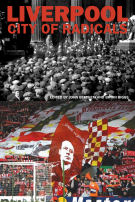
This piece appeared in the book Liverpool: City of Radicals edited by John Belchem and Bryan Biggs and published by Liverpool University Press. ISBN: 9781846316470. A fully referenced version is available in the book.

A Discerning Eye

Liverpool’s Open Eye Gallery reflects on its pioneering history as it prepares its move to a new home.

Liverpool, with its mixture of grand buildings and dockland dereliction, strong characters and deep poverty, has often been a favourite subject of photographers from around the word. Everyone from Cartier-Bresson to Candida Höfer and Rineke Dijkstra has shot in the city. Aside from being a subject though, Liverpool has also been home for over 30 years to one of the most important galleries in British photography, Open Eye. This autumn it will move to its first purpose-built home, a striking building on the city’s waterfront, thus beginning another chapter in its chequered history.

Director Patrick Henry is leaving the Wood Street space which has been Open Eye’s home since 1995. The gallery’s now filled with boxes, books and files in preparation for the move. After seven years at the helm, Henry has overseen the long process of finding the organisation a new home, not easy in the midst of a recession. Having studied history of art at Manchester University, Patrick worked for several years as a freelance photographer and then a Curator at what is now Bradford’s National Media Museum, before becoming Director at Open Eye. He says: ‘Cities like Liverpool have always had a romance and fascination for me. So when I was working in Bradford and looking for something new, more freedom and autonomy that you can have working in a big institution, when the job here came up, I was very interested in it.’

Open Eye originally emerged in 1973 as part of an organisation called the Merseyside Visual Communications Unit (MVCU). In its early days, MVCU was a heady mix of art and activism, a DIY operation run on a shoestring by artists, volunteers and a tiny staff team. Patrick says of those days: ‘It had a mission to do with media education, activism, and community arts, making facilities and equipment available at affordable rates. Making it possible to produce culture in a democratic way and also to present the kind of culture that at the time you couldn’t necessarily find in the official venues.’

But, as Patrick details, keeping such an operation afloat in those times was an unenviable challenge: ‘Some of the stories of the storms that were weathered through that period are almost biblical. They had really severe floods and there was a series of fires. There were even firebomb attacks by a far right-wing, racist organisation.’

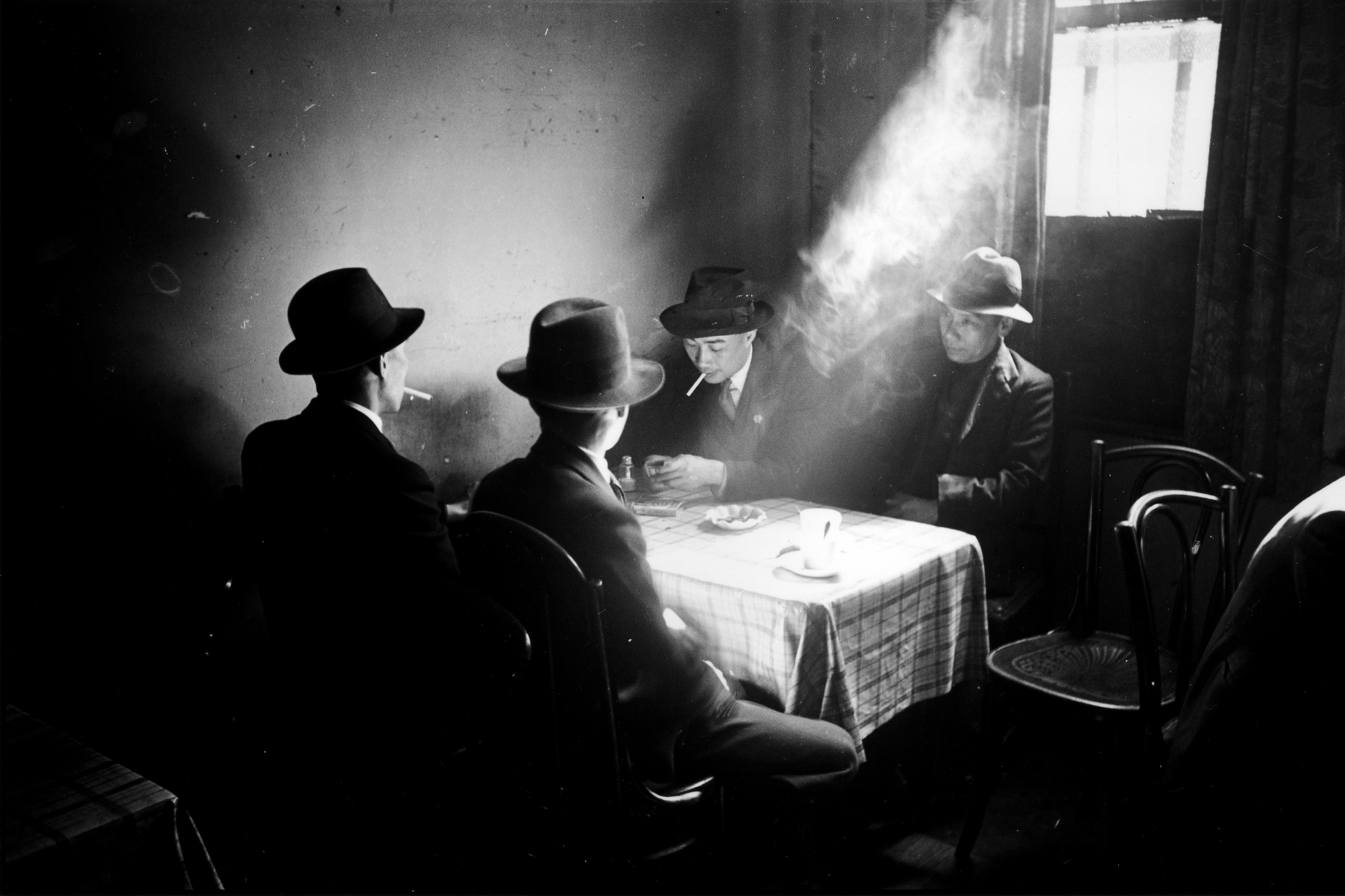
In 1976, MVCU moved into an abandoned pub, the Grapes Hotel in Whitechapel, central Liverpool. The Open Eye Gallery itself followed in 1977, occupying what had been the public bar. It was one of the pioneering galleries in that period, fuelled by a growing sense of photography’s artistic, social and political potential. ‘It was part of a network that was growing through the ’70s and the ’80s of independent photography gallery spaces around the UK,’ says Patrick. ‘Showing photographers like John Davies, Paul Graham, Tom Wood and Martin Parr, who were increasingly confident and assertive about the voice they wanted to have as artists, though they were for the most part excluded from the gallery scene and museum collections in this country.’

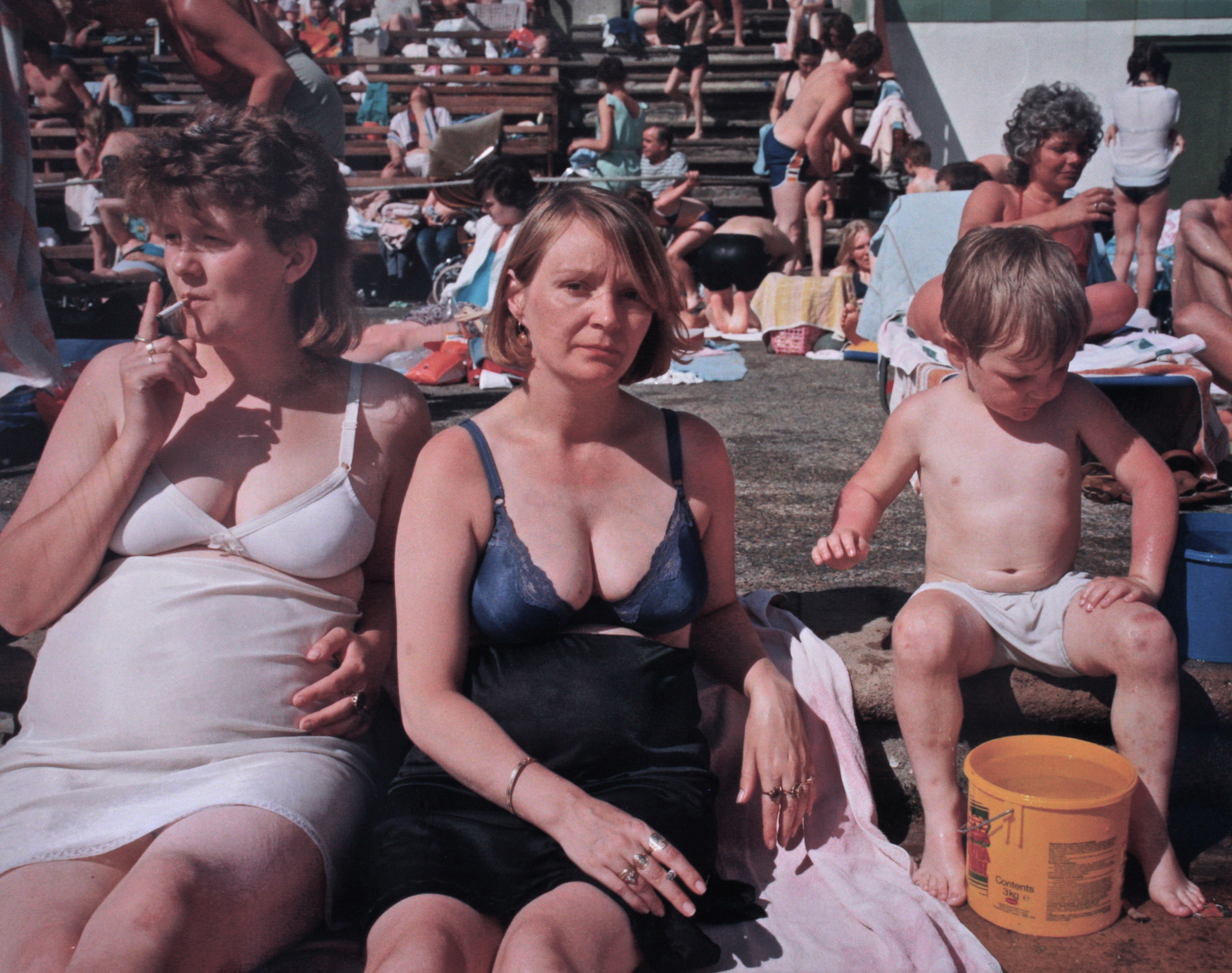
During this time, Open Eye’s exhibitions had a strong role in promoting some of the photographers now regarded as Britain’s finest, as Patrick details: ‘A really important one was The Last Resort. That exhibition was produced by Open Eye and toured. That was actually a joint exhibition of work by Tom Wood and Martin Parr. It’s very well-known now because of Martin’s work, and his book, but the original exhibition was the two of them. “The Last Resort” was of course New Brighton, across the river from Liverpool.’

Later, the gallery moved to Bold Street and shared premises with several other community-focused arts groups until funding and organisational problems saw Open Eye separate. In November 1996, the gallery was re-launched in Wood Street and began to show a stronger element of moving image work, as well as adopting an increasingly international photography programme.

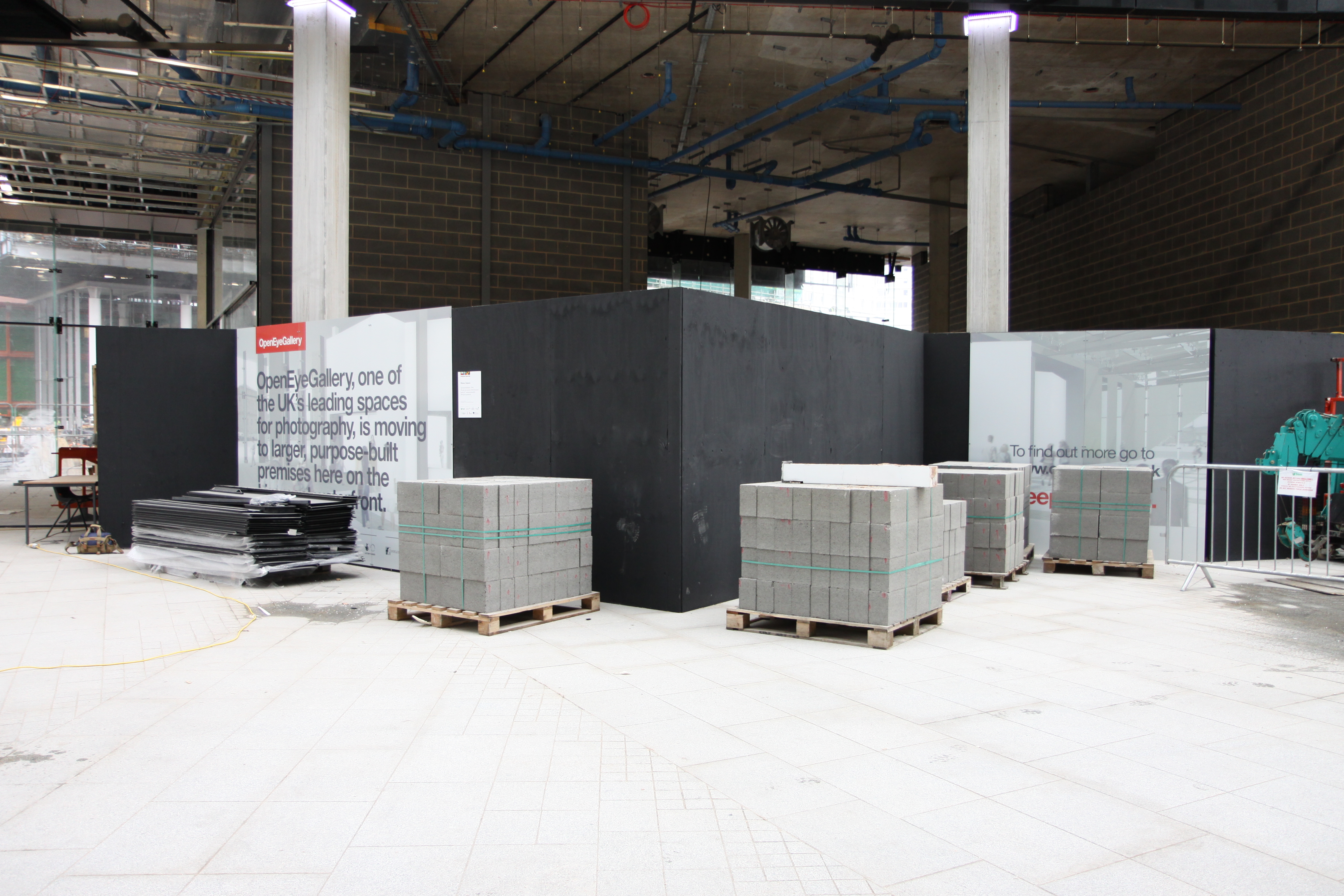
Fueled by a desire to expand its exhibition spaces and increase and diversify its visitors, in mid-2009 Open Eye entered the main phase of its relocation project, which will culminate in its new, purpose-built space opening in autumn 2011. The main gallery on the ground floor will showcase an international programme of contemporary photography. A mezzanine gallery will display exhibitions drawn from Open Eye’s archive of over 1600 photographs, while gallery’s exterior wall will be also be used for a series of large-scale vinyl commissions called, ‘Wall Work’.

The ability to show images from Open Eye’s extensive archive regularly for the first time is one of the key developments of the move. ‘The archive dates to 1980,’ says Patrick, ‘and it’s been growing ever since. There are the big formations; social documentary, portraiture and urban landscape and so on, but there are also countless, odd, fringe things as well. From a programming point of view for the archive, we just want to explore that over time and set it up in dialogue to the contemporary work we are showing.’

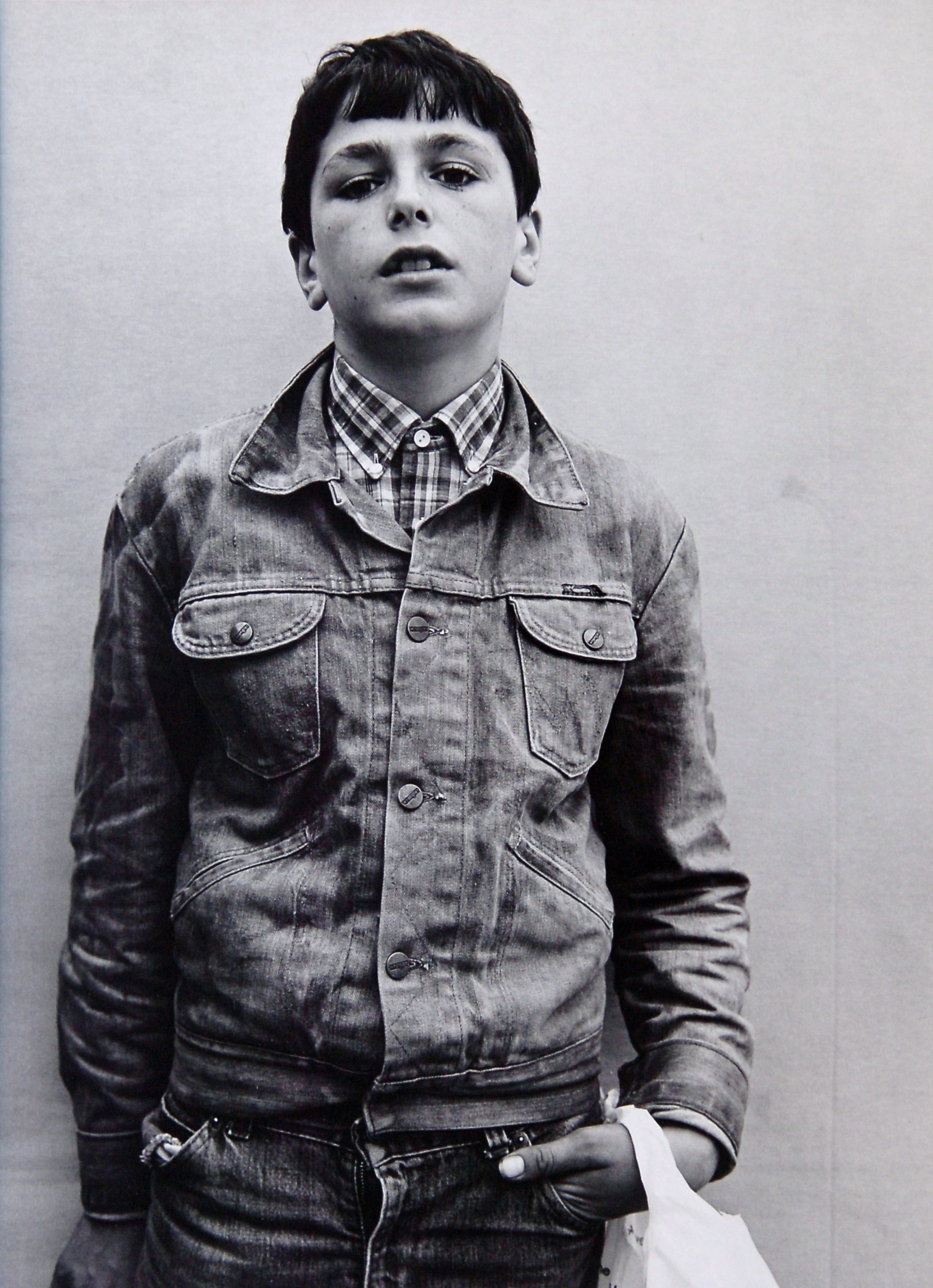
Open Eye’s launch programme in the new gallery reflects well both its past and present. Its main exhibition will be Mitch Epstein’s first solo show in the UK, American Power, which examines how energy is produced and used in the American landscape, questioning the power of nature, government and corporations. The archive show meanwhile will be Chris Steele-Perkins The Pleasure Principle, a photographic portrait of England in the 1980’s.

Patrick is keen on the contrasts and similarities between the two exhibitions: ‘Steel-Perkins project is about the 1980’s in Britain. It’s more photojournalistic, social commentary; whereas Mitch’s project is more art documentary. So that pairing was about a resonance, but also about a series of contrasts. Mitch’s work is kind of contemporary photography on a grand scale, while Chris’ is shot on 35mm. For our first show to connect to the culture and politics of the 80’s seemed like a good thing for Open Eye as well as it points back to our own history.’

Open Eye has changed with the times, as photography itself has changed, becoming more accepted as a fine art medium, whilst also contemporary arts spaces have become a more accepted part of the landscape of English cities. It is good to see a gallery so focused on the photographic move to a grand new space in prominent location. But is Open Eye in danger of losing its edge in its new, tourist-friendly home? ‘Historically, there has been a real edge to what Open Eye has exhibited, and we really want to retain that,’ says Patrick. ‘So we want to be popular and widen our audiences, but the key challenge, and something that’s not negotiable about what we do, is to be both popular and also be critical and provocative. Which is something that I think resonates well with Liverpool as a city.’

The new gallery opens to the public on 5th November 2011.

www.openeye.org.uk

This piece appeared in the September 2011 edition of f22 magazine.


Images Copyright Open Eye Gallery.

Art Station

Sat in a circle in the world’s oldest operational passenger railway station, Liverpool’s Edge Hill, are a disparate group of individuals united under the banner ‘Future Station’. As trains rattle past regularly, the group, a diverse mixture of ages and backgrounds, debate, discuss and crack jokes about creative projects, plans and ideas, helping to animate this historic space operated by art organisation, Metal.

Metal was founded in London in 2002 by Southbank Centre Artistic Director, Jude Kelly, as an artists’ residency space in a former metal workshop. The organisation came to Liverpool soon after, when current Director Ian Brownbill visited the London space and decided that Edge Hill, a central but deprived district of Liverpool he was working in, could do with such a facility. Beginning in a nearby house, Metal Liverpool moved into the underused station buildings in 2009 after their careful restoration. The larger space allowing the organisation to develop as a community-focused, multi-arts’ centre.

Metal seems to have managed that rare knack, of being popular with local people and attracting arts fans from far and wide. Project Manager Jenny Porter says the reason the organisation has been successful at engaging the community is pretty simple:

“I think we just make sure to listen and support people’s ideas. It helps being a small team and having built up a reputation in the area over the five years we’ve been based here. We don’t think people should have to always travel to city centres to access culture and that in the future it will become increasingly important for cultural provision to exist within towns and neighbourhoods.”

Metal Edge Hill is many things to many people. Its space home to several artists’ studios alongside activities and organisations as diverse as the annual Liverpool Art Prize competition, Suitcase Ensemble, who run a range of popular cabaret nights, and even a recent celebration event about Liverpool’s infamous 1911 Transport Strike.

Metal has also been keen to more deeply reflect the area in which it is located. The Edge Hill Archive Project, launching in November, is the culmination of two years’ work to record the history and culture of the local area for posterity, both online and in a permanent installation at the station.

Jenny says: “It will be exciting to finally see something permanent in the space that conveys its magnificent history. Hopefully it charts some of the many changes that have already happened in the area at a time when it is undergoing another transformation. It is as much about capturing the present as it is the past.”

The Future Station group acts as an entry point and steering group for Metal, and has managed to unite local residents, international artists, heritage enthusiasts and many others besides. Jenny explains more:

“Future Station is important in that we try to encourage in the group a sense of ownership by allowing them to bring their own ideas to the space. We also hope that the meetings help give the members of the group the confidence in their own creativity, no matter how extensive their past experiences are, as well as offering the support needed when it comes to setting up their own projects and ideas.”

Local resident Terry Eagles, who created his first art installation for the recent Future Station Festival, which showcased the group’s work, sums up why the arrival of Metal in the area has been important for people like himself:

“My background, I never had an art lesson in me life. But I always had an interest in it, and it’s been fascinating to me to stick it out down here, because I was something of a fish out of water when I first came down. I’m filling that gap now, and quite enjoying it, so that’s what I’m getting out of Metal now.”

This article appeared in the 29th September 2011 edition of The Big Issue in the North.  

Local and Global – contemporary art centres in the UK regions

There were many booms in the years leading up to the Credit Crunch, but one of the most visible was undoubtedly in the arts. After years of chronic underfunding by the previous Conservative administration, New Labour’s victory in 1997 saw a massive increase in funding for arts and culture in the UK. Museums were made free again, large-scale public commissions like Gateshead’s Angel of the North became commonplace and every city scrambled to organise a range of cultural festivals and open new arts facilities.

The increase in funding was especially prevalent in more contemporary, avant-garde and esoteric avenues. Up until this point, ‘modern’ art, especially the conceptual, was a largely London-based phenomenon. Save for a few brave regional municipal galleries and usually poorly funded ‘alternative’ spaces.

As the money ramped up, a plethora of new contemporary arts spaces was opened across the UK. Such facilities were promoted as the catch-all solution to a host of problems in these areas; combating social exclusion and economic weakness, regenerating derelict land, increasing tourist revenue and re-branding downtrodden areas suffering from negative stereotypes. This belief was encouraged by many of those that had been operating with success in the ‘alternative’ sector in the preceding years and held sway with local authorities inspired by the oft-quoted ‘Bilbao factor’, after the regional city in Spain that saw visitor numbers soar after it became home to a branch of the Guggenheim.

This trend of using public art galleries as a regeneration tool in the UK can be seen to have started in Liverpool. With the Tate pushing for more exhibition space, the then Conservative government directed them to open a gallery in Liverpool’s redundant dockland warehouses in the aftermath of the 1981 Toxteth riots. Tate Liverpool, which opened in 1988, has since provided a model for not only Tate Modern at Bankside, but also abroad, including the regional Pompidou Centre in Metz, France and Moderna Museet in Malmö, Sweden amongst others.

Tate Liverpool also helped to provide the inspiration for similar schemes across the UK and, since 1997, contemporary arts centres have been opened in Middlesbrough, Gateshead, Walsall, Glasgow, Nottingham, West Bromwich, Manchester, Wakefield, Sheffield and Margate amongst others.

The opening of such institutions was a success in many ways, and helped increase access to, and interest in, contemporary art across the UK. Yet, as this expansion trundled on, the flaws in such cultural regeneration plans became more apparent and problems began to set in. As contemporary art emerged in the regions it began to face tensions it wouldn’t have done in London, with its guaranteed middle-class art-going audience.

Despite the well-meaning behind the new arts centres, many quickly became accused of not bringing the regeneration benefits they promised and of being elitist islands of art in places that otherwise remained unchanged. Such centres were derided for being unreflective of ‘local’ culture, and of ignoring audiences beyond the artistic elite. Many were also criticised for only employing small numbers of highly educated ‘outsiders’ and ignoring artists in their vicinity in favour of international ‘star’ names.

Having helped begin the trend for culture-led regeneration in the UK regions, Liverpool was also the place were these issues came to a head twenty years later. The city’s European Capital of Culture celebrations in 2008 prompted many to examine the conventional logic of such schemes and the tension between bought-in ‘international’ culture and the reality for those living in many of these deprived towns.

Directors, Curators and Programmers have had to increasingly face this tension and criticism, and it has only worsened since the Credit Crunch. With local authority and Arts Council funding being cut and private sponsorship hard to come by, such facilities have had to increasingly justify their own existence much harder than they had ever done before.

As such, those in charge of these institutions are now undergoing a rapid re-assessment of their role and future sustainability in these changed times. They face a tough challenge of finding a balance between local needs, sound financial footings and high-quality artistic integrity.

Although difficult, this can be achieved with skilful programming, much in the same way that regional theatres have operated for years. A mixture of ‘blockbuster’ shows, experimental and risk taking shows and something with a local focus can all be done in a year. This must be coupled with providing opportunities for local artists and a proper engagement programme for the wider community that is taken seriously and not treated as an ‘add-on’.

Operationally too, there has to be a happy medium between employing the best staff from wherever, and enough local people to, not only provide opportunities that they would have once had to move to London for, but to help shape programmes with knowledge of, and concern for, local audiences and their tastes and quirks.

Achieving such a balance is not an easy task, especially in an era when budgets are being cut to the bone. The fear is that some will panic and sway their centres into lame, crowd-pleasing parochialism or, equally bad, rampant naked commercialism. While it is important for such venues to have different income streams such as corporate hire, becoming a conference venue with some nice, unchallenging stuff on the walls would defeat the object of its existence as a public arts institution.

These are challenging times for cultural venues, but they also represent a real chance to do things differently, to take the opportunity that has been created by opening such centres in deprived areas and for them to really make a difference, in artistic, social and economic terms, to their locality. The cuts should prompt a new openness and new ways of working, forming links across the community to provide programming for all.

Those institutions that don’t adapt can’t complain if public sympathy for their cause is limited after so much money was spent, and now so much money is being cut back from all areas of public life. Now can be the time of real flourishing for cultural centres in the regions, for those that pursue their own identity with focus and openness and have one foot in the local, one foot in the global, not merely be regional franchises of the international art word.

This article appeared in the September edition of Object of Dreams magazine. An abridged version also appeared in Arts Professional.

Closing Time?


By Kenn Taylor

“An epoch or a civilization cannot be prevented from breathing its last. A natural process that happens to all flesh and all human manifestations cannot be arrested. You can only wring your hands and utter a beautiful swan song.”

Renee Winegarten

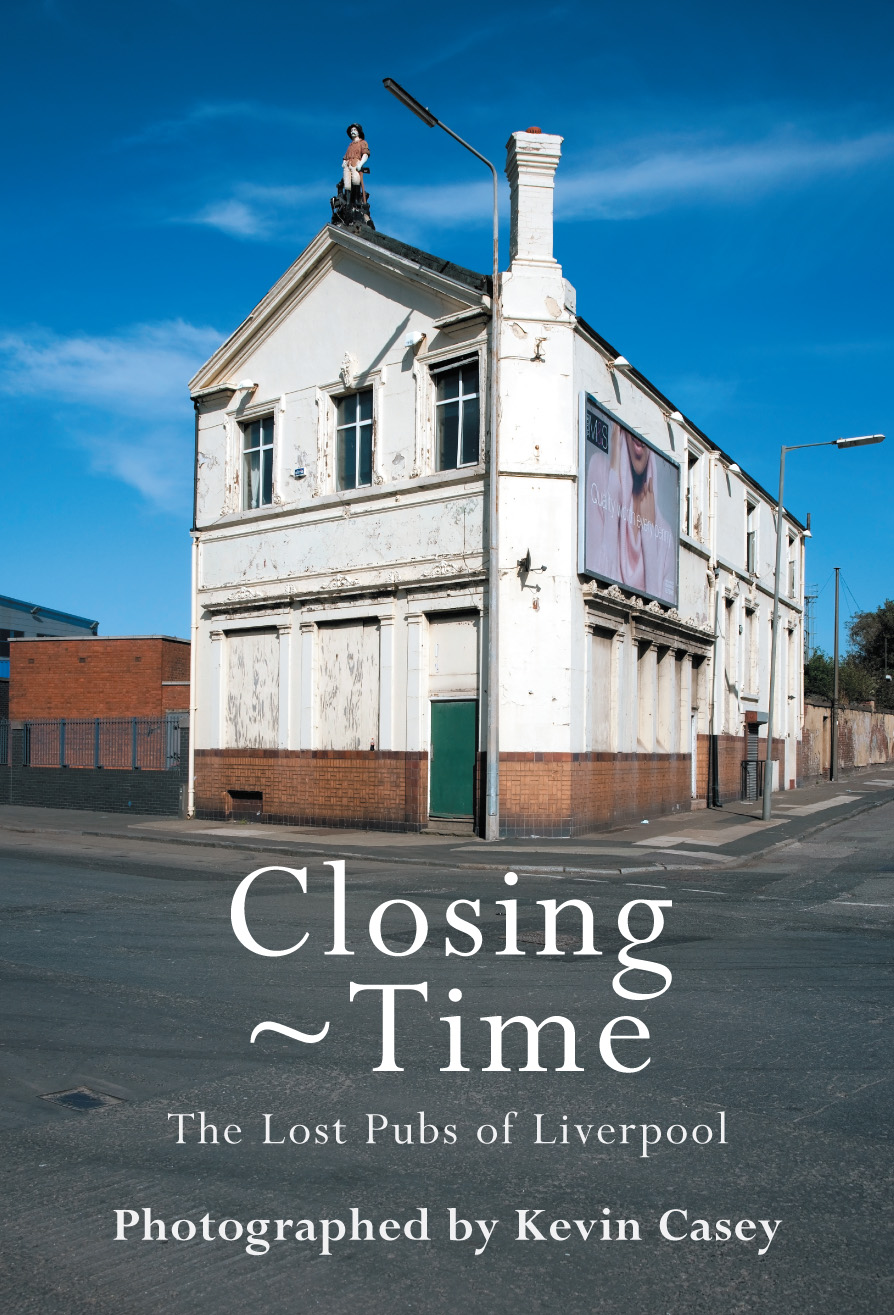
THROUGHOUT THE HISTORY OF PHOTOGRAPHY, the medium has often been used as a way of capturing what will soon be lost.There is a long tradition of photographers trying to preserve something of both landscapes and people at the point before they are gone forever. Kevin Casey’s images of abandoned public houses in Liverpool fall into this tradition.

These photographs are a systematic archive of the disappearance of what were once, both culturally and architecturally, a key feature of local communities across the country. They are also a lament, and a tribute, to what was contained within these public houses. After all, though we may admire old pubs for their cornices, brass rails, wood panelling and frosted glass, it was the life and community spirit that once existed within these now abandoned buildings that makes most people nostalgic for them.

These photographs are also a stark reminder of the urban decay that, far from being turned around by the regeneration schemes of the 1990s and 2000s, has continued apace in most areas of Britain. The uniformity in composition and the repetition of form in these images bring to mind the work of German photographers, Bernd and Hilla Becher. Except that while, in the 1960s, the Becher’s documented post-war industrial expansion and the increase of automation, here Casey documents the decline of Western industrial culture and the communities that relied on it. Yet, despite the frank depiction of the current state of these buildings, there is also a sense of empathy in the images. An empathy that could only come from a photographer native to Liverpool who had personally witnessed the decline of many of these pubs and their communities.

The number of pubs in the UK has long been in decline, as patterns of life and work have changed. However, the rate of closure has increased in recent years, with over 6,000 shutting down since 2005. Those that remain are now being battered on all fronts. The smoking ban, cheap alcohol in supermarkets, high tax rates on alcohol, problems with entertainment licences, big-money video gambling machines in bookmakers and the inability to tap into the lucrative pub/restaurant market have all hit many local pubs. Added to this is the domination of the pub industry by large, ruthless pub companies, keen to maximise their returns on supply charges and rent, leaving tenants struggling to make a profit. In turn, these power blocks of pub companies, with their collective buying and bargaining powers, are squeezing out the smaller operators. Above all, the deep recession we are currently experiencing, has driven down money for leisure right across the social strata, making people rethink how they spend their more limited incomes.

Pub closures in the UK peaked in 2008 and, although levels have since reduced, the number of pubs going out of business remains depressing. At the time of writing, closures are running at the rate of 39 a week, with a total of 2,365 pubs lost during the whole of 2009. This shocking rate raises a variety of big issues, from job losses and reduced tax revenue to abandoned real estate rotting away, but the effects are felt most in the communities that these pubs once served.

The Campaign for Real Ale (CAMRA) estimates about 40,000 of the UK’s 60,000 public houses are ‘community pubs’ – those which serve the people who live or work around them. CAMRA suggests that the benefits of having a pub in your local area include support for local charities and sports teams, having a space for social interaction and providing a place to drink in a safe, regulated and controlled environment. This shows the profound effect the loss of a local pub can have on a community although we should also be careful not to romanticise the local pub entirely. It is easy to look back with rose-tinted spectacles at the glazed tiles, wood-block flooring and frosted glass and forget that the tiles and wood block flooring were easier to wipe the blood and spit off and the frosted glass meant that the man of the house could drink away his wages unnoticed while his wife and children starved.

Even today, it must be acknowledged that pubs can also be a blight on a community, and many welcome the shutting-down of problem establishments in their area. There has been a history of some pubs being centres for criminal gangs, drug dealing and violent incidents, not to mention anti-social behaviour, vandalism and theft from those leaving the pub at the end of the night. For some urban communities, these pubs add to their many and complex problems, not help solve them.

This highlights the fact that the photographs in this book also reflect something wider, that of the changing nature of Britain’s urban communities in the 21st Century. From the Great Depression of the 1930s, through the 1960s slum clearances to the present day, photographers have been drawn to the inner-city and its people. Liverpool, in particular, with its striking urban changes, has often been a favourite subject.

So what does this latest survey of our changing urban environment tell us? What else can we see in the landscape where these abandoned pubs sit? It is not a happy story wasteland, boarded-up houses, crumbling industrial buildings, local shops as abandoned as the pubs. In some photographs, the signs of communities clinging on despite all of this can be seen, but nowhere in these pictures is thriving and, in many, the communities themselves are struggling as badly as the pubs on their corners.

It may not be a happy story, but it conveys a truth that reflects not just on Liverpool but much of the UK. These dead pubs are simply the most prominent examples of dying communities, a dying culture even. For generations, cities like Liverpool grew on the back of their commerce and industry. Now, as the industries have declined, the culture and way of life that surrounded them has slowly ebbed away, despite the best efforts of many within these communities. The Victorian architecture of the pubs, and the rows of terraced houses and industrial buildings that usually surround them, are a marker of a time past, a culture now gone, that will soon be as much a memory as the rural and agricultural Britain that the Industrial Revolution replaced.

As patterns of life and work change so inevitably will behaviour and culture. The consumer dream of choice that Britain has bought into has reduced the need for community pubs. Fifty years ago, in cramped family-filled houses with no central heating and limited home entertainment, the pub was one of the few escapes for many.

Now, why go the pub when you can buy cheap alcohol from the local supermarket, relax on your sofa, watch the match on your own big-screen television or play computer games, in the comfort of your own home for as late as you want?

There is, however, also something of a fightback on behalf of pubs. There have been many innovative solutions to stave off closures including co-operative community takeovers with pubs also taking on the role of general stores, cafes and even post offices. Most of these successes, however, have been in rural communities, often home to a wealthy commuting population. A CAMRA survey meanwhile suggests that over 80% of pub closures are urban.

In other UK cities, closed-down pubs have found new uses, everything from restaurants to money transfer facilities and even a canoe centre. There are some examples in Liverpool – one former pub in Seaforth has now found a new life as a branch of KFC, while another, The Clock in Everton, is now a successful community centre. Many more lie empty though, symptomatic of Liverpool’s perpetual economic malaise. Can these measures to save pubs succeed when the culture pub-going was based on has fundamentally changed? Can we, or do even want to, preserve in aspic what was a once-lively culture that is now in decline? Or, should we just accept that things will always change, and that there is a different future for drinking establishments? That will concern the traditionalists but let us remember that the grand ‘gin palace’ pubs we now revere, like The Vines and The Philharmonic in Liverpool, were viewed in similar ways by Victorian and Edwardian society as today’s media tend to view our ‘vertical drinking establishments’ – as garish and decadent places whose false glitz and glamour seduces the lower-classes to drink and doom.

Today, most young people in Merseyside prefer drinking in city centre-based bars and clubs and this poses problems. As much as drunken and violent behaviour happened in local pubs, the fact that they were still located within the communities that people lived in, with different generations drinking together, usually put a brake on such outbursts. City centre bars don’t have this self-regulation, and it has been suggested by the police that areas of concentrated bar development, such as Concert Square in Liverpool, actually intensify unruly behaviour by containing a large number of drinkers in a small area.

Concert Square was one of the pioneering developments in the UK for modern bars with dance-floors and outside drinking areas. Its developers advocated they wanted to give Liverpool the kind of ‘sophisticated’ outside drinking area that they had seen in Europe, and the development was replicated throughout the UK. Any visitor to Concert Square on a Saturday night could easily see that this has not come to pass, and that the violence and destruction that are features of weekend nights across the UK is at least partially a result of this failed aim. British culture is simply not like that of continental Europe and introducing 24 hour city-centre drinking will not covert British drinkers to slowly sipping a red wine on the terrace.

Liverpool might be the focus for Casey’s photographs but this city is merely at the extreme end of a national phenomenon. Social disorder and urban decay is prevalent, in varying degrees, from Burnley to Nottingham, Stoke to Newcastle, and Swansea to Ipswich. Leisure-led regeneration has been trumpeted as one of the answers to problems of urban decline since the 1980s but, once again, Liverpool has shown the rest of the country the error of its ways.

Since the credit crunch, the leisure-led regeneration myth has largely been debunked. Luxury flats, art galleries and shopping centres may improve cities but they will not, on their own, renew the communities that live next to them and, without wealthy residents to move into these new developments, they will not even replace those communities as they have done in places like London and New York.

Post-industrial cities of the kind that are now found throughout Britain are a relatively recent development. The future of urban areas, like the ones Casey has photographed, is uncertain. Many of these places, such as Kensington, Anfield and Seaforth, were once fields or sand dunes. In these pictures we can see grass and foliage slowly reclaiming what was once built over in the rush for a growth that is now retreating. Perhaps, one day, these streets will be fields and dunes again. Maybe the glass and steel bars that have transformed our city centres will eventually spill out into the districts that surround them. Yet, all of the issues that surround climate change seem to indicate that we could once again become more dependent on community. Most people seem to agree that we have lost something in our consumer-led, individualist culture that is unsustainable. Perhaps, then, the local pub has a future?

Indeed, it must also be pointed out that, despite this photographic survey, CAMRA recognises that Liverpool has, perhaps, the best collection of traditional pubs in the UK outside of London, though most are in the town centre and the wealthier suburbs.

The irony is that Liverpool’s poverty has actually helped preserve many of these pubs, which in wealthier cities would have been swept away by money-generating developments. These pubs, coupled with Liverpool being one of the few cities to retain an independent local brewery, Cains, has made the city a hotspot for ‘real ale tourism’ – a growth area for pubs. Real ale fans tend to be financially better off and might keep these pubs alive. Ironic, perhaps, that in the 1980s, it was the middle classes who appeared to favour the new style of bars over the traditional working-class pub. Whatever happens, this photographic survey of pubs, of Liverpool, of Britain’s urban environment in 2010, will remain a poignant document of its particular time. Casey’s efforts in scouring Merseyside for these buildings, in some cases on the day they were being demolished, are to be admired and have resulted in an important book that will be increasingly appreciated as more of our traditional landscape is lost in the coming years.

This essay was one of several pieces of writing by me that appeared in the book Closing Time (ISBN 9781904438854) published by Bluecoat Press in December 2010.

It’s time to drop the negative stereotyping of Liverpool

Liverpudlians are often accused of paranoia about how they are viewed by others, but it is little wonder when we see yet another broadsheet article about the city peppered with references to the Toxteth riots, militancy and striking dockworkers (Spending cuts: Liverpool facing ‘worse than the worst-case scenario’, 22 October). Yes, that is our history, but the city has moved on. The article opens with the line “Liverpudlians have long been exasperated at the persistence of the ‘gizza job’ tag bequeathed by … 1980s drama Boys from the Blackstuff”, and then goes on to tread over the same tired old cliches.

Even the picture that accompanies the report, captioned “boarded-up houses in Toxteth, Liverpool” despite the fact that only one of the houses in the image has boarded-up windows, serves to reinforce the bleak image that is given of Liverpool in the national press.

Particularly problematic is the continual negative focus on the Toxteth area “almost 30 years after a riot in 1981 became a symbol of the consequences of Thatcher’s policies”. That is not to deny the many problems that Toxteth faces, but it isn’t the most deprived part of the city; constantly referencing it as a touchstone of poverty only serves to reinforce the ingrained stereotypes the district faces. Do Chapeltown in Leeds or Birmingham’s Handsworth, also home to riots in 1981, receive this constant barrage of negativity?

Meanwhile, what is not mentioned is that around the corner from where the photograph illustrating the article has been taken are grand Georgian and Victorian mansions inhabited by property developers and art gallery directors.

The article touches on the city’s urban regeneration and European Capital of Culture status, but there is scant mention of the genuine economic development Liverpool has undertaken over the past few years. The Jaguar and Land Rover plant in Halewood is regularly hailed as one of the best car factories in the world; nearby is one of Europe’s largest printing plants, producing national and international magazines. The city is also a leading centre for computer games design, a growing biotechnology hub, the largest centre for wealth management outside London … I could go on.

It is true that these savage ideological cuts will hurt Liverpool. Like many regions in the UK, the city relies heavily on the public sector and suffers from a legacy of successive governments that have been happy to let its manufacturing sector fall by the wayside. In addition, cuts to the police force will undermine the work done to curb the destructive local gangs, and the loss of services will hit our poorest residents hardest. But there are ways of reporting this without consistently reinforcing negative stereotypes against our community and harking back to the city’s worst times.

The economy is still fragile but, unlike the last two recessions, there is still hope and growth in Liverpool. The city is in a better position than it has been for many years to weather the changes, and is much better off than other areas in the UK that didn’t do too badly in the 1980s. If the city is to survive and grow, it needs to receive more balanced coverage nationally. Commissioning more writing from rather than about the regions would go a long way towards this.

By Kenn Taylor

This article appeared in The Guardian newspaper on 11th November 2010.

The Journey Continues

One hundred and eighty years ago, Liverpool and Manchester became the first two cities in the world to be connected by a railway.

The driving force behind this was profit based on geography; Manchester’s damp atmosphere was good for spinning cotton and Liverpool’s proximity to the sea was good for shipping that raw cotton in and manufactured goods out. The railway shrunk the distance between the two, cementing their growth, but this was not just an important moment in the history of these cities, it was an important moment in the history of the world.

No industrial development has had such a sudden and transformative effect as the steam railway. It fuelled a revolution that not only changed the way we live fundamentally, but even the way we thought and perceived the world. Though the railways were built for freight and profit, they had the almost unintentional tandem effect of making passenger travel much easier and faster, speeding up communication and thus the spread of ideas, concepts, cultures, and, ultimately, change.

Information from London could be transported to the north of Scotland in a newspaper in a day. The slow shifts that would have once happened over many generations were replaced with a rate of change that destroyed old patterns of existence much quicker than anything had done before. The railway even revolutionised time itself, as scheduling led to the first standardised measure of time across the country. The effect of these changes can only be understood by us in the context of the transformative effect the internet has had in our own living memory.

This speeding up of the world was controversial at the time and many fought it, from William Wordsworth and John Ruskin to The Duke of Wellington, who feared that railways “will only encourage the lower classes to move about needlessly”. Doctors suggested that human organs could become displaced while travelling at these new speeds and farmers feared that thunderous locomotives running through the countryside would stop cows milking.

The last two never came to pass, but the railway and the Industrial Revolution it helped power did have ill-effects on countless people’s lives. Many migrated to the expanding towns for better wages, but found themselves working in dangerous factories for long hours, tied to the routine of a machine and living in squalid, cramped conditions. Yet the Industrial Revolution also freed people from the fields, increased wealth in general and, gradually, conditions did improve. Life expectancy increased and education spread. Despite the massive upheavals, people adapted, survived and prospered.

The human capacity for innovation and overcoming barriers continues to accelerate to this day, and we’re becoming used to it. We expect obsolescence and change, we expect newer, faster and more powerful. These forces driven forward by the intense development of technology and that most human desire it seems, always to advance. One hundred and eighty years ago a newspaper travelling from one end of the country to the other in a day was wondrous. Today the fibre-optic wires that carry the internet aid the transfer of information globally literally at the speed of light. The Industrial Revolution that the railway heralded has passed. We now live in an Information Age.

The Liverpool and Manchester Railway was a giant leap forward in the speeding up and shrinking of the world, but this has come back to haunt the towns and cities on its route. As the twentieth century drew to a close, industry in the Western world, and the culture that had grown up around it, declined and a post-industrial revolution swept across North West England.

Like the Industrial Revolution before it, this changed society immeasurably, and was also driven by technology and transport. The development of the container shipping reduced transportation costs so much that it became cheaper to make things in the Far East and ship them back through docks in southern England than it was to import the raw materials through Liverpool and make them here. Finally our speed of consumption overtook our speed of production.

Just as the Industrial Revolution was resisted by those who wished to protect old ways of life, as was de-industrialisation. Yet it seems that such revolutions are inevitable however much we may try to resist them. It can seem like the end of the world when such changes are ushered in, and for some cultures and some people, it unfortunately can be. Somehow though, in the end, humanity always seems able to adapt, survive and thrive in changed conditions. That is not to revel in the upheaval and destruction of ways of life, but to accept the inevitability of change and marvel at the continued capacity of the human race to move forward.

What then is the future for Liverpool and Manchester, who both rose up by creating a faster world only to be cast back down by it? Today, both cities are trying their best to be centres of the Information Age, with new developments on the sites of now long gone industry that aim for a high-tech future. Is this the start of a new age of success for the two cities? Or, was our age of consumption one to mark their end?

Edge Hill, on the route of the original Liverpool to Manchester line, is the oldest operational passenger railway station in the world. It is also home to Metal, an organisation trying to forge a new creative culture in the heart of an old industrial area. If anything can make the places that line the route of this railway relevant again, it’s new, creative, revolutionary ideas. Fostering such a culture can only help with the hope that these cities will continue, and that maybe even the wheel of history will turn in their favour once again.

Whatever happens, the journey continues. It never ends.

By Kenn Taylor

The piece originally appeared in the exhibition guide accompanying the ‘Dream Machine’ exhibition, held at Metal, Edge Hill as part of the Liverpool Independents Biennial 2010.  A digital version of the guide is also attached: Dream Machine Exhibition Guide – Metal

Come on feel the noize

There is currently a minor war taking place between the owners of one of Liverpool’s oldest nightclubs, the Blue Angel, known to many as ‘The Raz’, and the occupants of the block of flats which back onto it.

The situation has been rumbling on since the apartments were put up several years ago, with the residents unhappy about the level of noise being generated by the club. But a Facebook group in the club’s favour has attracted 5,000 members, and nearly 900 people have signed a ‘Save The Raz’ online petition.

Things took another turn this January, when the nightclub’s decks were seized by the Council. With no sign of them being returned, the Blue Angel’s owners were forced to expensively reinvest in a new soundsystem. If moves like this continue to hamper the club’s operation, it could be forced to close, ending a nightclub presence on the site of nearly 50 years.

The club’s appeal against the council order started yesterday (May 12). Solicitors representing the club argued that levels of noise coming from the venue have not been measured in a scientific way and that it is impossible to distinguish between the establishment and others in the area, which as a whole is always very noisy.

But Jonathan Eaton, representing the city council, said: “Although we accept residents can’t expect a Liverpool of tranquility associated with Belgravia Square or the open countryside, we have produced enough evidence to show it is a significant noise and interrupts sleep patterns. On no basis should these people expect to put up with it.”

Fun, cheap, tatty and unpretentious, the Blue Angel is unmistakably part of Liverpool. And when nowt but a few arty types and squatters lived in the city centre, such a complaint would have been unheard of. But as down town becomes full of apartment blocks, this could become and increasing problem – as the young urbanites living in these flats find that they aren’t getting enough sleep to be able to cut their big deals in new media public relations and city centre rental marketing in the morning.

Thing is though, what seemingly attracts people to living in town is the easy availability of thrills and entertainment, the vibrancy, the buzz, the bright lights and excitement. Well, all of that is generated by people having a good time, hitting the town and letting their hair down. And the thing is, it ain’t pretty, and it certainly ain’t quiet. Especially in this city were not only do we really know how to party, but where often the harshness of life means we need to party.

Worst case scenario – could we see these residents getting all the clubs in town closed, or forced to be quiet. Where would we go out ofnthe tiles then? Set up discotheques in West Derby? Night spots in Tuebrook? Town is ultimately for mixing, be that to buy and sell goods and services, or to find your life partner. And anyone who wants to buy into city centre living should accept that, though they may officially be residents, the central area belongs to everyone in the city.

If you want peace, go and rent a house off Lark Lane and pretend that the world is full of wine bars, trees and birdsong. If you want the excitement of living in town, accept that its going to involve putting up with a lot of cheesy disco tunes and relationship arguments at 3am, and broken glass and vomit when you go out for a pint of milk in the morning.

You can’t have it both ways.

Elysian Fields and Capitalist Vultures

Ominously a wrecking crane swings past my window. There to tear down another mistake-in this case the 1960s Colquitt Street College-an ugly example of the past, now surplus to requirements and unfit for conversion.

In its place will rise ‘Elysian Fields’ – named after the resting place of the gods in Greek myth. A moniker that may be a little over the top for what is just yet another one of the many identikit blocks of apartments that are springing up around Liverpool. And it’s symptomatic of everything that is happening in the city centre today.

Originally from the stix on the edge of the city, I’m now lucky to live right in the heart of town – and in somewhere remarkably cheap – as Liverpool celebrates its year as the European Capital of Culture. However, things are changing at an astonishing rate and my digs will probably not remain in my income bracket for much longer.

Every time I leave the house it is a step into the middle of the frantic pace of change. Every day another half-decayed house is surrounded by scaffolding, or a former scrap of wasteland masquerading as a car-park gets a billboard promising a future light and airy block. Walk past a building one day and by the next it will have disappeared. A street that you can get down on Monday will be, by Wednesday, roped off as behind it a white tower crane and another framework of grey and crimson girders rises up-Because all modern buildings look the same on the inside.

There is a palpable sense that the very fabric of the city is being transformed, and it is both frightening and exciting in equal measure. Every part of the town center from the waterfront to cheap shopping area of London Road, from the business district to the edge of Everton, from the cultural quarter of Hope Street to where I live, an area now marketed as ‘The Ropewalks’. By the time I’d first began to hang around this part of town a few years back, its former grandeur had long since succumbed to the passage of time and the pace of change. In all its variety, it was crumbling and semi-derelict. This meant low-rents, and so many of the buildings found new lives as artists studios, independent shops and markets, not to mention some of the best clubs and venues in the city nestling next to the odd traditional business clinging on; from sign writers to drinks wholesalers.

Despite its artistic community the area remained unpretentious, anywhere with so many lock-up garages had to be. The buildings, even as they began to rot, had their decaying brickwork buried under a healthy covering of fly posters, graffiti and the slow reclamation of nature as green growth poked through every crack. The area was falling down, no one can deny that, but it had a great variety of life in it. With Liverpool’s slow economic renaissance – and the rise in the fashion of inner-city living in Britain – some wealthier people began to move into this slightly ‘bohemian’ area and a few apartment blocks sprang up. They were praised – these flats where usually conversions, saving buildings that would have otherwise collapsed.

Their occupants were no doubt attracted to an extent by the rough charm of the area and its rich heritage. The area once housed some of the city’s richest merchants, it contained the city’s first library, and was before that it was an important industrial area, were rope was made – hence, ‘Ropewalks’.

One site in the area, my current home, is the former Royal Institution building on Colquitt Street. This organization was founded by poet, anti-slavery campaigner and businessman William Roscoe in order to bring art and learning to the giant industrial city Liverpool had become by the 1850s; Liverpool University was later to emerge from this. Before that the building had been the home and warehouse of Thomas Parr, the merchant who built it in 1799. It is a unique surviving example of this kind of structure in the UK, it is grade II listed and was a key building listed in Liverpool’s successful bid to become a World Heritage Site of UNESCO. In addition to hosting my digs it is also home to two nightclubs, Barfly and Bar Fresa, thus making it probably one of the few World Heritage Sites to have its own disco.

This sort of unpretentious mixture of rich heritage and modern life in the area is what made it special. But with Liverpool’s resurgence via regeneration, and the subsequent rise in property prices which was massively speeded up by it winning the title of European Capital of Culture for 2008, I wonder how long, I, or people like me, can afford to sleep, drink, dance and work around here.

With the mass of new property being constructed, the city is being cleaned up. The cracks and weeds and graffiti and posters are disappearing, as are the clubs and studios. Replaced by new buildings; for the most part those ‘Elysian Fields’ style apartments with a restaurant/cocktail bar at the base. Over and over again the same mediocre, foursquare structures are repeated, with only different balcony railings to distinguish them if at all. Some older buildings are retained, those with ‘character’, to be converted for similar uses.

The wild reclaiming growth coming out the buildings is replaced by neat but emaciated looking trees in metal-containers. And in between the flats, desolate squares are created complete with imitation marble and uncomfortable benches. Skinny saplings and asymmetric paving may look good in scale models and artist’s impressions but these soulless, dead spaces remain conspicuously empty throughout the day save for the odd homeless alcoholic or skateboarder. People would rather eat their pasties on nearby dirty, busy Bold Street.

One development in particular, the ‘East Village Private Estate’ on Duke Street, must rank as one of the most depressing sites in the city. Its gray apartments surround a dank square, with a pathetic fountain at its center. Hard wired with CCTV everywhere and covered with PRIVATE PROPERTY. CHILDREN MUST BE ACCOMPIANED NO DOGS. NO CYCLING OR SKATEBOARDING signs. It is a bleak place even in the sunshine, even the residents of the building hardly ever sit there. The East Village is actually quite lucky in one respect in that at its base it has restaurants. Many of these blocks simply have un-let, boarded-up voids under them. And with their secure underground parking, razor-wire topped gates and balconies far above the street below they give a sense of being cut off from the street, and the city, and life. This side of Liverpool is becoming a city of straight lines and security measures.

Just across the road however there is a different prospect, showing the city is still at the point of change. It is a row of decaying buildings full of cracked windows. But at its center is the WAH SING CHINESE COMMUNITY CENTRE, while next door is The Big Issue Liverpool office, both with their varying mix of punters usually floating about outside keep some life in the area. But how long will they all be able to stay where they are with the rising rents? The redevelopment now approaches the 1980s social housing between Chinatown and the waterfront with its small community and own schools. Will they too one day find themselves moved on as the land the homes were built on, once virtually worthless, rises?

‘The Ropewalks’ is just one area, but the same story is being repeated all over the city. Slow, organic change has been overtaken at an astonishing rate by mass re-development.  Down on Princess dock, once home of the Irish sea ferries, more new offices and flats are being put up right next to Liverpool’s famous waterfront buildings. Walking around there the thing that you notice-other than how crap the buildings look in comparison to the adjacent famous ‘three graces’-is the silence. There’s nothing above the wind and the vague hum of the air conditioners in the area, despite the fact that so many people live and work there. Another dead space, symptomatic of much of the inner-city regeneration in the UK. Anyone who has spent time in the regenerated docklands of Manchester or Glasgow will attest that even though the imaginative post-modern museums, galleries and flats that fill these spaces look nice sunlit in two-page spreads in The Guardian, in the flesh they seem desolate, cold and patchy, with dereliction still visible just on the edge of the picture.

Not only is much of the new city cut-off, cold and dead, but a lot of it is no more than a façade. I have mentioned the tellingly empty shops under the apartments before and even many of the flats themselves remain un-let. The new cocktail bars and restaurants often close quietly not long after they are launched in blazes of glory, though the local media and dignitaries that were there at the opening are conspicuously absent as the bailiffs move in. And, with the world economy seemingly in downturn, how much more growth can be expected in expensive shops and restaurants?

The key thing at the moment is creating a new image of the city rather than a new city. Liverpool’s administrators are keen to have the city seen as go-ahead place to do business and therefore move it firmly away from the stereotypical 1980s images of militancy, strikes and despair that were only partially consigned to the dustbin with the Capital of Culture win, and that even today dog the city to an extent. But sometimes it is getting forgotten that the city is still not as wealthy as it appears on the surface. Image is important, but there must be something underneath if it is to be sustained. Whilst the new buildings themselves often have a look of being temporary and cheap, flimsy facades hung off steel frames, with the distinct impression given off that they could fall down as quickly as they are rising up.

But perhaps I’m getting a little too Joni Mitchell here-luxury apartments replacing parking lots. It’s easy to be cynical. Things are far from all bad in the Liverpool, and many new developments such as the new arena on the waterfront and the FACT multimedia complex have both been welcomed with open arms. Even some of the flats, cocktail bars and chic offices of graphic design companies have been single-handedly responsible for saving fine, old buildings that were on the slow, painful road to collapse while the council dithered. Much too has been learned from the mistakes of the past, and Liverpool’s last great re-development in the 1960s when vast swathes of the city were demolished at the behest of planners’ grand designs-to many peoples eternal regret. Actions such as the saving of the well-known biker’s pub The Swan-now sandwiched loud and proud between a luxury apartment block and the FACT center, jukebox blaring out. By the same token we are also seeing some the atrocious 1960s and 70s structures that litter Liverpool being torn down; few people lament the loss the Duke Street multi-storey car-park, the Moat House hotel or the Paradise Street bus station.

These changes have also had a strangely positive effect on artists in Liverpool.  Many can scarcely believe that after so many years of stagnation that the city is changing so fast. It is impossible to ignore and for all the artists in the city, from musicians to photographers, it is a subject that many feel compelled to discuss; much as many of Liverpool’s creative people in the 1980s could not help but be influenced by the decline of the city.

Art is often at its best when it is reacting against something and in the wake of these disliked developments and the Capital of Culture win promoting principally the more marketable aspects of culture, a reaction against it has been created and a definite counter-culture has emerged, causing a wholesale examination of what exactly this ‘culture’ thing is. And I can’t imagine that if any other city in Britain had won this title that this would have happened.

One example would be Mercy, an award winning fanzine and independent artistic collective. It had humble beginnings, originally founded by a couple of art students as a way of getting their work noticed. But on its arrival in 2002 it inadvertently became the focal point of a reaction against the creation of the image of the shiny, clean, new Liverpool; a good place to do business populated by well-mannered, educated people. Mercy pointed out that the homeless alchy’s who hang around the Bargain Booze on Hardman Street are as much of a part of the culture of Liverpool as the art-deco Philharmonic Hall up the road. There have been many other reactions. A punk band night was formed under the banner ‘City of Capitalist Vultures’. Massive campaigns were mounted to save the Quiggins alternative shopping complex, the Parr Street Recording Studios and The Flying Picket music venue that were all threatened by new developments, meaning that Parr Street Studios was saved from closure and alternative premises were found for the other two.

And maybe as the city moves into the future it is simply returning to the old. ‘The Ropewalks’ was once home to Liverpool’s wealthy merchant class in the nineteenth century, so why not in the 21st century its wealthy new-media class? The urbane, sophisticated businessmen and women: those who like to eat sushi, buy paintings and attend the theatre. To simply be against these kinds of people or having private apartments in general is nothing more than inverted snobbery. Let them have their apartment blocks with silly, pretentious names. All major cities have these kinds of people, and what many artists find it hard to admit is that it is often these ‘bourgeoisie’ with their spare cash and time help to keep theatres and galleries in business, however unfashionable that may be.

It is also true that it is important for the whole life of the city for it to have successful businesses, because without a strong economic engine underneath, everything else falls apart-as Liverpool found in the 1980s. So it is also daft to be totally anti-business and anti-development. Indeed the buildings that symbolize Liverpool, the famous ‘three graces’ on the waterfront, are all palaces of commerce; insurance, shipping and docks respectively. Not to mention the fact that much of the city’s fine public buildings – from St Georges Hall to the Central Library, Walker Art Gallery and Sefton Park – were all paid for by private capitalist benefactors in their day.

But therein lies the problem.

Because most of Liverpool’s previous wealthy residents, the patrons of arts and charities and benefactors of public palaces quickly buggered off when the going got tough and the city ceased to be a profitable place to live. They abandoned their houses and business and distanced themselves from the city they had once proudly run, leaving only those who could not afford to go behind to try and rebuild something.

So the empty warehouses and homes were turned into markets and studios and clubs and some new life rose out of what was left to rot. But now Liverpool is again, to an extent, a profitable place to be, and the indigenous and independent culture that survived, created by those who stuck by the city and kept the heart of it alive, is being pushed aside and forgotten in the rush to bring in the money. This fiercely independent culture of the city, that stood the years of knocks and ridicule, the culture that made the forgotten ‘Ropewalks’ fashionable, is being pushed out to the fringes again and potentially crushed in a desperate, grasping attempt by the city to become accepted. The strong willed Liverpool that is being lost, though at times arrogant and self-important, was nevertheless honest. But now the city that once defied central government and tried to take on the world (people forget that the dockers strike of a few years ago managed to cripple half the ports in the world before its collapse) now seeks the simpering approval of the South East and the tourist Dollar.

Of course this is not unique to Liverpool. The same thing happens the world over, form New York to London, once an area becomes a fashionable and desirable place it immediate begins to lose something of what made it that way. And there is always that nagging thought; is this brave new luxury apartment filled world is still better than riots, dereliction, despair, ridicule?

Perhaps. But we may find out to late that there was actually more life in Liverpool 1 when it was decaying. Maybe what is being created will become resented as being dead and soulless, the money will leave just as quickly as it came and once again it will be up to those left behind to start again. As much as I hope it won’t, it may come to pass that this new dawn for Liverpool will just be another mistake that we will have to tear down.

By Kenn Taylor