The Bicycle Thieves

By Kenn Taylor

Hear no evil. See no evil. Speak no evil. All three sat in the front of the Transit, faces locked in grimace.

The van’s old heater could not mask the cold of winter. They wore their high-collared, all-weather coats up past their chins and their breath turned into long streams of white mist with every exhalation.

Aaron drove the van around at a steady pace, focused intensely on the road and his labours with the knackered gearbox.

Phil and Ethan sat adjacent on the dual passenger seat. Casting narrow eyes through the murky windscreen for targets and occasionally rubbing their hands for warmth.

Aaron and Phil were the old hands at this game, Ethan the apprentice. They had been working since first light. Out to catch anything good left overnight.

As time passed, dialogue was reduced to a few comments about the cold and remarks on the sight of any prospects. Coughs, squeaky farts and the crunching of the gears were the only other sounds that echoed around the metal box of the van.

The miserable day had reduced even the glow of a successful prize to minimum. It was now midday and they had two bikes in the back already: a fairly decent Scott and a good-but-old racer. More was needed though.

Coming back around the north end of town, they drove down between the Royal and the university and turned into Paddington.

Hoards of students filled the squares that formed the centre of the university. Aaron slowly moved the van over towards the large bike rack by the university branch of the bank.

“They’re jus goin in for their afternoon lectures,” said Aaron, “we’ll wait till it’s all quietend down a bit.”

“Aye yeah,” said Phil.

“Fuckin gormless studes eh?” said Ethan looking towards the others. They stared ahead unmoved.

They parked the van a little distance away from the racks. Even when most of the students had disappeared into the various university buildings, they continued to wait as the engine ticked over and a Radio City DJ chirped away low in the background.

Eventually, as the student body trickled down to a few stragglers, Aaron nodded and Phil got out of the van and walked casually over towards the bike rack.

Adjacent to the rack, there was a CCTV camera high on a pole. Phil pulled his high plastic coat collar a little further up his face. No one would be watching he reckoned, they never were. But, even if they were recording, on the shit grainy video he would now be just another shaven head in a big coat.

In the rack there were four bikes. Phil assessed the scene within a few seconds, glanced around to see if anyone was watching, and then walked back towards the van. He raised his eyebrows a little and smiled at the other two as he approached.

He climbed back in the van and, still looking forwards through the windscreen, said, “There’s a quality Specialized, but it’s got a decent D-Lock on it an, at this time a day, I jus don’t think it’s worth riskin it. We’ll have the saddle off it though; that’s jus bolted on. There’s also a half-decent Dawes racer and a class Kona. We’ll ave both a them. And a piece of shit Raleigh, but I can’t even be arsed carryin it.”

“Nice haul,” said Ethan.

“We aint got anything yet mate,” said Aaron, and he looked Ethan in the eye for the first time in ages. “You hold yer fuckin horses.”

“Let’s jus get it over and done with,” said Phil, and he pushed the van door open again. As it separated from its bent frame it made a popping sound.

Aaron also got out of his side and walked around to the back of the van. He and Phil pulled the back doors open and picked up a set of bolt cutters off the floor.

Leaving the back doors a little ajar, they walked quickly over to the bike rack.

Without speaking, Phil went over to the first bike and snipped its loose chain in an instant, then set to work on the next one. Aaron pulled the first bike free from its holder, lifted it up and rolled it rapidly towards the back of the van.

Ethan, meanwhile, having unscrewed the bolts on the expensive saddle, began to pull it out of the frame.

They all glanced around constantly, but worked in silence.

Ethan pulled the saddle free with a grunt and fell backwards a little with the force of the release. He walked around to place it in the back of the van.

Phil hacked through the last of the chain on the second bike, it had been harder than he had imagined. Grabbing at the crossbar, he prepared to yank it upwards when he heard an intense rushing at the side of his ears.

He was hit in the side of the head with so much force that his whole body swung violently sideways. He heard a cry and ‘Fuck, Phil.’ before his vision turned red then black.

His sight returned within a few seconds and he found himself rolling uncontrollably on the ground. Reflex and long experience made him jump up immediately, but before he could fully regain his feet he was hit in face again, this time he could identify by a foot, and slid sideways into a brick wall, tasting iron in his mouth.

A second kick to the chest knocked the wind out of him and he curled up to protect himself from further blows. But instead he heard a yelp of pain from above and then felt a dead weight slump onto of him.

As Phil struggled to cough out the blood and the chunks of teeth and gum that filled his mouth, he felt his arms get grabbed and his whole body being dragged violently forward. Still dazed, he figured more pain was about to come his way. He braced himself but, even though his arms were being strained in their sockets, he realised he was being lifted up.

As his vision recovered, he could see that it was Ethan that was pulling him forward, holding him by the shoulder and arm. Phil didn’t even have the time to set his legs straight and his feet dragged and kicked as he tried to find balance.

Ethan continued to pull him along aggressively. He stared straight ahead to the road where Phil could see Aaron rapidly turning the van around with the gears grinding loudly again.

Aaron pulled up with the open back doors facing the two of them. Ethan pushed Phil forward straight onto the greasy metal floor and leapt in behind him. Phil looked back and caught a glimpse of a crumpled body slumped by the bike rack as the van moved away. And the bolt cutters covered in dark blood held by Ethan as he pulled shut the doors.

This piece appeared in Issue 12 of The Crazy Oik in January 2012. 

The Workshop

By Kenn Taylor 

The workshop
was his place.

Now he is gone
the tools gather dust
cobwebs forming
dense spiralling sheets
and that moist residue
of cold, outside places
lies thick, undisturbed.

So much of who he was is here
the old Golden Virginia tins
Written on in Tipp-Ex:
Allen Keys
Screws (Head Tapping)
O-rings
Swarfega
all in
neat
sensible
order.

Tools I have no use for
tools I have no skill to use
tools like him.
Old
strong
hard
slow
dependable
cold
tools.

Things of use.
Things that lasted.
Things that mattered.
Making things.
Keeping things.
Just in case.

Taking time
to repair
and make do
Recycling
before it was fashionable.

He was wrong about many things
Now I am older though
I know, sometimes, he was right
but
alas
as the dust thickens
I cannot
tell him.

This piece appeared in Issue 3 of The Accent magazine in January 2012.

Reviewing the Regions

By Kenn Taylor

When Brian Sewell was asked if he was going to see the Gustav Klimt exhibition at Tate Liverpool, he replied: “But that would mean going to Liverpool. Liverpool’s awful. Nothing would get me there. They should dig a trench all round the place and pull it out to sea.”

Sewell is, of course, generally fond of such pathetic outbursts. However it is not an isolated incident when it comes to the media’s view of arts outside of London. The situation is so dire it prompted the then head of Bradford’s National Media Museum, Amanda Nevill to say “We still don’t get talked about or written about nationally. I sometimes think I don’t mind if they tear us apart, as long as they write something about us.” This lack of attention is shocking given the fact the venue attracts over 600,000 visitors a year.

When coverage does happen, more than once, I’ve seen broadsheet reviews give more criticism to the train service north than the show itself. Other alleged reviews are in fact opinion pieces about culture as a regeneration tool or the social and economic problems of any given region. Interesting topics that I have written about myself, but so often the exhibition itself is forgotten, as regions are used as mere fodder by metropolitan writers to peddle one ideology or another. I notice that coverage of shows at Tate Britain or the Serpentine in London does not tend to feature much comment on the latest tube strike or deprivation in Tower Hamlets.

The same goes for the frequently patronising coverage of arts institutions outside London in general. The media has been full of tut-tutting about financial and other issues facing newer regional venues like Gateshead’s Baltic and The Public in West Bromwich, but considerably less on the successes of places like the New Art Gallery in Walsall or Nottingham Contemporary.

Coverage of art in the regions is especially hilarious when it comes to reviewing the cultural festivals of various kinds that have sprung up across the country. When reading reviews from Venice or some other exotic locale, you can almost hear the hack smiling and sipping a glass of vino on expenses, while writing on some sun-drenched terrace. Just as you can hear the bitterness of the journalist typing up a review in Costa Coffee in rain-sodden Manchester, miffed that the other guy got the Lisbon Biennial gig this year. Of course it is easy to be impressed with weather and glamour that Britain can not offer, but what about the actual quality of the shows?

There is perhaps an inevitable ‘chip-on-shoulder’ defensiveness in regional arts institutions when critics attack ‘our’ venues, especially when it is such a struggle to get arts outside of the capital acknowledged at all. Nevertheless, I think most of us regional arts workers are capable of critical distance and our chip-on-shoulder is almost inevitable when consistently faced with such poor examples of journalism.

Not only is it exasperating for those of us who know the quality of some of the work being shown in regional Britain, despite the frequent malaise in the media. With critics often treating the regions as ‘other’, like some colony whose attempts at culture must be picked over anthropologically by the ‘educated outsider’. I think it also unveils something deeper and darker about our media: its lack of understanding of the Britain outside London and the narrow talent pool it so often draws its staff from. Perhaps the BBC move to Salford will shift this a little. We live in hope.

If you want to review art in the regions, commission local writers with better insight, even better, come and criticise, we can take it. But if you want to moan about the train service, write a letter to Network Rail and save the space to tell your readers about the artwork.

This piece appeared on Arts Professional in January 2012.

Why George Shaw should have won the Turner Prize


By Kenn Taylor

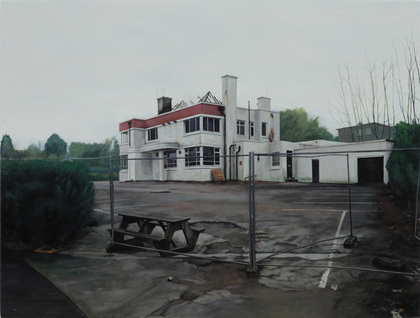
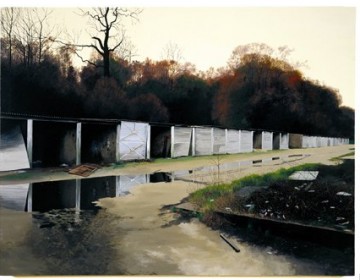
I always take an interest in art’s biggest bauble, the Turner Prize, and usually have my favourite entrants, but for once, in 2011, I was actually excited about a nominee. It was through the prize I learned about the work of George Shaw, comprising of paintings, in Humbrol enamel model paint, of seemingly insignificant places in the area of Coventry where he grew up.

Occasionally, something just speaks to you. I’m not from Coventry and my feeble attempts at Airfix as a child were limited, but his representation of abandoned pubs, bent fences, tatty lock-up garages and scrappy woodland appealed greatly to me. There was a personal recognition that the landscapes he was painting looked similar to where I grew up, but more importantly, and why I wanted him to win the Turner, was that his work felt so representative of where the UK is now as a country.

This is not to disparage Turner winner Martin Boyce’s work, which I also like. However, Shaw’s paintings seem much more significant, almost like a stark acknowledgment of a Britain brought back down to Earth after what Adrian Mole writer Sue Townsend brilliantly referred to as ‘The Cappuccino Years’. The time when we pretended everything was getting better in new modern sophisticated Britain, when really they were getting worse, covered only briefly by froth on the surface now swept away.

Coventry, like pretty much everywhere outside the South East of England, has suffered economic decline, in particular in its once thriving car industry. However Coventry’s decline was not in a dramatic, easily aesthetic way the likes of Liverpool and Glasgow did in the 1980s; cities picked apart by so many ‘social realist’ photographers and documentary makers.

Coventry’s decline was slower, almost unknowable. A breaking apart, due to various factors, of economic, social and cultural ties, something that has now enveloped much of Britain, from Dundee to Burnley, Ipswich to Plymouth. Shaw’s Coventry is neither the ‘gritty’ inner city like East London, places for the latest crop of art students to colonise, nor the ‘quaint’ leafy suburbs, but the area in between. Places where the hope of the post-war settlement, of new housing estates and modern factories and a better, more stable, more egalitarian world has decayed. Places confused, liminal, unsure of what anything means any more or where things are heading. The Britain that I know, the Britain David Cameron hasn’t got a clue about.

That’s not to say ‘The Cappuccino Years’ that led us to now didn’t have their plus points. For those of us in the arts it was a boom time. Galleries expanded and spread, audiences grew and diversified, there was cash for ambitious projects, and art entered more into the arena of mainstream culture. Now though, when I look back on so much of the work that was created at this time, at least that which dominated the public consciousness; the infamous Young British Artists, all those big public sculptures and the Tate Modern Turbine Hall projects. Grand visions assembled by armies of fabricators with money no object. Even if I like such work and still value it, I can’t help but think back into art history.

Back to the turning of the 19th century into the 20th, of the Fin de siècle, the Viennese Secession, the beautiful decadent work produced at the zenith of a culture that would soon collapse in on itself. A high point before everything that was solid melted into air, transformed by technological advances, war, depression, revolution, social change and scientific discovery. I look back and ponder that we might now be at a similar point again.

The sheer lack of monumentalism in Shaw’s work seems to me to represent the UK now. A country humbled from its arrogance that its laissez-faire, sado-monetarist system should be embraced by the world and that real industry could be replaced by finance and the ‘Cool Britannia’ cultural industries. Shaw shows instead the reality; a Britain cracked, dog-eared, confused, battered, half-shod, but in a way that is sublime and truthful rather than bleak.

His use of Humbrol model paints is also resonant. An everyday product that most people must have used at some point as children, Humbrol was once manufactured in Hull. Now it is produced in China and its old plant stands abandoned and boarded up. Hull being another place in the UK that has suffered slow, quiet, decline, ignored by those in the ever faster spinning wheel of the City of London, a wheel that has now fallen of its axis.

It was great seeing musician and former graffiti artist Goldie on Channel 4’s Turner Prize coverage from the Baltic in Gateshead. The very fact that the Turner prize was held in Gateshead, shown on Channel 4 and partially presented by Goldie is a positive product of the last ten to fifteen years, of art’s increasing popularity and expansion out of the capital and, to an extent, out of elite circles. Goldie’s open enthusiasm for fellow West Midlander Shaw’s work was also great in contrast to fellow presenter Matthew Collings, looking like Karl Marx and talking the usual jargon.

Shaw at least has been given a solo show in the Herbert Museum in Coventry, and like all Turner nominees, should see his work grow in popularity and price even though he didn’t win. Hats off to Martin Boyce, but we’ll see in decades, who was making the more important work, the work that captured the spirit of our age.

This piece appeared at a-n Online in January 2012.

Kevin Casey in conversation with Kenn Taylor


The following was an interview conducted with photographer Kevin Casey about his project Closing Time, for which he photographed the many abandoned pubs across Liverpool. An abridged version of it appeared in the book of Closing Time, alongside an essay on the subject by myself which you can read here.

KT: Tell me, how did this project began and, why pubs?

KC: Basically, it started two years ago on my journeys into town. I live in Waterloo/Crosby, and I take the train to town for my job as a Gallery Assistant in Liverpool. During that journey you stop at Seaforth, Bootle, Bankhall, Sandhills, and at nearly every stop you’d see a pub that was in disarray, or about to close down. I just thought, well, with my background being photography, I decided to photograph them. There’s also a link to my family. We’ve had quite a few pubs over a twenty-five/thirty year period, so I feel like I’ve got a bit of an intrinsic link to them, so maybe that’s why my awareness has been heightened.

KT: How did you go about finding the pubs?

KC: Initially it was ones that I saw on my journeys to work, or going to the football. I also asked my friends, family members who used to run pubs, if they knew of any pubs that had closed. A lot of the time when I was photographing, on the way to the location I’d find two or three pubs I’d never even heard of on the way.

KT: When you were shooting, were you consciously trying to portray anything?

KC: It’s impossible to be impartial when you’re documenting or photographing anything, but I thought when I was taking the images that if I could get them as uniform as possible, then hopefully you can see both the comparisons and the contrasts of each building. Basically my idea was to be as impartial as possible, and to show both the harsh reality, with slight sympathy, but not overly romanticise the images.

KT: When taking these pictures, did you have a desire to preserve something, to capture it before it went?

KC: I think one of the main things photography is used for is capturing the here and now, that is photography’s strength, and I’d like people to appreciate them now. But I also think that they might have greater emphasis in ten, twenty, thirty years time, when we look back on a lot of these buildings, when I think it’s a given that the majority of them will not be standing any more, or at least will not be a pub.

KT: Tell me about your experience of shooting the images. Did it generate a lot of interest amongst passers by?

KC: Yes, there was a lot of interest, and a lot of suspicion as well. Some people are more suspicious if you’re holding a camera than they are if you’re holding a baseball bat. Most people were great though. They’d stop and chat to you and take an interest, and even suggest or point out other places I could go to. A lot of communities, like say Kensington, a few in Bootle, a few of the ones near to town and Anfield, people were quite interested and wanted to get involved and tell you places where to go, and they’d always start talking about their childhood, and the places they used to go out.

KT: What were your own feelings then, whilst shooting the project, having seen all these pubs, going to these communities?

KC: You go through different stages. I think at first you feel, it’s such a sad and alarming thing to see, even before I started to photograph, witnessing and picking up on the fact that these places are closing down. Then you go through the sort of, selfish stage of ‘That’s a good idea for a project. It’s quite unique and it might get me some attention.’ And then you feel a little bit guilty for that, because your project is the fact that these things are in decline. Something draws a lot of photographers to that, there’s a lot of appeal in things that are declining, there’s a beauty, a sort of fallen grace if you like. So you do feel a bit of guilt sometimes that, even though you’re getting a great project out of it and doing good work, you are doing that good work through the misfortune of something else. But I suppose your role as a photographer is to document what you see, whether it’s a good thing or a bad thing happening in front of the camera. But I also had quite a lot of empathy towards it, because my family have been involved in pubs from a long time and I used to spend a lot of time from an early age in pubs that my cousin and my auntie and my nan used to run,. If you can get success out of a project, that’s what you want as an artist or a photographer, but I’m doing it in an honest way I’d say.

KT: Tell me what photographers have influenced you, either in general or for this particular project?

KC: I’m actually a big fan of the modern trend of ‘constructed reality’. Like your Jeff Wall, Gregory Crewdson, and Hannah Starkey as well, because I come from a bit of a fine art background as well as the photography, it’s almost like creating something in front of the camera. But I also love the documentary people, like you’re Walker Evans, you’re Cartier-Bresson, Brassaï. Then there was people like William Eggleston whose colour work was so raw and new at the time. Landscape wise, I love the Becher school; Edward Burtynsky, Andreas Gursky, the grand landscapes, high statements. There might not be a lot going on in the image but the power and size of the image forces you to look at it. Especially in colour, that’s definitely been an influence on me deciding not to shoot in black and white, because with people like Burtynsky and Gursky I think you can see the fading and deterioration of buildings and landscapes a little bit more than you can do with the Becher’s work in monotone black and white. You can see little details of these buildings, like the brickwork that is starting to erode, or the pub sign which has got faded paint dropping off, that was one of the reasons I decided to shoot in colour. It is the influence of them, but also just to retain the detail for future reference.

KT: Was there a reason you decided to shoot them in portrait format?

KC: I was shooting the images in a portrait format because you’re in a very, very tight space with some them, and I didn’t want to include too much background. If you can pick up a bit of the surrounding background, then that obviously adds to it, but I wanted the focus to be on the pub. I thought that the portrait format is a lot more direct in the way it is cropped. I also think it gives the pub a bit more personality, almost like people in a way. They’re all very similar but they’ve also got their own characters and that, which you can relate to portraiture.

KT: You seem to have purposefully shot the buildings largely in isolation. There are no people in the shots and hardly any cars.

KC: I think it was the South African photographer David Goldblatt who purposely used to include cars and people in some of his landscapes because in ten, twenty years time you can see the difference in fashions, or style of the motor car, in shot. So with me, I’ve been battling whether to include cars or people in the scenery. I’ve chosen not to have any people. In a few of the shots there are cars, but ultimately I didn’t want to detract too much from the actual buildings.

KT: So were you trying to get the buildings to speak for themselves?

KC: Yes…and no. That doesn’t really answer your question but…I wanted them to speak for themselves in the sense that, they didn’t need any extra help from me to show either the decay, or the loss, in some cases, of great architecture. I mean some of them are run down shacks that are not very beautiful at all, and some of them are actually beautiful buildings that have been left to ruin, but still have that element of beauty. So they do speak for themselves in that case, but if I said that phrase I think it would sound a bit cheesy. If someone wanted to describe it in that way though, I’ve got no problem with that.

KT: How do you think this work fits in with other photographic representations of Merseyside?

KC: I suppose the most well-known, well the ones that spring to mind, linked to Merseyside, are Martin Parr’s The Last Resort, and any given Tom Wood book. Bus Odyssey I suppose is the one he’s known for. I can understand that people get frustrated the only thing that seems to be popular linked to Merseyside photographic wise are decline, or a working-class way of life. I think there are a lot of other things that the city offers and a lot of positive things that are happening in Liverpool at the moment, I’m more pro-Scouse than anyone, but I think it would be naive to ignore the things that are going on, and that are in decline just to put a positive spin on things. Of course, pub closures are a national thing, but my experience was Liverpool, I’m from Liverpool, I know Liverpool. I feel that, because I’ve got a connection to the area, and even to some of the pubs, I’m not just showing decline in Merseyside of the sake of it, to add to the stereotype.

KT: What do you think it is about Liverpool that seems to either suit the documentary mode, or appeal to documentary photographers? I’m thinking especially of photographers from outside the city that have come to shoot it, some of the most famous in the world; Henri Cartier-Bresson, Candida Höfer, Phillip Jones-Griffiths, Rineke Dijkstra.

KC: From what I can guess, for people coming from outside of the city, when they come to Liverpool, it’s almost like a separate state, even though it’s reflecting what’s happening in a lot of the rest of the country. I think a lot of Scousers see themselves as slightly different. Whether it’s because England is an island in itself, and on the edge of that island you have Liverpool, so close to Wales, Ireland. It’s such a melting pot of people and it’s gone through so many different changes; from slavery, trade, to the industrial revolution to the decline of industry. Right now we’re going through a period were leisure and tourism is the new industry, and there’s quite a lot of documentation of that. I think it appeals to people because it is such a powerhouse of a city, such a melting pot that’s gone through so many transitions, up and down like a rollercoaster ride. As a photographer, you’d be foolish not to want to document it.

A Brief History of Edge Hill

This is a book I wrote to accompany the Metal Culture project, The Edge Hill Archive, which looks at the history and culture of Edge Hill, Liverpool 7, and the work that Metal is doing in the area now. The project and the book’s publication was supported by the Heritage Lottery Fund. The design is by Ultimate Holding Company.

You can read A Brief History of Edge Hill at the Issuu link below or download the PDF. For further information on the wider Edge Hill Archive see also the link below.

Edge Hill: the place where an industry began that changed the world.

http://issuu.com/kenntaylor/docs/a_brief_history_if_edge_hill

A Brief History of Edge Hill PDF

www.edgehillstation.co.uk

Canning zine

‘Canning’ is a new zine I have created with artist Natalie Hughes and designer Mike Carney. It features a varied collection of my writing from the last few years that has been inspired by the Canning area of Liverpool 8. You can read it on Issuu at the link below or download the PDF. A limited number of print copies will also be available for free in the usual outlets in Liverpool, Manchester and Sheffield in the next couple of weeks.

http://issuu.com/kenntaylor/docs/canning_zine

Canning zine PDF

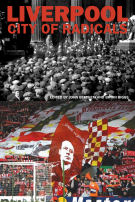
From the Ground Up: Radical Liverpool Now


By Kenn Taylor

This book tells the story of a century in the life of a radical city. One hundred years of turmoil, extreme change, alternative ideas and independent action. Different radical currents have flown through Liverpool over the years but underneath it all the city’s inhabitants seem to have developed a fiercely independent nature that defies any attempt to pin it down – a nature that mistrusts external authority, frequently defies conventional logic and seeks practical solutions to seemingly intractable problems.

If you talk about radical politics and activism in Liverpool, there is an inevitable harking back to the radical socialism that was a key component of the city’s identity after 1911 – especially during the 1980s, when a local authority dominated by the Militant Tendency infamously refused to set a legal budget as an act of resistance against a hostile Conservative government. This, along with the radical trade union activity throughout the city and the Toxteth riots of 1981, helped cast a view of Liverpool as a hotbed of revolutionary socialism that still persists today.

Yet, as documented elsewhere by John Belchem, this was far from representative of Liverpool’s grassroots politics throughout its history. If 1911 was the year that marked Liverpool’s shift towards a form of socialism, then the 1980s were perhaps its peak. And almost as soon as this aspect of the city’s character entered into the national consciousness it had begun to decline.

Contributing to this, no doubt, was the failure of the Militant council to bring down the Conservative central government and fund the municipal socialism they promised – not to mention distaste within the city for some of their methods. This, along with a decline in trade union membership and disappointment in thirteen years of New Labour government, has considerably reduced the influence of the labour movement in Liverpool at a grassroots level. It has been suggested in light of this that the city has lost its radical nature and become overwhelmed by apathy. Indeed, Liverpool has some of the lowest voter turnouts in the UK. However; this chapter will argue that this decline has seen an emergence, or perhaps a re-emergence, of a different type of radicalism in the city.

In recent years, large sections of Liverpool have been transformed, mostly in a positive way. But beneath this brave new regenerated city there are still many problems and, with them, a vast undercurrent of grassroots activism that is fighting to rebuild the city from the ground up. The radical spirit that has over the years fuelled protests, riots, strikes, occupations and takeovers, remains. As do the skills, in organising, protesting, publicizing and delivering action. Though much of this is still organised and influenced by those who were part of the labour movement, the landscape has changed.

This spirit perhaps harks back to something older and deeper in the psyche of Liverpool’s citizens: to the culture forged in the dire poverty of Victorian Liverpool, when the character that came to be known as ‘Scouse’ was being formed and the gulf between rich and poor was so vast.

Perhaps the best-known example of grassroots community activism in Liverpool during the last thirty years has been that surrounding the development of the Eldonian Village. Here, in deprived Vauxhall, a celebrated, self-organised community grew up on wasteland, against the odds and in the face of an actively hostile local authority. In Liverpool it has frequently been individuals rather than movements that have defined the city’s activism. This is exemplified by Tony McGann, who led the residents of the Eldon Street and Burlington Street tenements to develop the Eldonian Village. His actions were driven by a desire to prevent their community being broken up and dispersed to estates on the fringes of the city – the fate of so many other working-class communities in Liverpool due to successive slum clearance programmes from the 1930s onwards.

Encouraged by the then Liberal-dominated city council in the early 1980s to form a housing co-operative, the residents that were to become known as the Eldonians had their plans undermined when Labour gained control of the city in 1983. Coming up against a local Labour party keen that it alone should control housing and community development, the residents nevertheless battled on. Determined that they knew what was best for the community, they had come to mistrust the council, of whichever political stripe, for having failed to deliver the services they had promised.

In order to bring their plans to fruition, McGann and his fellow community association members worked not only with the labour movement but also formed alliances with everyone from Conservative ‘Minister for Merseyside’ Michael Heseltine to major construction companies, architects, social landlords and even royalty, developing the new ‘urban village’ over a number of years and many hurdles.

From a humble start the Eldonian Village has grown into a development renowned around the world, even winning the UK’s first United Nations World Habitat Award in 2004 for creating ‘an internationally recognized model of community-led sustainable regeneration’. The Eldonian Community Trust and its various subsidiaries have since expanded into many other areas beyond housing, establishing a local leisure centre, nursery and village hall. They have also worked with private developers and other partners on expanding the area and encouraging younger families to move in. The result is a ‘self-regenerating community’.

The Eldonian Village was a radical project at the time, but it was not Liverpool’s first attempt to create better lives through buildings. Poverty has meant that problems with housing have dominated the city for much of its existence, as have attempts to find solutions to them. Liverpool Corporation is noted as having built the first local-authority-owned housing in the UK in 1869, thus bringing new standards into the housing of the poor.

Later, between the wars, the city pioneered continental-style tenement blocks and developed out-of-town housing estates. As such initiatives moved from being radical to the norm in the post-war era, Liverpool also became home to some of the largest housing associations in the UK, these largely focused on regenerating older, abandoned city-centre properties that had been left to rot by the council. However, the well-meaning that had seen the city pioneer the first municipal housing eventually became lost among council bureaucracy and limited funds. Even the housing associations morphed to become huge public corporations, now often perceived as being as remote as local authorities themselves.

With the emergence of the Eldonian Village, Liverpool also became a test bed for large-scale co-operative urban development. For many years the city had searched for solutions to its housing problems and come up with groundbreaking ideas that were later adopted nationally; the Eldonian solution, however, was developed from within the community itself, not imposed by outside ‘experts’.

The Eldonians realised that rebuilding housing was not on its own enough to tackle deprivation and create a sustainable community. Control by local people over their own environment and long-term, multifaceted thinking were key. This was in contrast to the zealousness with which Liverpool city council had pursued its flawed modernist-influenced housing developments in the 1950s and 1960s. Whilst acknowledging that the dire post-war housing shortage contributed to this, these schemes, developed by outsiders with utopian ideals and often rigid beliefs, were frequently ill thought out and badly built. Such estates were imposed onto people with little thought for the fragile ecosystems that provided support in poor communities, creating untold damage, the effects of which remain today.

The failure time and again of such grand plans and ideologies dreamt up by outsiders to improve the lives of the poor in Liverpool, be they from politician, academic, architect or otherwise, has helped create a mistrust of such ideas in the city, fostering instead a do-it-yourself mentality where disenfranchised communities have taken matters into their own hands.

The work of Tony McGann and the Eldonians prompted Prince Charles to remark, ‘Men and women, through the power of their own personalities, can achieve more than millions spent through committees’ – a comment no doubt with which many citizens of Liverpool would agree.

It took the prospect of their community being broken up and dispersed to galvanise the residents of Eldon Street and Burlington Street into creating the Eldonian Village. A similar crisis in the Croxteth area of the city was to prompt equally radical action at around about the same time. In 1980, Liverpool city council stated its intention to close Croxteth Comprehensive School, doing so without consulting the local community or even informing the school’s head teacher.

Croxteth was one of Liverpool’s rapidly built, post-war peripheral housing estates and the school was one of the few facilities the deprived community had. Numerous intense protests against closure were quickly organised, but when these came to nothing, parents and local residents took the decision forcibly to occupy the school on the day before its planned closure in 1982. This radical action sent shockwaves through both the community and the authorities, as recalled by local resident Irene Madden: ‘I’ve never known an atmosphere like it … I think the Council and the government got the shock of their lives, you know when we stood up to them.’ Unlike the Eldonians, those involved in the Croxteth occupation were fighting the then Liberal-dominated council and had the support of the Labour group, but once again they were defying the power of a local authority they perceived as remote to try to protect the interests of the local community.

Soon after the occupation, the Croxteth Community Action Committee took the decision to open their own community school in the building, despite overwhelming odds and no real funding. The committee was led largely by Phil Knibb, like Tony McGann, another tough individual who commanded the respect of the local community. It organised and operated all aspects of the school and its round the clock occupation in partnership with parents and pupils. Volunteer teachers came from across the country, donations were successfully sought and supplies given by local factories.

They received widespread media coverage and even won celebrity backing from Vanessa Redgrave and UB40 – all this in the face of legal threats from the council and the electricity being cut off. The current UK coalition government are keen on ‘free schools’ and communities setting up and running their own educational establishments, but in 1982 Liverpool was once again pushing a radical idea that was attacked by many in politics and the media. The Daily Mail even suggested that ‘the strange Indian cult Anada Marga’ was at work in the ‘school of chaos’.

After Labour won control of the city council, Croxteth Comprehensive was taken back fully into local authority control in 1985. However, the occupation had helped create a new sense of community activism and empowerment in the area. Early in the occupation the Action Committee formed several subcommittees to work on wider local issues, including providing activities for young people, tackling the area’s heroin problem and providing support for older members of the community – work that was to continue long after the school campaign had ended.

In 1999, an old people’s residential home in the centre of Croxteth became available for purchase and a number of Committee members pooled their savings and redundancy monies to buy it and turn it into a community-based education centre. Since then, the now Alt Valley Community Trust, still led by Phil Knibb, has grown beyond all recognition.

The old people’s home has been turned into ‘The Communiversity’ and is the main base for the organisation’s work. Social businesses have been set up in local shopping units purchased by the trust and a vocational skills training centre for young people has opened in the former St Swithin’s Church – a project that is now entirely self-financed through contracts.16 Even the local leisure centre has been taken over by the trust through asset transfer.

Croxteth Comprehensive School was once more threatened with closure by the city council at the end of 2008. The decision again sparked outcry in the local community, which refused to accept the verdict. This time there was no occupation, but they became among only a handful nationally who managed to take their case to the High Court in an unsuccessful bid to challenge the ruling. However, having lost that battle, members of the community are attempting to turn something negative into something positive. At the time of writing, the Alt Valley Community Trust is in discussions with Liverpool city council to take ownership of the modern technology and sports blocks of the school to expand its own education provision. Croxteth is another example of a community being pushed into taking control of its own situation, no longer allowing itself to be at the mercy of external forces. This recurrent theme of recent activism has arguably filled the vacuum left by the decline and failure of the overarching ideologies and systems that such communities had come to rely on.

The mistrust of grand schemes within Liverpool has manifested itself most recently perhaps in campaigns around the city’s European Capital of Culture 2008 designation. Winning the status in 2003 was one of, if not the, biggest things to happen to the city in the last twenty years. Property values rose overnight and there was nothing short of euphoria in some quarters that Liverpool’s importance finally seemed to be officially acknowledged after so much decline and derision. In particular the city’s cultural community, which had struggled to survive through years of austerity, felt that its role was finally being recognised.

But it all soon began to slip. The Culture Company running the year was perceived as remote, the programme for 2008 was accused of not acknowledging ‘local’ culture and links between the title and wider development plans began to emerge. Rightly or wrongly, building developments such as Grosvenor’s Liverpool One and the Housing Market Renewal Pathfinder programme instigated by the government were lumped together with the award as the city went through an intense period of growth it had not experienced in years. This development was fuelled not only by the culture title but by increased inward investment and the global easy-credit boom.

As rapid development continued in the build-up to 2008, the city’s artistic fringe found itself being pushed out of its studios and venues by the rapidly developing legions of bars and flats. Ironically, however, the Capital of Culture title also provided a hook for the city’s artistic grassroots to resist these developments, which, with the credit boom and the like, would probably have happened anyway, as it did in other cities across the UK. A loose anti-2008 movement emerged, questioning not only how plans for the year were being handled but the whole notion of regeneration and the Capital of Culture status in and of itself.

The big spark for all of this appears to have been the fight against the proposed closure of the Quiggins ‘alternative’ shopping centre to make way for the Liverpool One development. Ultimately, the campaign did not succeed, though the shopping centre has since been moved elsewhere in the city, but it became a powerful symbol and rallying point of the ‘independent’ and ‘local’ against the ‘corporate’ and ‘global’, even if the Liverpool One development has subsequently proved very popular in the city. Similar campaigns were mounted around the Picket music venue and the Parr Street Studios recording complex, both threatened with conversion into apartments. Angry words were raised in independent local publications such as Mercy and Nerve and pretty soon even the mainstream media began questioning what was happening in Liverpool.

The city then became a test case for contemporary urban regeneration ideas that had developed over the intervening thirty years. In the aftermath of the 1981 Toxteth riots, the Conservative-backed, quango-led regeneration initiatives around the Garden Festival, the Albert Dock and the Southern Docks meant that Liverpool was among the first cities to experience the sort of leisure and private-housing-led regeneration later adopted by former industrial areas around the country. And, in the build-up to 2008, what was happening in the city was to highlight the flaws in these ideas.

Liverpool subsequently began to attract considerable criticism from both academia and the broadsheets for its regeneration plans, with commentators questioning just how much of the city’s renaissance was trickling down positively to affect poor local communities. That many of the same people had previously talked up the triumphs of similar schemes in London, Manchester, Birmingham et al., despite the fact that these areas all retained similar levels of deprivation masked by redeveloped central areas, seemed lost. Liverpool was blamed for telling a wider truth about the UK’s situation that was soon to be exposed by the credit crunch. Many commentators who had previously backed such forms of regeneration subsequently washed their hands of these ideas in the same way as did zealous supporters of post-war modernist development when communities themselves highlighted the flaws of their new towns and high-rises.

The city again showed the rest of the country ‘the error of its ways’ and demonstrated the power of grassroots action. This perhaps is Liverpool’s greatest contribution to the wider world for having been awarded European Capital of Culture: to have been the place that questioned, even deconstructed, the whole concept, in the process changing the way many people think globally about concepts of culture, cities and regeneration.

The other big issue that has provoked intense community activism in Liverpool in recent years is the Housing Market Renewal Initiative (HMRI) Pathfinder programme. Instigated in the early 2000s by the Labour government, its intention was to regenerate areas where housing demand was seen to have failed and that were suffering from dereliction and the inherent problems it creates. Based on a report by academics from the University of Birmingham, the plan advocated wholesale demolition and reconstruction of many deprived areas of the UK.

Liverpool city council adopted the policy enthusiastically and began buying up properties, often through compulsory purchase orders, and instigating a demolition programme. This was perhaps understandable as after years of government underfunding the city was being offered a large amount of money for housing development. But the plans were fiercely resisted in parts of the city as once again the council was seen to be imposing its will unthinkingly on local communities. Some even accused the plans as amounting to ‘social cleansing’ and an attempt to drive poorer people out of the city.

As with previous demolition schemes, HMRI galvanised local residents into taking control of their own surroundings. In Toxteth, one of several areas where there was a reaction against the programme, committees and residents’ groups were created to fight the plans. Alliances were developed with politicians, heritage groups and even Beatles fans, since one house up for demolition in the ‘Welsh Streets’ area had once been the home of Ringo Starr. Partnerships were also formed with housing co-operatives and private developers who stated their intention to renovate rather than demolish the area’s empty properties. There have also been symbolic and imaginative responses against the plans. Poetry and art was daubed on the doors and windows of threatened houses in the Welsh Streets. Meanwhile, in the nearby ‘Four Streets’ area of Granby, residents have undertaken ‘guerrilla gardening’, planting flowers and vegetables among the empty buildings to create a veritable oasis of green in an area now blighted by urban decay. Local street markets and parties have also been organized to highlight the strength of feeling and community spirit, again powerful symbols against the might of a massive national government initiative and the council’s plans.

Campaigns against HMRI have had mixed successes across the city, and it must also be pointed out that a proportion of the residents involved did back demolition and reconstruction. Nevertheless, at the time of writing, the council had recently announced plans to refurbish rather than demolish some of the houses in the Four Streets area, while the Granby Residents Association hopes the demise of HMRI funding might now allow for more community-led refurbishment schemes to takes its place.

However, a question mark continues to remain over whether the high-profile campaign to save the Welsh Streets will be successful. Communities taking over and reusing spaces left abandoned by Liverpool’s economic problems can be seen time and again across the city.

Another example is in the Dingle area of Liverpool 8, where a high-profile campaign was instigated to take over, refurbish and bring back into use a prominent local building that had been left to rot. The Florence Institute was originally gifted to the area by Sir Bernard Hall, a merchant, Alderman and former Mayor of Liverpool. Named after his daughter, who died tragically at the age of twenty-two, ‘the Florrie’ was officially opened in Mill Street in 1890 and became a focal point for the local youth and community for many years. With funding running dry, the Florrie was eventually sold in 1987 with the intention that its charitable work should be continued by another body. Unfortunately, this never happened and the building became neglected, a target for vandals and the elements.

As the building decayed, the local community formed a pressure group, ‘The Friends of the Florrie’, to bring it back into use. A community-led trust was set up at the end of 2004 and completed a consultation on the building’s future. Denise Devine, chair of the trust and also managing director of the nearby Toxteth Town Hall, says the needs of local people were paramount: ‘There has been door to door and group consultation throughout and that will continue … It really means a lot in the hearts and minds of local people, the Florrie bettered people, it made them better, honest, hardworking people … It will fulfil that function again – from cradle to grave, Sunday to Sunday.’

The Florence Institute Trust has worked hard over the last few years to develop a regeneration plan for the building and to raise funds to restore it into a multi-ethnic community centre for all ages and abilities. The plan for the new Florrie includes exhibition and performance space, activities for young people and the elderly, an indoor/outdoor sport area, childcare facilities, workspaces for local business and a heritage resource centre.

Having raised over £6.4 million from a variety of sources including the Heritage Lottery Fund and the city council, in June 2010 it was reported that work was due to start on the new Florrie with a planned completion at the end of 2011. The trust has also formed an agreement with the main building contractor that wherever possible jobs on the project should be sourced from the local community.

As Denise Devine documents, once again this initiative was led by the community itself: ‘The Friends of the Florrie is a home-grown grassroots organisation that has had to take the lead when no-one else wanted to touch it with a barge pole. Now people are inspired and have had their faith restored.’

This chapter has attempted to show that grassroots radicalism is still a key component of Liverpool’s culture, and also to draw together some of the factors that link these different actions and initiatives. Rather than Liverpool adhering to an overarching radical ideology, there are instead many instances of the city’s deprived communities refusing to be crushed or to have their destiny controlled by external forces. If anything, that is the underlying radical undercurrent in Liverpool now, and possibly always has been.

Community activists in the city have always had general mistrust of external authority or anyone trying to impose anything on them, be it government, institution, trade union, political party or local authority. There is also an equal distrust of grand plans and ideas, usually because time and again they have been shown to fail the people they are most meant to help. The dreams of 1911 and of other attempts at rapid radical change in Liverpool – be they the slum clearances, Militant Tendency or leisure-led regeneration – have rarely brought the transformative benefits they promised.

Although disparate, all the actions I have described – everything from short-term campaigns to full-blown community takeovers – seem to have similar motivations: wresting control of the local environment from distant, unaccountable figures and working towards practical, long-term goals that reflect the needs of the city’s people. Such activism has filled the vacuum created by successive local and national government indifference or incompetence and the decline in trade union and Labour party support.

If deprived communities are to survive and prosper, it can only happen with local control and action that comes from the ground up. Some may find the city’s and its communities’ ruck for independence and self-determination exasperating, while it is also true that it can be hard to strike to strike a balance between this and Liverpool’s need to develop its economy and infrastructure; but when this spirit is directed to solid agency it can be magnificent and can transform the lives of those involved with it. Such communities have also time and again pioneered solutions to seemingly intractable problems and highlighted to the rest of the UK where it is going wrong. For doing so, Liverpool often gets the blame for spoiling the party. But, for that the country owes the city a debt, as it is frequently ideas formed in the turmoil of this radical city that become tomorrow’s ‘common-sense’ solutions.

Indeed, many of the campaigns and initiatives mentioned in this chapter that were once considered radical, even dangerous, ideas – self-organised housing co-operatives, community school takeovers and local control over facilities and services – are now in vogue, favoured by the current UK coalition government as part of its ‘Big Society’ agenda, suggesting that communities will be able to take over from the role of the state services for which it is withdrawing funding. In fact, just before the 2010 general election, Conservative leader David Cameron visited a Liverpool social enterprise called MerseySTRIDE on Great Homer Street in Everton – a furniture workshop that provides work for local unemployed, homeless and otherwise disadvantaged people – saying that it demonstrated his ideas for the ‘Big Society’ in action: ‘The biggest thing is to build a stronger society – we’ve got to help people who are unemployed for a long time and social enterprises like this help. It demonstrates where giving more power and control to projects like these works.’

Most people in Liverpool would agree that communities themselves know what is best for them. Is the city then not only leading the way in radical new ideas, but for once not going against the grain of the rest of the country? Yet, what promoters of the ‘Big Society’ do not acknowledge is that many of the most successful initiatives discussed here, from the development of the Eldonian Village to the Florence Institute restoration in Dingle, despite being community-led, have required a complex mesh of external funding and support. In a city that relies heavily on national government funding that is now being withdrawn, this is something that in future will be in short supply. And, despite the grassroots activism of the past thirty years often operating against the grain and with limited support, it was the withdrawal of such funding and support in the past that helped create so much damage in these communities and fostered the need for such radical action in the first place. It is also why it has taken so much work and extra money over the years to build things back up.

If all that disappears once again, it can only undo so much of what has been achieved. With the government refusing to admit that the voluntary and the community-led also requires financial support, it has to be asked how many of these projects will be able to continue their current good work, let alone replace the role of local and national government provision.

Indeed, despite Cameron’s pre-election support for MerseySTRIDE, once in power, the coalition government quickly axed the Future Jobs Fund programme that had provided much of the funding for placements at this social enterprise. It seems the ‘Big Society’ might end up just being another flawed, top-down ideology that Liverpool’s communities will have to resist, counteract and find solutions to.

What then is the future of grassroots activism in Liverpool? Much has changed since 1911, but much remains the same: the interconnected problems associated with poverty, housing, unemployment, crime, ill-health, education and opportunity. As the last hundred years have taught us, there are no easy answers to any of these. Yet something else we have learned over the last century is that Liverpool and its active citizens are resilient: they will not give up and will do whatever they can to look after their communities.

In many respects, the city should long ago have ceased to exist, let alone have managed to achieve what it has. And not only that, but also remain a place of radical action that is still influencing thinking globally.

Radical Liverpool today is perhaps the same as it has always been: a collection of tough, bolshie individuals and groups who share a passion for their beliefs and their community and will not be told what to do. There are radical grassroots activities being undertaken across many different communities and over many different issues, but what unites them seems to be what has united radical Liverpool since 1911 and before: a gritty self-determination to succeed against the odds – something that will stand the city in good stead for the inevitable challenges of the next hundred years.

This piece appeared in the book Liverpool: City of Radicals edited by John Belchem and Bryan Biggs and published by Liverpool University Press. ISBN: 9781846316470. A fully referenced version is available in the book.
Lime Street

By Kenn Taylor

Leslie opened the dustpan-on-a-pole with a click of his finger and swept another pile of sweet wrappers, crisps and grit past the scarred, sticky plastic edge. Snapping it back closed he raised it up to the cart, casting an eye briefly on the lanky kid sat in the chair next to where he was working.

The kid had long, dark hair and patchy black stubble poking through his pale white skin. As Leslie watched him, he lent further forward on his elbows, sliding a little further off the arse-chilling perforated metal chair. He was clearly hungover, weary and keen to be right back wherever he came from.

Leslie shook the pan to empty it and, as he let go of the button with his thumb, it gave a satisfying click as it snapped back shut. As Leslie moved to clean under the next bench, the hungover lad lifted his arm casually up to look at his watch. Staring at it, his eyes began to widen and, without warning, he sized his backpack, leapt out of his seat and dashed towards the platform entrance.

From the moment the kid had leapt up though, his dash for the train ceased to be of any interest to Leslie. He was, as ever, focused on the floor, more specifically the large Styrofoam cup that had been knocked over as the lad grabbed his bag.

The plastic top had come off and its contents were now slowly emptying out across the deeply-scuffed Terrazzo tiles. The cup had tipped in an instant, but the thick, fizzy liquid poured out slowly, its viscous blackness overwhelming the fragmented yellow pattern of the tiles.

Leslie leaned silently on his brush as it the cup poured out. As all around him the station carried on oblivious, he squeezed his large baggy hand around the grey plastic handle, his sagging, worn skin briefly tightening, firm once more in anger. The old swallow tattoo that sat between his thumb and index finger also recovered its shape momentarily, though not its colour.

His eyes strained through his thick glasses and, for a moment, the old rage seemed to be overwhelming him. This offence, though small, was just another kick to an already broken pride. His throat cleared and his muscles tensed. ‘How dare the little fucking cunt do that,’ he thought.

In the past, revenge would have been his immediate reaction, to feel the satisfaction of violence, power, and respect. He felt his blood heat up but, as quickly as it came, this energy faded. Deep down he knew the strength was no longer there, and his rage was replaced by a burning frustration that churned deep in his stomach. He was left with only a tense indignation, an impotence that scared him and cut deep into his guts.

He looked down at the spilt Coke again, put his brush and pan back on the trolley, and pulled out the mop. He grimaced once more and silently began to slosh it back and forward through the liquid. The form of the Coke spreading out further across the floor with the action of the mop before it began to be absorbed and turn its stringy, mulchy ends a darker shade of grey.

Around Leslie, the spin of the station concourse continued; people complained to exasperated attendants, dragged heavy bags with tired arms, munched enthusiastically on over-priced sandwiches, posed gurning for passport photos, slunk wearily off delayed trains, looked curiously at information panels and gazed in wonder at the Victorian marvel of the roof. Trains moved in to fill the platform gaps, and then moved out again across the country. A thousand, small, ordinary dramas occurred, and Leslie noticed not a second of it.

To Leslie, the station had no romance, no intrigue. Through all the people and the movement, he saw only litter and dirt and never-ending work. Looking always downward, seeing only legs and shoes and, even then, noticing only the stains and the wear in them.

He pushed all of his weight onto the mop and pushed it with rare forces against the tiles. As it began to absorb the moisture, this extra little humiliation forced him to contemplate his lot in life.

The strong personality that had been formed through harsh times was now only a shadow of what it had been. The spirit remained, but it was now only a ghost in a slowly decaying frame.

He had been a big man, a man with a reputation. He may not have been a face as such, but he was someone who generated enough fear and respect to live as he wanted to live with relative ease. He was aided by the strong union power of the time, which enabled him to work the way he wanted. And of course, he was clever enough to let no woman tie him down.

Sharp in a suit, he was well-known and liked in the pubs around Kensington and the clubs in town. Still living with his family then, he had money enough for his smart clothes, his motorbike and, later, a car.

The world changed on Leslie though. And, more fundamentally, he didn’t realise that age always gets you in end, however quick or strong or smart you may be. First the speed goes, then the strength, then the wit, and then finally, the power. He ignored the first decline, but he began to come off worse in a few fights, the fear crept in, and slowly, he got used to the fact he was no longer the man he had once been.

In the new city, it was harder to pick and choose jobs, especially for an unskilled old man. Between spells on the social, he began to take worse employment and more shit from younger bosses. He walked out of a few jobs, and decked one employer. But he needed money for the bookies and the pub. So, he began to suppress the rage, till it died away.

While gambling debts curbed his free ways, a beer belly, sagging skin and thick glasses made him, even in a fluorescent vest, a ghost to all the attractive women who passed through the station everyday. No longer did they see the brooding power of a dangerous man. Instead they felt the slight indifference and suspicion of an old husk of something rotten.

He knew he was powerless now, and felt deeply the emptiness that created inside of him. Respect was now something to hope for not fight for.

Still, he knew he had lived in his own way, which was more than most men achieve. And, though bitter that a 28-year-old gobshite with a HND in Business Studies told him what to do every morning, in is head remained the desire in the eyes of all those women he had seduced, and the fear in the eyes of all those men he had threatened.

And, if it came to it, he knew he would still fight them to the finish. He had promised himself one thing as a young man; that he would keep his face up for as long as he could, even if it meant the end of him. It was the only way to live, without fear; snarling and scratching till your last breath.

Now though, it came to him. He sensed a blackness in the near distance. Even this indignity he could cope with, but soon, before the end, he would be totally dependent, frail, finally a victim to age rather than a stronger opponent. But, he thought, don’t dwell, and grimaced as he noticed a blonde girl drop a yellow polystyrene carton on the floor by the Burger King.

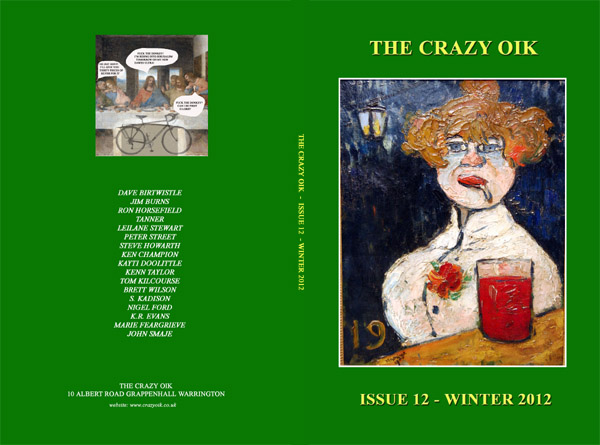
This appeared in the Autumn 2011 issue of The Crazy Oik.

A Discerning Eye

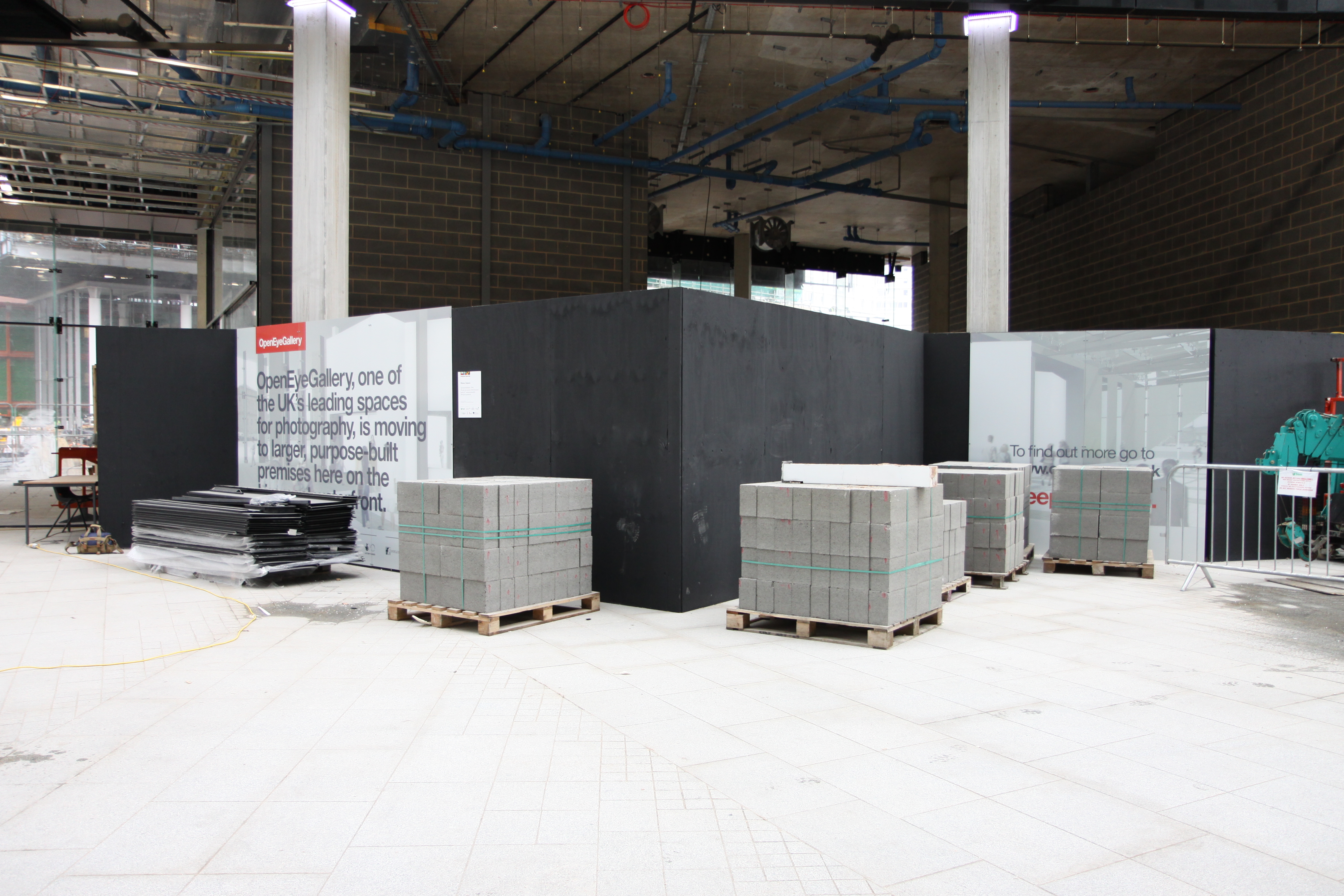
Liverpool’s Open Eye Gallery reflects on its pioneering history as it prepares its move to a new home.

Liverpool, with its mixture of grand buildings and dockland dereliction, strong characters and deep poverty, has often been a favourite subject of photographers from around the word. Everyone from Cartier-Bresson to Candida Höfer and Rineke Dijkstra has shot in the city. Aside from being a subject though, Liverpool has also been home for over 30 years to one of the most important galleries in British photography, Open Eye. This autumn it will move to its first purpose-built home, a striking building on the city’s waterfront, thus beginning another chapter in its chequered history.

Director Patrick Henry is leaving the Wood Street space which has been Open Eye’s home since 1995. The gallery’s now filled with boxes, books and files in preparation for the move. After seven years at the helm, Henry has overseen the long process of finding the organisation a new home, not easy in the midst of a recession. Having studied history of art at Manchester University, Patrick worked for several years as a freelance photographer and then a Curator at what is now Bradford’s National Media Museum, before becoming Director at Open Eye. He says: ‘Cities like Liverpool have always had a romance and fascination for me. So when I was working in Bradford and looking for something new, more freedom and autonomy that you can have working in a big institution, when the job here came up, I was very interested in it.’

Open Eye originally emerged in 1973 as part of an organisation called the Merseyside Visual Communications Unit (MVCU). In its early days, MVCU was a heady mix of art and activism, a DIY operation run on a shoestring by artists, volunteers and a tiny staff team. Patrick says of those days: ‘It had a mission to do with media education, activism, and community arts, making facilities and equipment available at affordable rates. Making it possible to produce culture in a democratic way and also to present the kind of culture that at the time you couldn’t necessarily find in the official venues.’

But, as Patrick details, keeping such an operation afloat in those times was an unenviable challenge: ‘Some of the stories of the storms that were weathered through that period are almost biblical. They had really severe floods and there was a series of fires. There were even firebomb attacks by a far right-wing, racist organisation.’

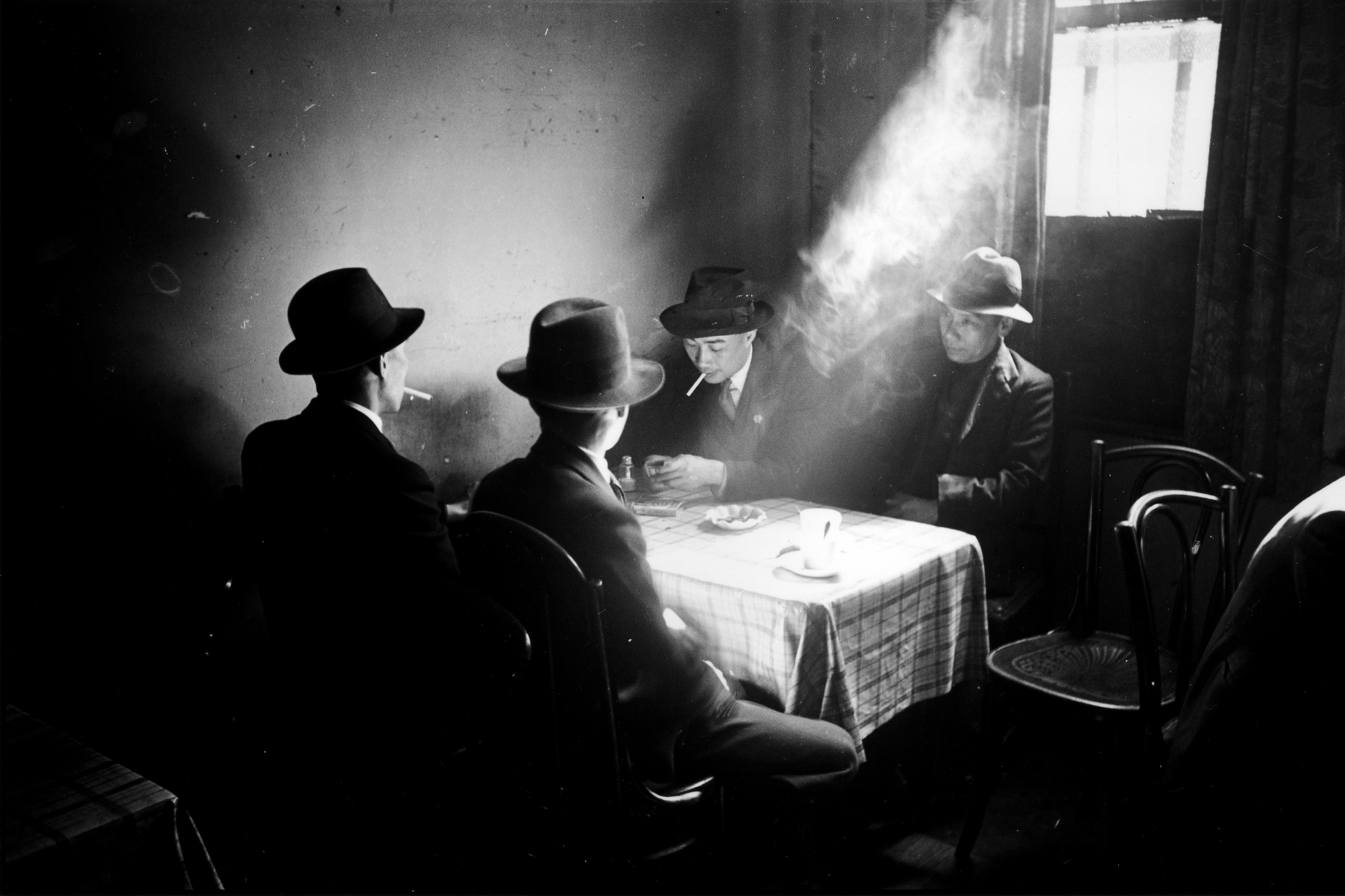
In 1976, MVCU moved into an abandoned pub, the Grapes Hotel in Whitechapel, central Liverpool. The Open Eye Gallery itself followed in 1977, occupying what had been the public bar. It was one of the pioneering galleries in that period, fuelled by a growing sense of photography’s artistic, social and political potential. ‘It was part of a network that was growing through the ’70s and the ’80s of independent photography gallery spaces around the UK,’ says Patrick. ‘Showing photographers like John Davies, Paul Graham, Tom Wood and Martin Parr, who were increasingly confident and assertive about the voice they wanted to have as artists, though they were for the most part excluded from the gallery scene and museum collections in this country.’

During this time, Open Eye’s exhibitions had a strong role in promoting some of the photographers now regarded as Britain’s finest, as Patrick details: ‘A really important one was The Last Resort. That exhibition was produced by Open Eye and toured. That was actually a joint exhibition of work by Tom Wood and Martin Parr. It’s very well-known now because of Martin’s work, and his book, but the original exhibition was the two of them. “The Last Resort” was of course New Brighton, across the river from Liverpool.’

Later, the gallery moved to Bold Street and shared premises with several other community-focused arts groups until funding and organisational problems saw Open Eye separate. In November 1996, the gallery was re-launched in Wood Street and began to show a stronger element of moving image work, as well as adopting an increasingly international photography programme.

Fueled by a desire to expand its exhibition spaces and increase and diversify its visitors, in mid-2009 Open Eye entered the main phase of its relocation project, which will culminate in its new, purpose-built space opening in autumn 2011. The main gallery on the ground floor will showcase an international programme of contemporary photography. A mezzanine gallery will display exhibitions drawn from Open Eye’s archive of over 1600 photographs, while gallery’s exterior wall will be also be used for a series of large-scale vinyl commissions called, ‘Wall Work’.

The ability to show images from Open Eye’s extensive archive regularly for the first time is one of the key developments of the move. ‘The archive dates to 1980,’ says Patrick, ‘and it’s been growing ever since. There are the big formations; social documentary, portraiture and urban landscape and so on, but there are also countless, odd, fringe things as well. From a programming point of view for the archive, we just want to explore that over time and set it up in dialogue to the contemporary work we are showing.’

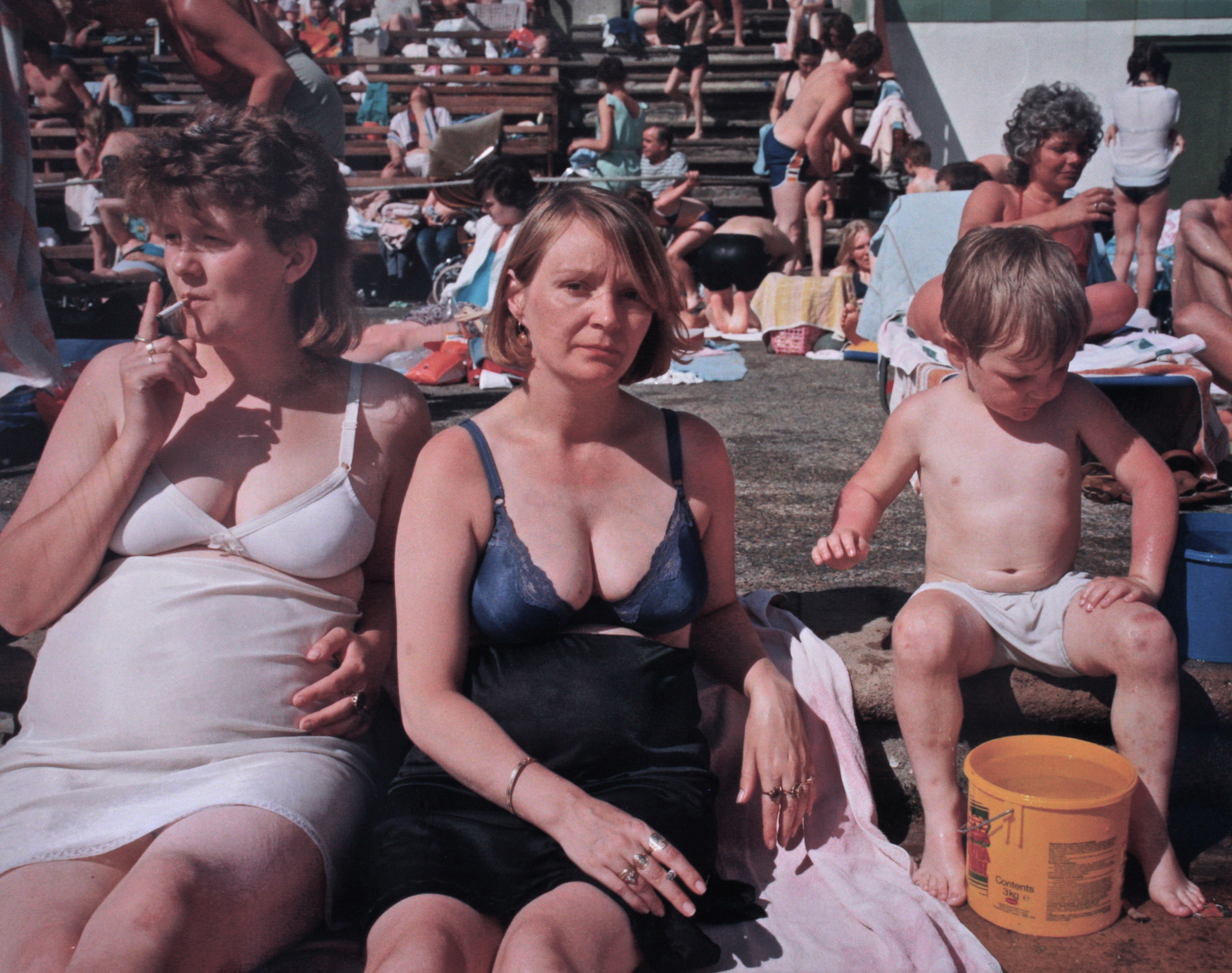
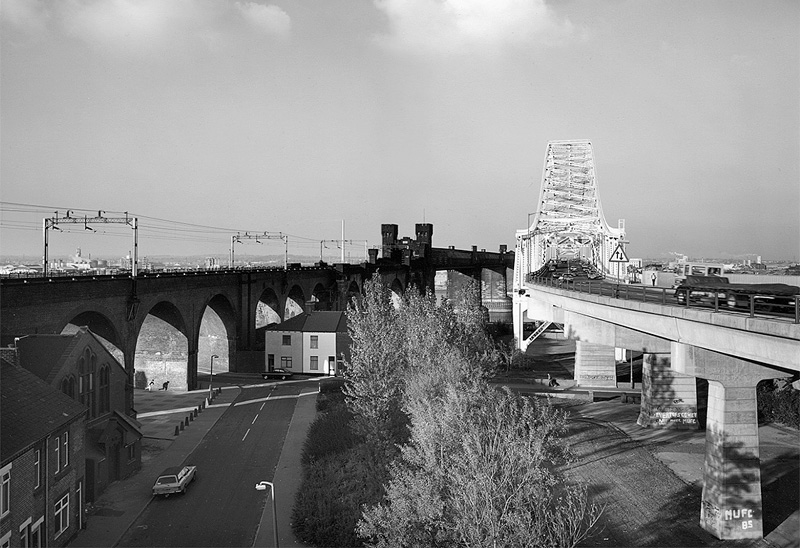
Open Eye’s launch programme in the new gallery reflects well both its past and present. Its main exhibition will be Mitch Epstein’s first solo show in the UK, American Power, which examines how energy is produced and used in the American landscape, questioning the power of nature, government and corporations. The archive show meanwhile will be Chris Steele-Perkins The Pleasure Principle, a photographic portrait of England in the 1980’s.

Patrick is keen on the contrasts and similarities between the two exhibitions: ‘Steel-Perkins project is about the 1980’s in Britain. It’s more photojournalistic, social commentary; whereas Mitch’s project is more art documentary. So that pairing was about a resonance, but also about a series of contrasts. Mitch’s work is kind of contemporary photography on a grand scale, while Chris’ is shot on 35mm. For our first show to connect to the culture and politics of the 80’s seemed like a good thing for Open Eye as well as it points back to our own history.’

Open Eye has changed with the times, as photography itself has changed, becoming more accepted as a fine art medium, whilst also contemporary arts spaces have become a more accepted part of the landscape of English cities. It is good to see a gallery so focused on the photographic move to a grand new space in prominent location. But is Open Eye in danger of losing its edge in its new, tourist-friendly home? ‘Historically, there has been a real edge to what Open Eye has exhibited, and we really want to retain that,’ says Patrick. ‘So we want to be popular and widen our audiences, but the key challenge, and something that’s not negotiable about what we do, is to be both popular and also be critical and provocative. Which is something that I think resonates well with Liverpool as a city.’

The new gallery opens to the public on 5th November 2011.

www.openeye.org.uk

This piece appeared in the September 2011 edition of f22 magazine.


Images Copyright Open Eye Gallery.